



Food Safety Focus (232nd Issue, Nov 2025) – Article 1
Safe Preparation of Sauces to Prevent Food Poisoning
Reported by Arthur YAU, Scientific Officer,
Risk Communication Section, Centre for Food Safety
Sauces are versatile and can enhance the palatability of many dishes. However, food safety is of paramount concern especially when it comes to the preparation of sauces. Food poisoning cases involving different types of sauces, including meat sauces (e.g. pasta sauces, chilli), gravies (e.g. curry sauces), dips (e.g. guacamole) and egg-based sauces like mayonnaise and hollandaise sauce, have been reported from time to time. This may be partially caused by the tendency to prepare larger batches of sauces in advance, coupled with slow cooling with uncovered pots left at room temperature. This article explores common causes of food poisoning involving sauces and offers practical tips on prevention.
1. Cook Sauces Thoroughly
Many common food ingredients can harbour pathogens from the environment, e.g. Salmonella in meat and eggs, Bacillus cereus in fruits, vegetables and herbs, Clostridium perfringens in gravies, thick soups, cooked beans etc. Proper cooking (at least 75°C for 30 seconds) can kill the vegetative bacteria present. Avoid undercooking as sauces that contain uncooked or lightly cooked components can lead to survival of the bacteria.
To prevent survival of any pathogens in food in the first place, it is important to cook the sauce thoroughly. If the recipe calls for the use of raw eggs, raw milk or raw milk cheese, safer alternatives like their pasteurised counterparts should be used instead.
2. Cool Sauces Rapidly
After the sauces are cooked thoroughly, they should either be kept at above 60°C, or be cooled down quickly within two hours if they are not intended for immediate use. Pathogens like Bacillus cereus and Clostridium perfringens can form spores, which is a tough, dormant form of the bacteria that can survive unfavourable conditions like cooking and without nutrients. If cooked sauces stay in the "Temperature Danger Zone" of between 4°C and 60°C for too long (e.g. the whole pot of sauce left at the kitchen overnight to cool down, or sauces left in an underheated steam bath for the whole afternoon), the heat-resistant spores of the pathogens can germinate. They can then multiply rapidly with less competition as most other microorganisms were killed during cooking. Once ingested, these bacteria can produce toxins inside human intestine leading to food poisoning with gastrointestinal symptoms. Bacillus cereus can also produce toxins in food and form protective spores when warmed. Therefore, reheating alone cannot render the sauces that are contaminated with spores and toxins safe.
To cool down sauces rapidly, one can take reference from Figure 1 below, where sauces are cooled to 20°C or below within two hours and then cooled further to 4°C in a refrigerator within two to four hours. There are also ways to help speeding up the cooling process, which include preparing sauces in smaller batches, putting the sauce in shallow, covered containers in an area with good air circulation, and placing pans of hot sauces in an ice water bath with stirring. Keep the sauce separate from raw food during cooling. Blast chilling, where smaller portions of food are rapidly chilled to 4°C within 1.5 hours with the use of special chillers, can also be used where available. Sauces should be marked with production date labels and stored separately from raw food in the refrigerator at 4°C or below. Apply the first-in-first-out (FIFO) principle to stock rotation.
3. Reheat Properly
Properly reheating sauces means re-cooking, not just warming them up. Reheat the sauce until full boil or the temperature reaches at least 75°C. Reheat only once and do not put the reheated sauce back in the fridge afterwards. Only after the sauce has been thoroughly reheated to 75°C or above should it be held at a temperature above 60°C to keep it safe for consumption. Do not reheat in a bain marie or with similar equipment that are only designed to hold food at a safe temperature once it is already hot, as it will either take too long or have insufficient power to do so.
4. Prevent Cross-contamination
Maintain good hygiene practices, (including good personal and environmental hygiene) to prevent cross-contamination of cooked food with raw meats, poultry, seafood, produce or eggs that may be contaminated with Salmonella or other pathogens. Cross-contamination can also occur when utensils, equipment, surfaces and hands of food handlers which have come into contact with contaminants are not cleaned properly.
Key Points to Note:
To prevent food poisoning from sauces, one should
- Cook thoroughly;
- Cool rapidly;
- Reheat properly; and
- Prevent cross-contamination.
In conclusion, preventing foodborne illnesses during preparation of sauces requires knowledge and diligence in the kitchen. By adhering to safe cooking and food handling practices and employing rapid cooling techniques, one can significantly reduce the risk of food poisoning from sauces. Always prioritise food safety to ensure that your food is not only delicious but also safe for consumption.
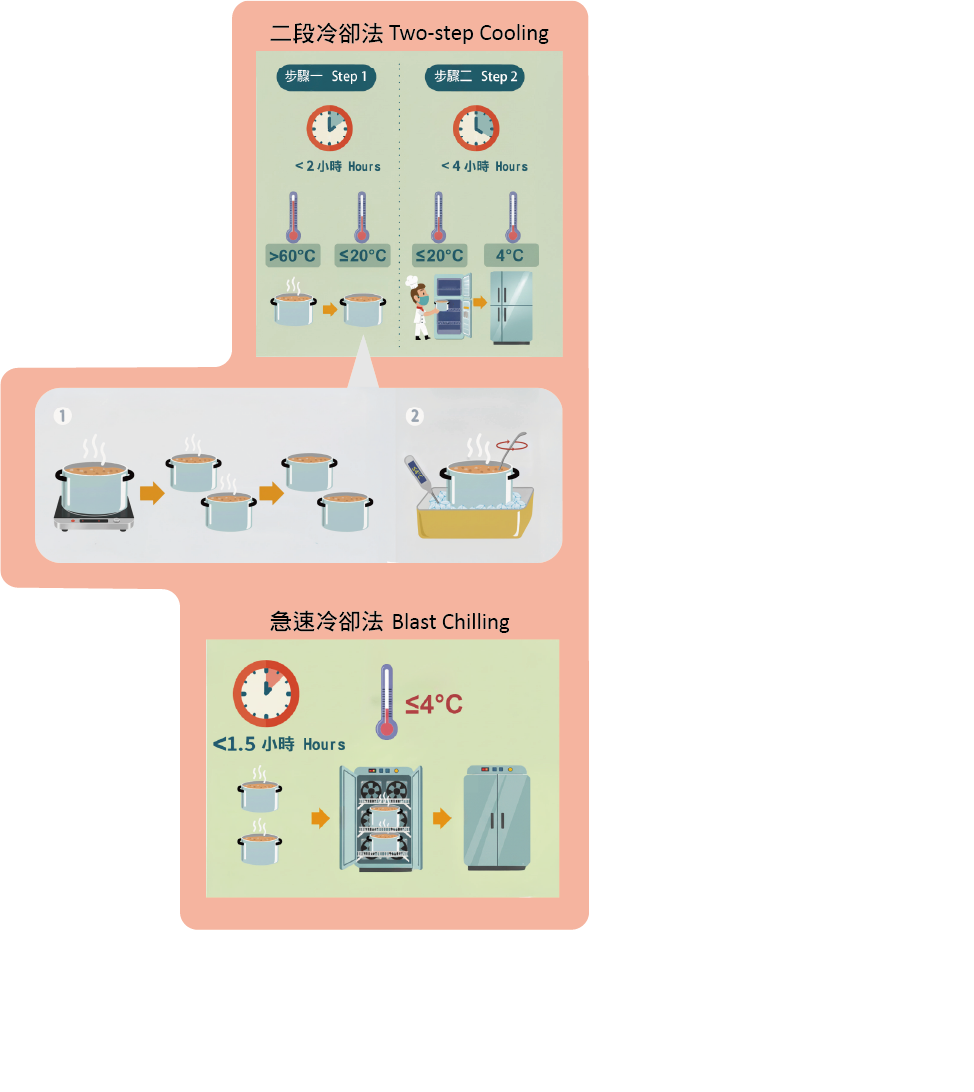
Figure 1: Sauces should be cooked thoroughly (to at least 75°C for 30 seconds) and cooled quickly (cooled to 20°C within two hours and then cooled further to 4°C in a refrigerator within two to four hours) if not used immediately. Reheat by cooking them to at least 75°C before use.