


Food Safety Focus (241st Issue, August 2026) – Article 2
Hong Kong's "1+7" Nutrition Labelling Scheme: Decoding Codex Principles
Reported by Dr. Violette LIN, Scientific Officer
Risk Assessment Section, Centre for Food Safety
Mandated under the Food and Drugs (Composition and Labelling) Regulations (Cap. 132W), the Nutrition Labelling Scheme (NLS) is a vital public health tool for mitigating local non-communicable diseases like hypertension. Since Hong Kong relies heavily on imported food, the NLS closely aligns with international practices, specifically the Codex Alimentarius Commission (Codex) guidelines on nutrition labelling and claims. This article reveals how the compulsory NLS for prepackaged food, implemented since 1 July 2010, maintains harmony with the latest Codex updates. The NLS strikes a balance between protecting local public health while facilitating international trade without creating unnecessary technical barriers under World Trade Organization rules.
The NLS serves three primary purposes: (i) assisting consumers in making informed food choices; (ii) encouraging food manufacturers to apply sound nutrition principles in food formulation; and (iii) regulating misleading or deceptive labels and claims (see Figure). To achieve these goals, the NLS aligns with Codex principles to stipulate precise nutrient definitions, clear nutrient lists, and strict claims standards under Cap. 132W. These requirements are communicated to traders and the public through workshops, guidelines, FAQs, etc., all collated on the designated NLS website.
Regulatory Definitions of Energy and Nutrients
Under the NLS, a “nutrient” is defined as any substance present in food which belongs to, or is a component of, specific categories, namely protein, carbohydrates, fat, dietary fibre, vitamins, and minerals. Furthermore, the substance must satisfy at least one of the following conditions: (i) it provides energy; (ii) it is needed for growth, development, and normal functions of the body; or (iii) its deficit causes characteristic biochemical or physiological changes. This definition adheres strictly to the Codex definition, thereby excluding non-nutrient substances such as “antioxidants”, “enzymes”, and “probiotics”. Consequently, it is misleading to declare these non-nutritent substances on a nutrition label or to make any nutrition claims regarding them.
The NLS also defines energy and certain core nutrients, like protein, sugars, dietary fibre, and trans fatty acids (TFAs) under Cap. 132W. These definitions remain fully aligned with Codex benchmarks. To assist traders in preparing reliable nutrition labels, the Government provides explicit chemical and structural definitions in the Method Guidance Notes and FAQs on NLS website.
The "1+7" Nutrient Framework
The NLS permits traders to determine nutrition label values through either direct chemical analysis or indirect nutrient analysis based on calculation. This closely follows Codex principles, which state that nutrient declarations should use weighted average values derived from data specifically obtained from analyses of products that are representative of the product being labelled. Many jurisdictions, such as Australia, Canada, the Chinese Mainland, and New Zealand, permit the use of nutrient databases as a nutrition label development tool. However, for enforcement and compliance purposes, definitive nutrition label values will always be verified via laboratory analysis.
Under the NLS, nutrition labels must declare energy plus seven core nutrients—protein, available carbohydrates, total fat, saturated fatty acids (SFAs), TFAs, sodium, and sugars (the “1+7” framework)—and any nutrient subject to a claim. This was initially modelled on the Codex “1+3” framework (energy plus protein, available carbohydrates, and total fat). Codex subsequently expanded “1+3” to “1+6” by incorporating SFAs, sodium, and sugars. Hong Kong specifically added TFAs in 2010 to meet local health requirements, and the NLS has effectively informed consumers and driven industry product reformulation. This policy remains fully aligned with Codex principles and directly supports the World Health Organization’s global campaign to eliminate industrially produced TFAs.
Nutrition Claims and Compliance Criteria
The NLS strictly follows Codex standards for regulating nutrient content, comparative, and function claims. Criteria for "low" or "free" claims (energy, fat, SFAs, cholesterol, and sodium), and "source" and "high" claims (protein, dietary fibre, vitamins, and minerals (except sodium)) are identical across both frameworks. They also share the same principles regarding exemptions; for instance, terms like “low fat milk” and “low sodium salt” inside an ingredient list are not treated as nutrition claims. This applies provided that the overall packaging does not imply special nutritional properties, and the information provided is factual and not misleading.
The NLS effected since 2010 has remained consistent with the latest Codex principles to empower consumers and encourage healthier food formulation. The Government will continue monitoring international regulatory updates including Codex guidelines to safeguard public health and facilitate trade. To ensure compliance, traders can get familiar with these requirements through browsing the NLS designated website's guidelines and FAQs.
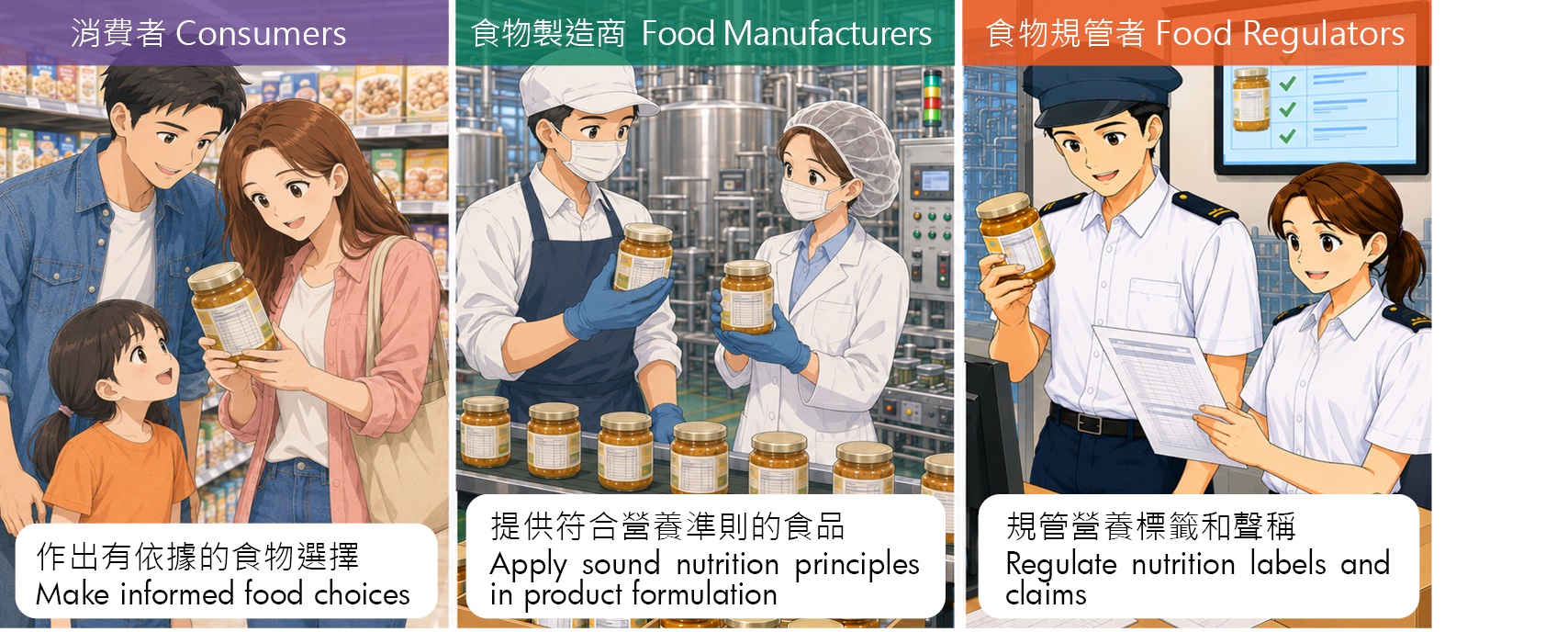
Figure 2: The Nutrition Labelling Scheme, enforced by the Food and Drugs (Composition and Labelling) Regulations (Cap. 132W), harmonises with Codex guidelines to safeguard public health and facilitate trade