


Food Safety Focus (241st Issue, August 2026) – Article 1
Wild Mushrooms – Numerous Species and Numerous Toxins
Reported by Dr. John LUM, Scientific Officer,
Risk Assessment Section, Centre for Food Safety
Mushrooms are commonly consumed as food with various essential nutrients and provide a distinctive taste and aroma. However, there are reports of poisoning after eating wild mushrooms from time to time. So, what is mushroom poisoning and what causes it?
What is Mushroom Poisoning?
Mushroom poisoning results from consuming raw or cooked fungi that contain harmful toxins. These toxins are naturally produced by the fungi and cannot be destroyed by cooking, canning or freezing. Mushroom poisoning cases are mainly resulted from consuming toxic wild mushrooms that have been misidentified as edible, or edible mushrooms that have been mixed with toxic species.
Characteristics of Mushroom Poisoning
Mushroom poisoning is typically acute. However, symptoms of certain mushroom toxins, such as the notorious amatoxins, exhibit a delayed onset and occur long after the consumption. By the time symptoms appear, severe liver or kidney damage may have already occurred, which can be fatal.
Types of Mushroom Toxins
- Disulfiram-like toxins: These toxins generally cause no symptoms, unless alcohol is consumed after eating the mushroom. The mushroom produces a toxin, and its metabolite can block the liver's ability to break down Drinking alcohol will lead to intense headaches, flushing, nausea and vomiting. Various Inky Cap mushrooms contained disulfiram-like toxins.
- Gastrointestinal toxins: These toxins cause temporary digestive distress, including vomiting, abdominal cramps and While the exact chemical identity of these toxins remains largely unknown, sugars, amino acids or peptides present in the mushroom might be involved. A classic example is the Green-gilled mushroom which causes gastrointestinal upset upon consumption.
- Neurotoxins: These toxins affect the nervous system, causing profuse sweating, convulsions, hallucinations, and abdominal cramps. Examples of neurotoxins include muscarine, which is found at high level in Inocybe and Clitocybe species.
- Protoplasmic toxins: These toxins can injure body cells and cause irreversible organ damage. Example of protoplasmic toxins include amatoxins and hydrazines, which are found in Death Cap and Destroying Angel.
The symptoms and severity of mushroom poisoning depend on the type and amount of toxins ingested. There are reports that the consumption of a single Death Cap mushroom could be lethal. Moreover, the entire mushroom could contain toxins and poisoning could not be avoided by not eating a specific part of the mushroom.
Managing the Safety of Mushroom
Edible and poisonous mushrooms often look remarkably similar, making differentiation incredibly difficult. As such, individuals should not collect wild mushrooms themselves for consumption. Even those dried edible mushrooms do not contain toxins by itself, bacterial growth will occur if they are not handled properly. The time for soaking mushrooms at room temperature should not be too long, generally no more than two hours, otherwise they should be soaked in the refrigerator.
The Centre for Food Safety has implemented a risk-based surveillance system for food products available in Hong Kong, including mushrooms. Between January 2023 and June 2026, over 150 mushroom samples have been collected for testing of mushroom toxins. The test results of all samples were satisfactory.
Key Points to Note
- Mushroom toxins cannot be destroyed by cooking, canning or freezing.
- Poisoning cases are mainly resulted from consuming toxic wild mushrooms that have been misidentified as edible, or mushrooms that have been adulterated with toxic species.
- Severe cases of mushroom poisoning can be life-threatening.
Advice to Consumers
- Do not pick wild mushrooms for consumption as distinguishing edible mushrooms and poisonous species is difficult.
- Buy mushrooms from reputable and reliable retailers, and avoid mushrooms which are doubted to be mixed with unknown species.
- Travellers should remain vigilant when abroad and only patronise reliable shops when buying mushrooms.
- Do not buy mushrooms which look unhygienic or show signs of spoilage.
- Wash and cook mushrooms thoroughly before consumption.
- Mushrooms should be kept in the refrigerator if overnight soaking is needed.
- Seek medical treatment immediately if mushroom poisoning is suspected.
Advice to Trade
- Ensure mushrooms sold, whether fresh or not, are fit for human consumption.
- Maintain proper trade records to facilitate source tracing when necessary.
- Source mushrooms from reputable and reliable suppliers; and prevent mushrooms from mixing with unknown species.
Myth and FactThere are many folk traditions on identifying poisonous mushrooms: that they are usually brightly coloured, insect free or they turn the silverware black. These folk traditions are not correct. Even the identifications by using photo-recognition programmes are not reliable and there have been poisoning cases after eating mushroom that the programme identified as edible. |
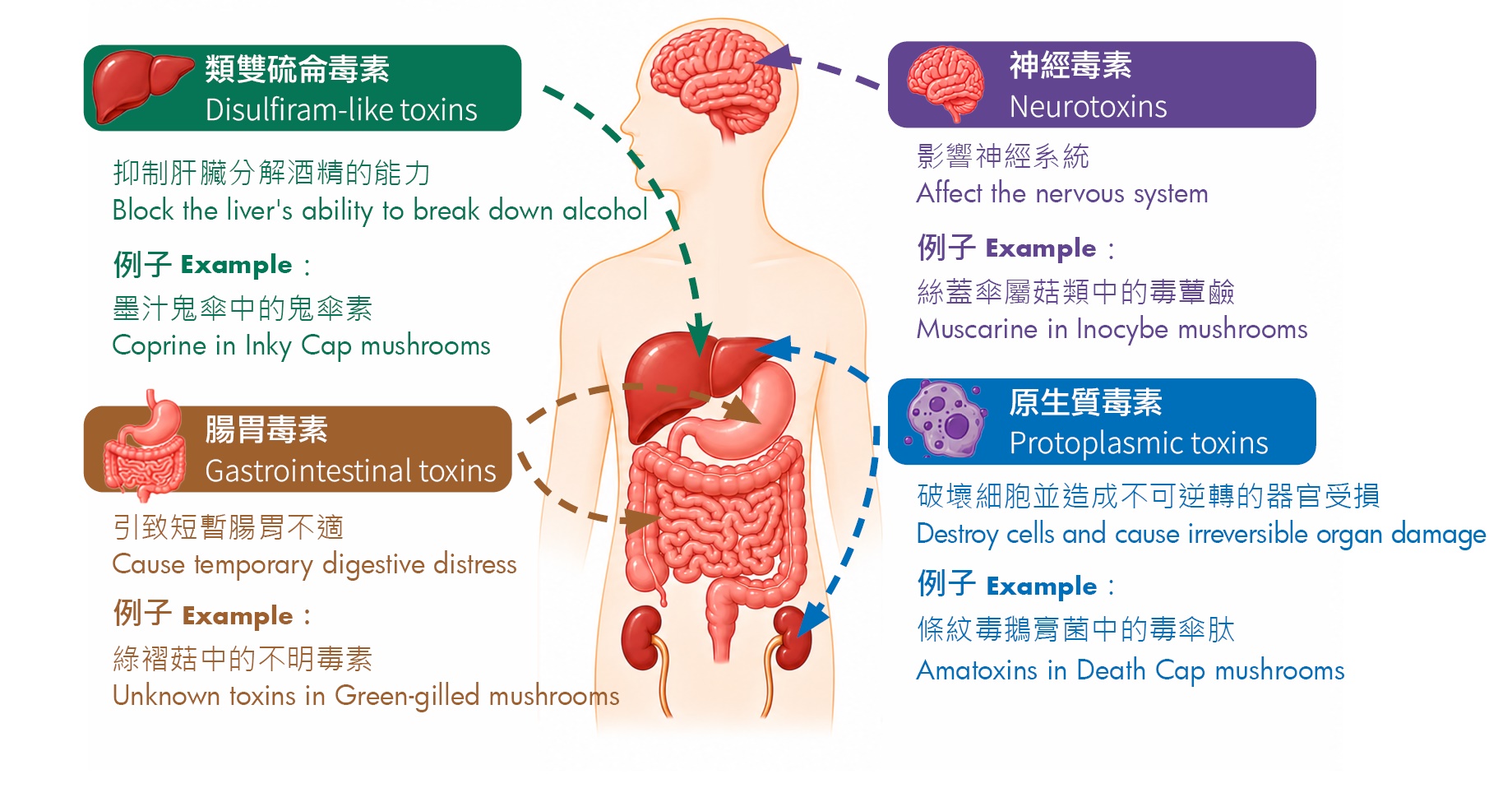
Figure 1: Effects of different mushroom toxins on human body