


Food Safety Focus (239th Issue, June 2026) – Article 2
Bean Curd – a Traditional Vegetarian Food Produced from Soybeans
Reported by Ms. Amy LEUNG, Dietitian,
Risk Assessment Section, Centre for Food Safety
In this article, we continue our discussion from the last issue with a shifted focus from pulses to bean curd. One commonly eaten soybean product is bean curd (tofu), a soft and nutritious traditional food that is versatile and can be enjoyed in many ways. Bean curd is made by soaking, grinding, cooking and filtering soybeans into soy milk, then adding coagulants such as calcium sulphate or magnesium chloride to separate the mixture and form curds. Bean curd is classified as “Meat, Fish, Egg and Alternatives group" under the Healthy Eating Food Pyramid.
Nutritional Characteristics and Health Benefits
Bean curd is a good source of protein containing all the essential amino acids. It is low in saturated fat, cholesterol-free, and rich in calcium and iron. A 100 g serving of regular bean curd provides about 8.08 g of protein, 0.69 g of saturated fat, 1.06 g of monounsaturated fat, 2.7 g of polyunsaturated fat, 350 mg of calcium, and 5.36 mg of iron. Protein promotes body growth and repairs cells. Iron is a key component of haemoglobin, which helps red blood cells carry oxygen from the lungs to the rest of the body. Calcium supports bone health and helps prevent osteoporosis. Since bean curd is one of the products made from soybeans, soybean’s benefits for heart health and breast cancer prevention are covered below:
Soybeans support heart health through their soluble fibre content and as a plant-based protein substitute for meat. Soluble fibre binds bile acids in the intestine, promoting their excretion. The liver then draws LDL cholesterol from the blood to synthesise new bile acids, thereby lowering LDL levels and reducing the risk of heart disease. By partly replacing meat (particularly fatty meat) with soybeans and their products, some saturated fats can be displaced with healthier unsaturated fats and cholesterol intake can be reduced, which can help reduce LDL synthesis.
Soybeans and their products contain phytoestrogens (isoflavones), which have weakened oestrogen properties in the body, resulting in a decrease of oestrogen production. This mechanism has been investigated by scientists to correlate the effect of soy consumption and breast cancer occurrence. A meta-analysis published in 2022 reported an inverse correlation between the amount of soy isoflavones consumed and breast cancer occurrence in pre- and post-menopausal women. However, the authors noted that there remained controversy on the effects and outcomes of soy and isoflavones on breast cancer.
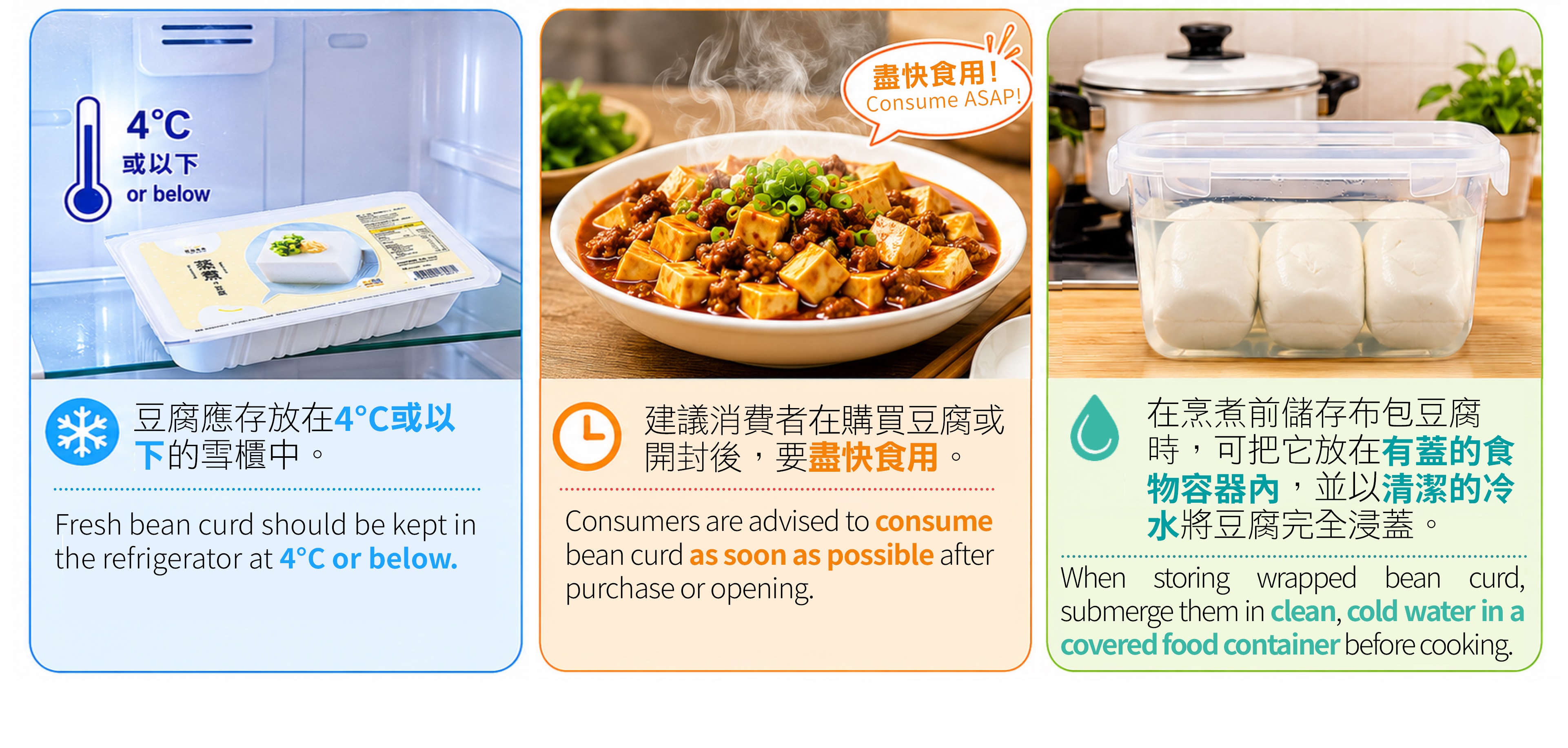 Figure: Proper handling of bean curd.
Safe Preparation of Bean Curd
Bean curd is generally safe to consume when produced and stored under hygienic conditions, but as a fresh soybean product, it is highly perishable. To ensure food safety, fresh bean curd should be kept in the refrigerator at 4˚C or below. To maintain eating quality, for example with wrapped bean curd, keep it in a covered container and submerge it in clean, cold water for temporary storage before cooking. This can help preserve its shape and moisture. As storage times may vary depending on the food source (e.g. wet market or prepackaged products) and since bean curd is sometimes consumed as a ready-to-eat food, consumers are advised to eat it as soon as possible after purchase or opening. For longer storage, fresh bean curd can be frozen, though texture may change.
Fermented bean curd is safe when produced under controlled fermentation. However, improper or unhygienic fermentation may lead to microbial contamination. In recent food incidents, fermented bean curd has been found contaminated with Bacillus cereus. Consumers should therefore purchase only from reputable sources, check the expiry dates of the fermented bean curds and consume within the recommended period, and follow the “Five Keys to Food Safety”.
As bean curd is made from soybeans which are a recognised allergen, individuals with soy allergy should avoid consumption and check food labels carefully.
Bean curd is nutritious and can form part of a healthy, balanced diet. Include it wisely in various dishes to make the most of its nutritional benefits. Limit the consumption of deep-fried bean curd, fried bean curd puffs and fermented bean curd, as they are higher in fat and sodium. Choose low-fat cooking methods, such as steaming, boiling in soup or stir-frying in less oil. Individuals who need personalised health advice should consult a dietitian or healthcare professional.