


Food Safety Focus (235th Issue, Feb 2026) – Article 1
Safe and Fresh: Practical Tips for Storing Vegetables
Reported by Ms. Melva CHEN, Scientific Officer,
Risk Communication Section, Centre for Food Safet
Not everyone buys vegetables daily. It is common for consumers to purchase vegetables in advance and store them for several days or even weeks. As vegetables are consumed regularly, many people are concerned about how to keep them fresh while ensuring food safety. This article will discuss several common storage mistakes in daily life and suggest practical tips.
Practice of concern 1: Washing vegetables before storage and sealing them in airtight plastic bags
Why this is a concern: Some people wash vegetables immediately after purchase and store them wet in airtight plastic bags or sealed containers. This practice traps moisture, creating a humid environment that encourages the growth of bacteria and mould. Leafy greens, in particular, may become slimy and spoil more quickly.
Recommended practice: Vegetables should be washed only right before cooking or consumption. If washing is necessary in advance, they must be thoroughly dried. Place them in perforated bags or non-airtight bags lined with a paper towel to absorb excess moisture, then store in the refrigerator's crisper drawer. To remove dirt and soil from root vegetables before storing them, use a brush or paper towel.
Practice of concern 2: Wrapping fresh vegetables directly with a newspaper before storing them in the refrigerator
Why this is a concern: Wrapping fresh vegetables in a newspaper is an old practice based on its effective moisture absorption. However, printing inks contain hazardous chemical compounds, including solvents, pigments and binders. They may transfer to the surface of the vegetables if they are wrapped with newspapers and may not be easily detected by the naked eye. Prolonged exposure to these chemicals may pose potential risks to human health.
Recommended practice: Wrap vegetables with a white cloth or paper towel before putting them in perforated bags or nonairtight bags. Rinse thoroughly before cooking.
Practice of concern 3: Placing vegetables and fruits together without sorting
Why this is a concern: Most tree fruits, such as apples and pears, produce ethylene gas, a colourless, odourless and natural plant hormone gas, which accelerates ripening. When stored together with ethylene-sensitive vegetables like leafy greens, broccoli and cucumbers, this gas speeds up yellowing, wilting and spoilage.
Recommended practice: Store ethylene-sensitive vegetables separately from ethylene-producing fruits (see figure). In practice, put fruits in a basket and place them in a cool and dry place, or bag the fruits before storing in the refrigerator.

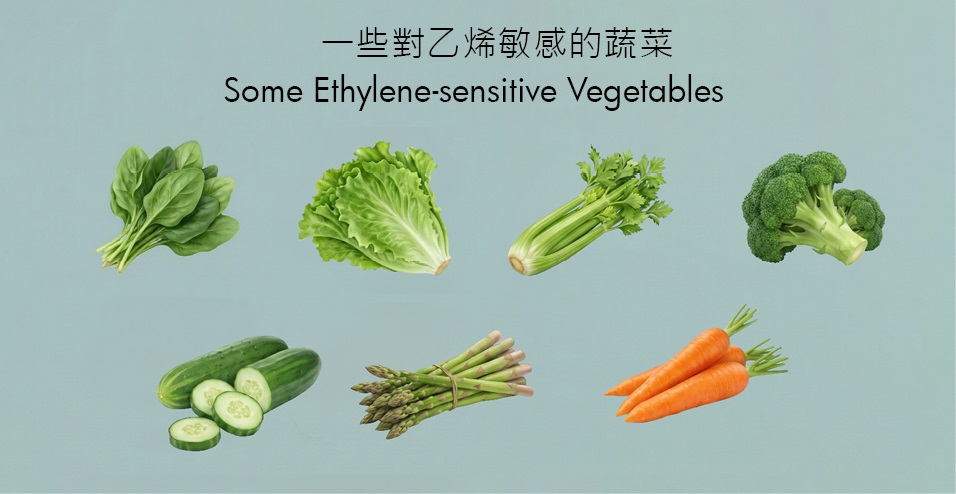
Photo: It is better to store ethylene-producing fruits (apples, pears, peaches, nectarines, papayas, and cantaloupes) separately from ethylene-sensitive vegetables (spinach, lettuce, celery, broccoli, cucumbers, asparagus and carrots) to prevent premature deterioration of vegetables.
Practice of concern 4: Refrigerating potatoes and other vegetables that do not need chilling
Why this is a concern: Vegetables that do not require refrigeration are generally hardy, thick-skinned, or root vegetables like potatoes, sweet potatoes, taro roots, winter squashes, garlics, onions and shallots. Refrigeration often causes them to lose flavour, develop off-textures or spoil faster. Furthermore, refrigerating potatoes causes starch to naturally convert into reducing sugars, causing an increase in the formation of potentially harmful acrylamide when they are cooked at high temperature such as frying and baking.
Recommended practice: Store the above-mentioned vegetables at room temperature in a cool, dry and well-ventilated place, away from direct sunlight.
Practice of concern 5: Storing homemade frozen vegetables such as peas and corn kernels in freezers without blanching
Why this is a concern: Some people prepare their own frozen vegetables (such as peas, corn, broccoli, cauliflower etc.) at home. Freezing vegetables without blanching does not stop enzyme activities. As a result, colour, texture and flavour deteriorate over time, even when frozen. Blanching reduces microbial load on the surface and inactivates enzymes, which improve the safety and quality of the vegetables during frozen storage.
Recommended practice: :Vegetables suitable for freezing (such as peas, corn, broccoli, cauliflower etc.) should be blanched briefly (2 to 3 minutes) in boiling water, then rapidly cooled in ice water before freezing. Whether frozen vegetables are store-bought or homemade, they should be cooked before consumption to reduce the risk of Listeria monocytogenes and other foodborne bacteria.
Practice of concern 6: Not storing cooked vegetables properly
Why this is a concern::Storing cooked vegetables at room temperature for a prolonged period without refrigeration not only increases microbiological risk, but also poses a risk of conversion of natural nitrate into toxic nitrite, which may lead to methaemoglobinaemia (“blue baby syndrome”) in infants. Yet, at refrigerated temperature (0°C to 4°C), the conversion rate of nitrate to nitrite in cooked vegetables decreases.
Recommended practice: Refrigerate cooked vegetables as soon as they are cooked and cooled down, and reheat thoroughly before eating.
Proper vegetable storage is not complicated, but it requires awareness. Ultimately, buying vegetables on an “as needed” basis minimises the need for long-term storage and helps reduce food waste, making daily consumption safer and more sustainable.