


Food Safety Focus (243rd Issue, October 2026) – Article 1
Paralytic Shellfish Poisoning: Current Understanding and Recent Developments
Reported by Arthur YAU, Scientific Officer,
Risk Communication Section, Centre for Food Safety
The ocean offers a bounty of seafood, from bivalves like clams, mussels, scallops and oysters, to gastropods like whelks and sea snails, to crustaceans like crabs and lobsters. However, marine ecosystems can harbour natural toxins that may pose a threat to public health when significant amounts accumulate in seafood. Among them, Paralytic Shellfish Poisoning (PSP) toxins stand out as one of the more common forms of algal toxin poisoning from seafood.
What Is PSP and What Are the Toxins?
Paralytic Shellfish Poisoning is a foodborne illness caused by consuming seafood contaminated with PSP toxins, a group of potent natural marine algal toxins related to saxitoxins. Saxitoxins function as sodium channel blockers that disrupt normal nerve signal transmission in mammals, which can be lethal at sufficient quantity. These toxins are odourless, tasteless, colourless and heat-stable, and cannot be destroyed with standard cooking techniques such as boiling, steaming, grilling or freezing.
Symptoms in Humans
As PSP toxins affect the nervous system, symptoms can develop rapidly, often within half an hour or even minutes after the consumption of contaminated seafood. The symptoms range from tingling, burning or numbness around the lips, tongue and mouth, to spreading numbness of extremities like fingers and toes. Other symptoms include nausea, dizziness, vomiting, headache, tingling sensations, weakness, loss of coordination and a feeling of floating. PSP can also lead to muscle paralysis, severe shortness of breath, respiratory failure and death in severe cases if the patient does not receive immediate emergency medical support.
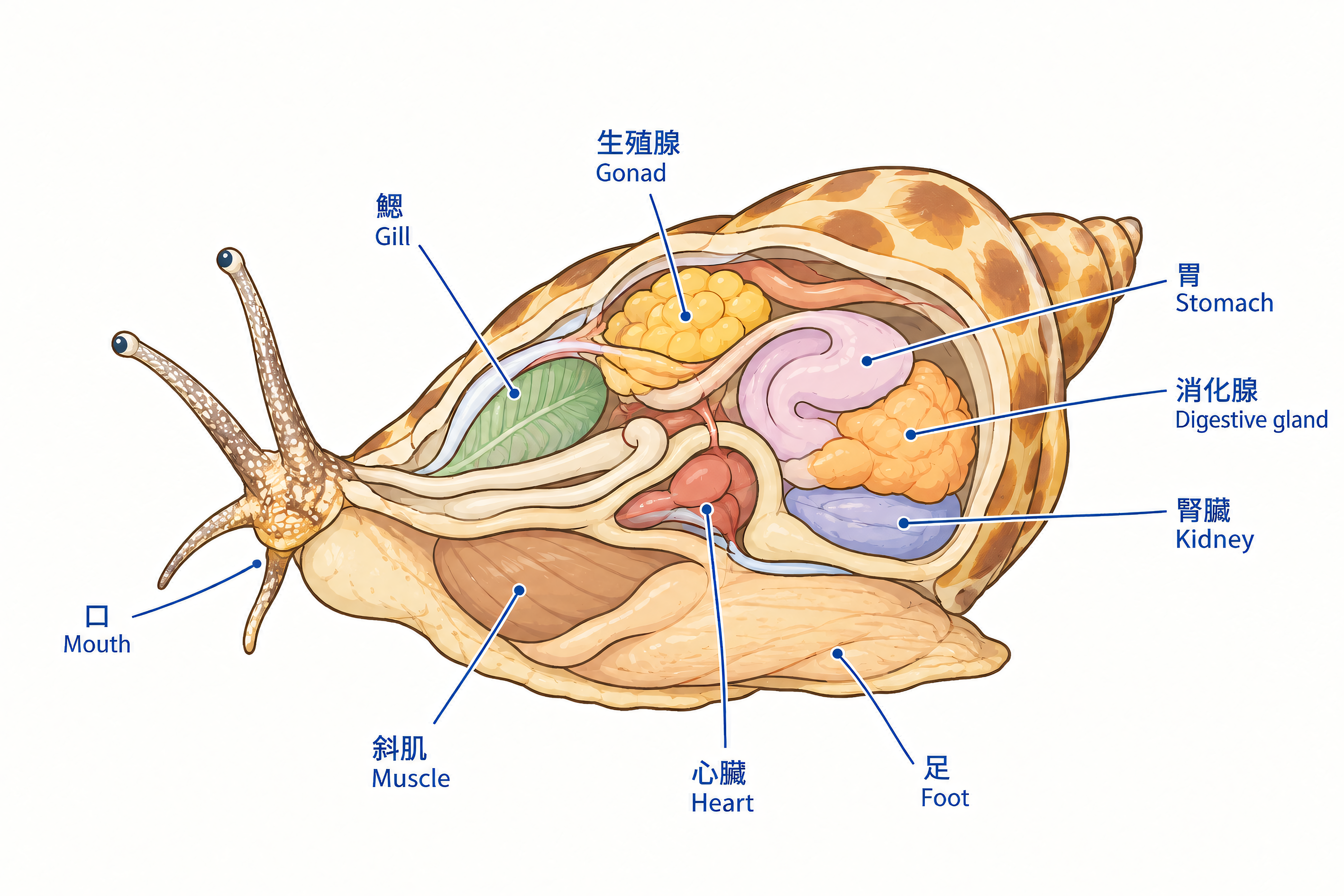
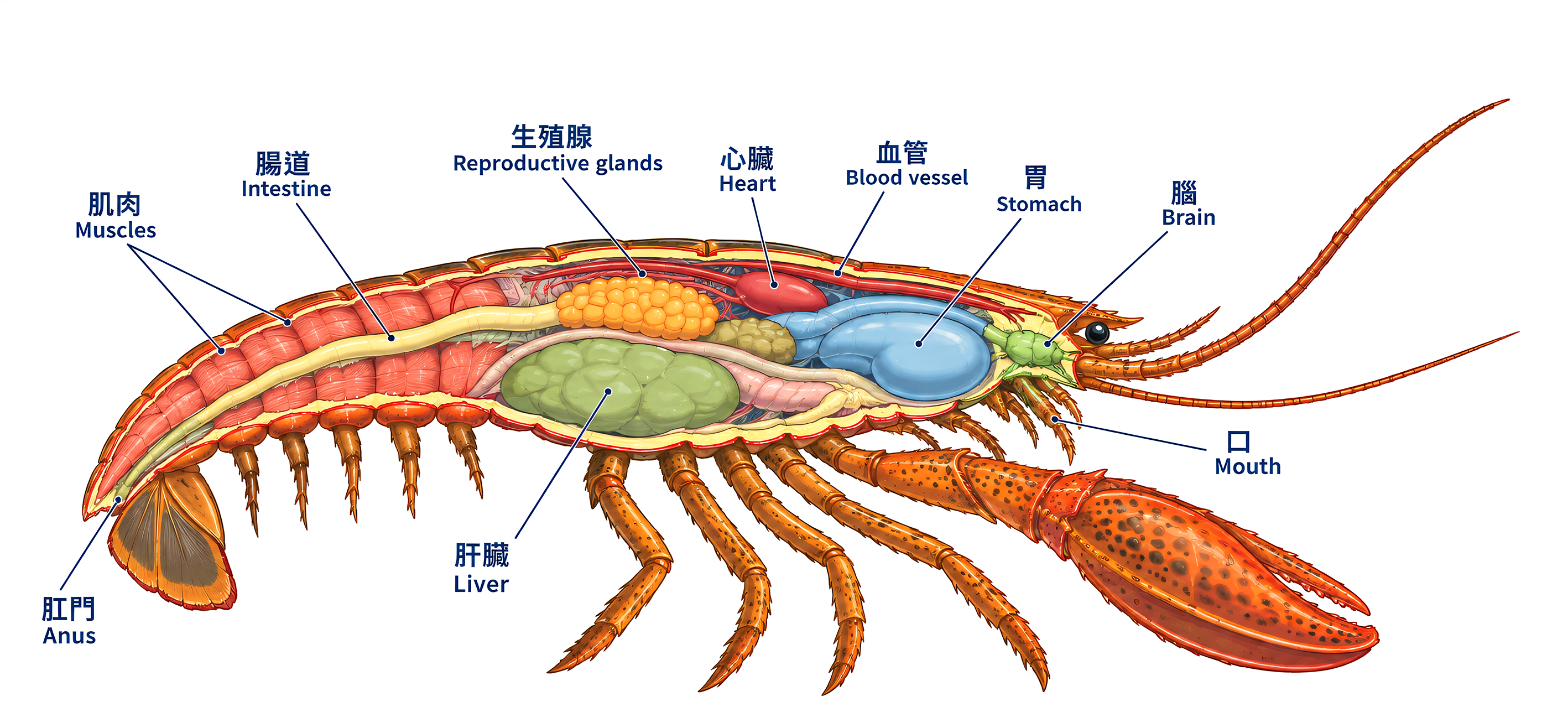
Illustration 1: PSP toxins have been reported to be concentrated in the digestive gland of some gastropods (e.g. whelks and sea snails) and the liver (hepatopancreas) of crustaceans (e.g. crabs and lobsters) (For illustrative purpose only).
How Do PSP Toxins from Algae End Up in Seafood?
The journey of PSP toxins begins with microscopic marine algae (phytoplankton) in the ocean. Under specific environmental conditions, such as warm water temperatures and abundant nutrients, algae can multiply rapidly, creating massive blooms often referred to as “red tides”. Bivalves, as filter feeders, filter large volume of seawater to obtain food and thus can accumulate significant amount of PSP toxins from microscopic algae during algal blooms. In more recent times, PSP toxins have also been detected in gastropods (e.g. whelks and moon snails) and crustaceans (e.g. crabs, lobsters, crayfish and shrimps) in various locations around the world. These gastropods and crustaceans can accumulate PSP toxins by preying on and consuming affected bivalves. The toxins are reported to be concentrated in the digestive glands of some bivalves and gastropods, and in the liver (hepatopancreas) of crabs and lobsters.
As different marine organisms have different feeding habits and process toxins differently, the risk level varies depending on the species. Although some bivalves can eliminate toxins at different rates through the depuration process, the effectiveness varies. For example, mussels clear toxins within weeks, while certain clams and scallops can retain high toxicity levels in their organs for longer periods, spanning months or even years. Depuration is therefore unlikely to be adopted commercially for post-harvest removal of PSP toxins.
Are PSP Toxins Affected by Climate Change?
With the increase in sea water temperature, some studies have noted a gradual expansion of areas that are affected by algal toxins, including PSP toxins, in recent decades. This can lead to the detection of PSP toxins in previously unaffected waters.
Control Measures
Preventing PSP relies on regular monitoring at the source for the levels of toxic algae in harvesting areas and in the shellfish harvested, as post-harvest processing is not effective in removing PSP toxins. In Hong Kong, analysis for PSP toxins in food is conducted regularly. From 2023 to August 2026, 951 samples (including samples of whelk and whelk products) had been analysed for PSP toxins. All results were satisfactory.
For consumers, purchase bivalves and crustaceans only from reliable sources. To further reduce the risk of shellfish poisoning, remove and discard all internal organs of shellfish where possible before consumption. Anyone who falls sick after eating shellfish should immediately seek medical attention and save any leftovers for investigation and laboratory testing.