

Food Safety Focus (242nd Issue, September 2026) – Article 1
A Closer Look at Cadmium in the Local Diet
Reported by Ms. Joey KWOK, Scientific Officer,
Risk Assessment Section, Centre for Food Safety
Cadmium is a metallic contaminant that is present ubiquitously in the environment through natural processes and human activities. Exposure to cadmium is a global public health concern. This article focuses on the latest findings of the Second Hong Kong Total Diet Study (2nd HKTDS), covering the occurrence of cadmium in the local diet and the results of the dietary exposure assessment.
Sources of Exposure and Health Effects
Cadmium persists in the environment. It can be taken up by plants and ingested by animals for food use, thereby entering the food supply. For the non-smoking general population, the major route of exposure to cadmium is through food. For smokers, smoking tobacco is another important source of cadmium uptake.
The human body eliminates cadmium slowly. Over years of exposure, cadmium ingested through food accumulates mainly in the kidneys and liver. Prolonged exposure to cadmium can impair kidney function and is associated with decreased bone mineral density. Cadmium is also classified as a human carcinogen on the basis of occupational studies.
Dietary Exposure to Cadmium in the 2nd HKTDS
The 2nd HKTDS assessed the levels of cadmium in food and related overall dietary exposure among the Hong Kong population. A total of 187 TDS food items covering 15 food groups were selected to represent the majority of foods consumed by the local population. Samples of these food items were collected, prepared as for consumption, and tested for cadmium.
Cadmium was detected in 125 (67%) of the food items tested, involving 12 food groups. The highest levels of cadmium were found in certain types of shellfish (e.g. lobster, oyster, cuttlefish, mantis shrimp, mussel) and seaweed. Lower cadmium levels were found in other foods including fish, vegetables, cereals, fruits, meat and poultry, dairy products and non-alcoholic beverages, etc. In general, the pattern of cadmium levels revealed in the 2nd HKTDS was in line with those reported in literature.
Dietary exposure to cadmium of the Hong Kong population was estimated by integrating laboratory analytical results with the local food consumption data. According to the findings, the dietary exposure estimates of cadmium were 5.3-6.1 and 9.3-10 µg/ kg bw/month for average and high consumers of the adult population respectively. For the younger population (aged 6 to 17), the dietary exposure estimates of cadmium were 8.8 - 9.9 and 15 - 17 µg/kg bw/month for average and high consumers respectively. As these dietary exposure estimates fell below the Provisional Tolerable Monthly Intake (i.e. 25 µg/kg bw/month) established by the Joint Food and Agriculture Organization of the United Nations / World Health Organization Expert Committee on Food Additives for cadmium, dietary exposure to cadmium is unlikely to pose health risks to the local population.
When attributing the main dietary sources of cadmium in our local diet, both the levels of cadmium detected in foods and the amount of food consumption go hand in hand. The major contributing food groups were identified as “Vegetables and their products”, “Fish, seafood and their products”, and “Cereals and their products”, accounting for about 80% of the total dietary exposure to cadmium in the local population. Of note, although the cadmium levels in vegetables and cereals were not the highest, they were consumed in large amounts and thus became important contributors of dietary exposure to cadmium in the local diet.
Comparison with Results of the 1st HKTDS and Other TDSs
Comparing with the results of the 1st HKTDS conducted between 2010 and 2014 which revealed that the dietary exposure estimates of cadmium were 7.8 - 8.8 and 13 - 15 µg/kg bw/month for average and high consumers of the adult population respectively, it is noted that the dietary exposure estimates of cadmium were lower in the 2nd HKTDS.
On the other hand, data show that the dietary exposure estimates of cadmium in the 2nd HKTDS were roughly in the mid-range as compared with TDSs conducted in other places (including Chinese Mainland, Japan, Australia, New Zealand, France, Ireland, Portugal, the UK and US).
Advice to the Public
Members of the public are reminded to maintain a balanced and varied diet to avoid excessive exposure to metallic contaminants from a small range of food items. Moreover, additional food preparation steps, including washing vegetables and fruits thoroughly to remove dust and soil, removing outer leaves from leafy greens and peeling off the skin of root crops, may be adopted to reduce cadmium levels therein.
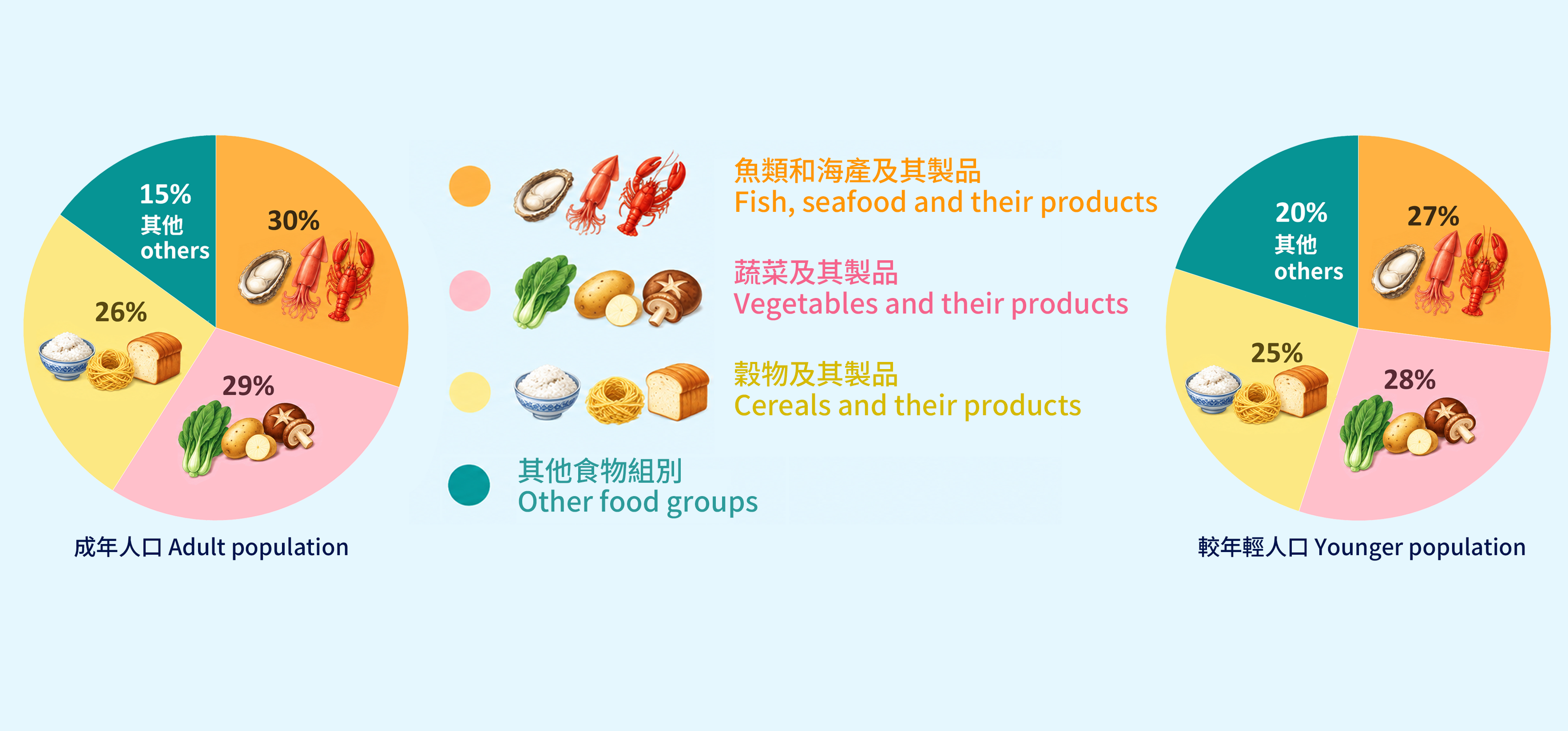
Figure 1: Percentage contribution to cadmium dietary exposure by TDS food group in the adult (left) and younger (right) populations in Hong Kong