



Food Safety Focus (236th Issue, March 2026) – Article 2
Are gluten-free food products better choices for the general population?
Reported by Ms Alam NG, Scientific Officer,
Risk Assessment Section, Centre for Food Safety
When you go to a supermarket, you can see gluten-free pasta and noodles that are made from rice, corn, or even peas and beans. When you turn to the bakery section, there are gluten-free breads made from rice or corn flour, tapioca or potato starch. When you want to pick some candies before you leave, gluten-free candies made without wheatbased thickeners or binders can be your options. These foods are usually more expensive and advertised as healthy foods, but are these food products better?
What is gluten?
Gluten is a protein fraction naturally found in wheat, rye, barley, oats or their crossbred varieties and derivatives thereof. Being a Latin word meaning “glue”, gluten has viscous, elastic and extensible properties. Based on these properties, gluten is frequently applied in leavened baked products, used as meat substitutes and texturizers as well as food additives and binders. Apart from foods using ingredients that naturally contain gluten such as bread, noodles, pasta, crackers, beer and malted milk, gluten may also be found in processed meats, sauces and gravies such as soy sauce, vegetarian meat substitutes and soup.
Is gluten bad? Why are products made without gluten?
Although gluten is neither poisonous nor carcinogenic, some people are not compatible with gluten if they suffer from gluten-related disorders. Gluten-related or wheat-related disorders are an umbrella term referring to wheat allergy, coeliac disease and non-coeliac gluten sensitivity. The body responds to gluten differently in these disorders, but develops some similar symptoms such as bloating, diarrhoea and vomiting.
Wheat allergy occurs when the body's immune system reacts to wheat proteins, including gluten. Coeliac disease is a chronic intestinal disease in genetically predisposed people, whose lining of the small intestines is damaged by their immune system when they eat gluten-containing foods. Some people who neither have wheat allergy nor coeliac disease may still experience a mixture of symptoms after eating wheat/gluten, and they may be diagnosed with non-coeliac gluten sensitivity. Nevertheless, wheat allergy is uncommon in most Asian populations, with a prevalence rate of 0.22-0.32% in Hong Kong preschoolers as reported by a study. Moreover, another study showed a prevalence rate of coeliac disease in low-risk groups (for example, non-relatives of patients) of 0.06% in East Asia including China.
Excluding gluten-containing foods from the daily diet is a lifelong treatment for those with gluten-related/wheat-related disorders, and they usually receive dietary advice from health professionals after diagnosis.
How can I know if the food products contain gluten?
Codex standard requires that foods and ingredients that are known to trigger food allergy or coeliac disease shall always be declared as allergenic foods when intentionally present in the food. In Hong Kong, the Food and Drugs (Composition and Labelling) Regulations (Cap 132W) have required prepackaged foods consisting of or containing “cereals containing gluten” to clearly specify the name of the allergenic substance on the label since 2004. Since then, you can check if wheat, rye, barley, oats, spelt or gluten is written in the list of ingredients on the label to tell if that food contains gluten. Sometimes, an allergen warning statement may also be seen near the list of ingredients to alert consumers the presence of possible allergens in the food products.
Should we choose gluten-free food products?
People with gluten-related disorders are thankful for more gluten-free food products available in the market, which expand their food choices. If you experience symptoms such as bloating, diarrhoea and vomiting after eating gluten-containing foods, you are advised to consult a medical professional to identify if avoidance of gluten from your diet is beneficial.
However, gluten-free food products are only a few of many possible choices for most people. Unless you suffer from these disorders, there is no need to exclude gluten-containing foods from your diet. While you can certainly choose pasta made from corn or peas for different textures and tastes, sticking only to a gluten-free diet may make it harder to get a balanced diet as wheat is a common staple that provides important nutrients.
Advice to the public: People with gluten-related disorders should check labels carefully for the presence of gluten-containing ingredients. For other populations, enjoy a wide variety of food to maintain a balanced diet, including food products with or without wheat/gluten.
Advice to trade: Adhere to Good Manufacturing Practice (GMP) to prevent cross-contamination of allergens. Follow local regulations to specify allergens, including cereals containing gluten, clearly on food labels of prepackaged foods. Although it is not a requirement for non-prepackaged foods, it is suggested to consider declaring allergens on the menu to provide informed choices for your customers.
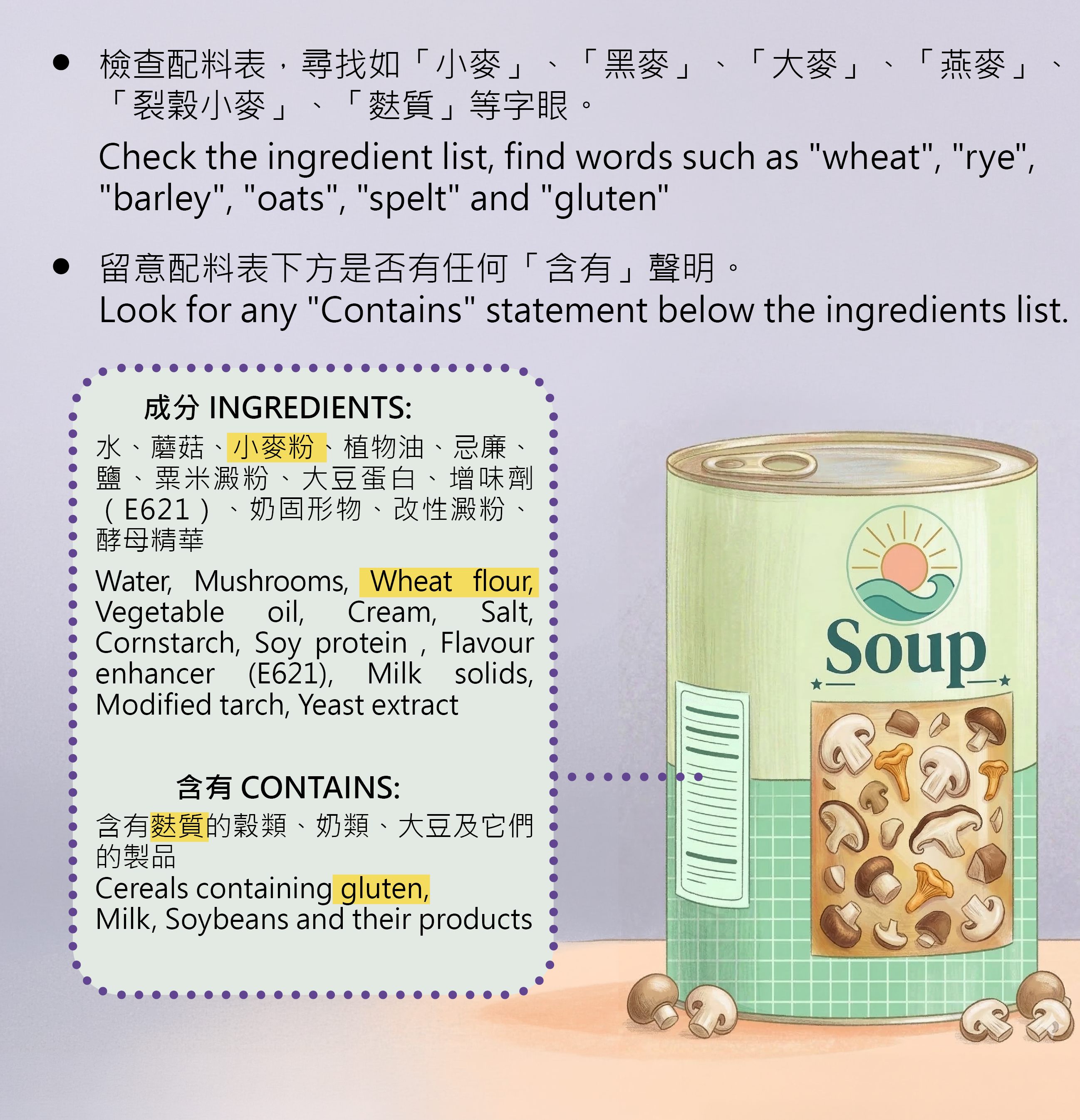
Figure: How to Spot Gluten-Containing Ingredients in Prepackaged Food