


Food Safety Focus (238th Issue, May 2026) – Article 2
Safe Preparation and Handling of Pulses
Reported by Ms. Jacqueline FUNG, Scientific Officer,
Risk Assessment Section, Centre for Food Safety
Legumes, an important component of a healthy diet, are commonly classified into three subgroups based on their usage and composition, including pulses (dried seeds such as kidney beans and lentils), oil-bearing crops (e.g. soybeans and peanuts) and vegetables (e.g. green peas and green beans). In addition to their differences in use and composition, they also present various food safety concerns. One such concern is the presence of natural toxins, particularly in pulses with relatively high levels as compared to fresh legumes. While many health authorities promote the nutritional benefits of pulses and encourage their regular consumption, it is equally important to understand how to consume them safely. Let us explore in this issue how pulses can be incorporated into the diet in a safe manner, before examining another type of legume, soybeans, in the next issue.
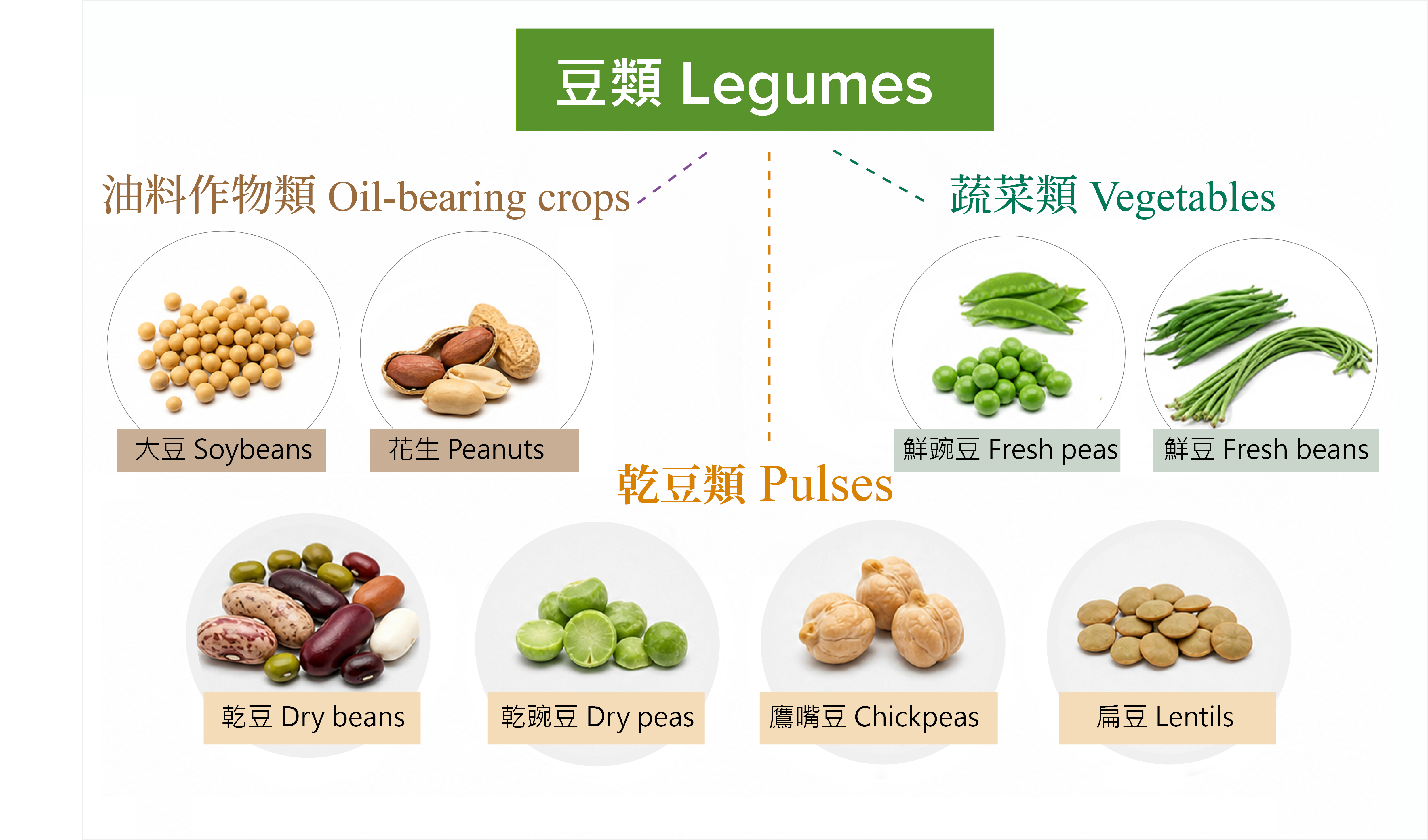
Figure 2: Classification of legumes
Pulses are the edible dried seeds of leguminous plants, including adzuki beans, kidney beans and lentils. They are harvested when fully dry and hard. Pulses are rich in protein, dietary fibre, folate, iron and potassium, and are recommended in many dietary guidelines, which list pulses as important sources of protein, alongside meat, fish, eggs and dairy.
Nutritional Characteristics and Health Benefits
In meal planning, pulses are important plant sources of protein, which contain all nine essential amino acids, but some of them are relatively low in methionine and cysteine, so they are not “complete” proteins in the same way as eggs or meat. Nevertheless, pulses are recommended as substitutes for animal protein, and if consumed together with grains, such as rice and wheat that are low in lysine, they form complementary proteins in an overall diet.
Pulses offer numerous health benefits and are commonly consumed to help prevent non-communicable diseases such as heart disease and diabetes. The dietary fibre in pulses binds cholesterol in the gut, helping to lower blood cholesterol. It also slows digestion and glucose absorption. Furthermore, by increasing stool volume and promoting intestinal transit, it supports weight management by slowing digestion and enhancing satiety, thereby helping to prevent overeating.
Although pulses are recognised as a "superfood" in recent years, they are not commonly consumed as they take a relatively long time to cook and can cause bloating and flatulence. A practical tip is to soak pulses before cooking, as this helps reduce cooking time and may lower the likelihood of flatulence.
Safe Preparation of Pulses
Raw or undercooked legumes contain natural toxins, such as lectins, phytates, tannins and phenols, which are also known as “anti-nutrients” because they limit the absorption of minerals, such as calcium, iron, phosphorus and zinc, in the gut. Phytohaemagglutinin, a type of lectin found in relatively high levels in pulses and also present in fresh legumes, agglutinates mammalian red blood cells, causing nausea, vomiting and diarrhoea. The onset of symptoms can occur within one to three hours after intake. Most people recover within three to four hours after onset, but some may require hospitalisation. To avoid food poisoning, pulses must be soaked and cooked thoroughly before consumption (e.g. soaked for at least 12 hours and then boiled vigorously for at least 10 minutes in water) to ensure the destruction of natural toxins, including phytohaemagglutinin.
Fermentation (e.g. natto chickpea) and sprouting are traditional processing methods that can also reduce anti-nutrients and enhance nutrient absorption. However, improper fermentation may pose food safety risks, including microbial contamination, mycotoxin production or incomplete detoxification. To ensure food safety, it is essential to maintain controlled conditions, use proper starter cultures and cook thoroughly.
However, improper fermentation may pose food safety risks, including microbial contamination, mycotoxin production or incomplete detoxification. To ensure food safety, it is essential to maintain controlled conditions, use proper starter cultures and cook thoroughly.
Summary
Pulses are rich in protein, dietary fibre, vitamins and minerals, and are also low in fat, making them an excellent part of a healthy diet that supports growth and development, and helps to prevent chronic diseases. To avoid gastrointestinal discomfort (e.g. bloating and flatulence) and food poisoning due to natural toxins found in pulses, pulses should be properly prepared by soaking and boiling before consumption.