Feature Article
Lunch Bringers: Decoding the Risks and Safeguarding Your Health
Many people prefer to bring their own lunch to work, but a few slip-ups may pose food safety risks. Below are three everyday examples of things went wrong, and the lessons learnt.
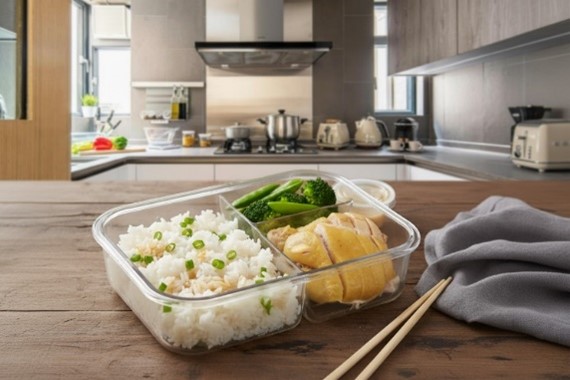
Figure : Lunch box with poached chicken
Case 1–Tender Chicken, Painful Cramps
Phyllis, a marketing executive, loved the taste of silky Cantonese poached chicken Note 1 from last night's dinner. Wanting to enjoy it again, she packed the leftovers with rice into her lunch box and slipped it into her handbag for her two-hour commute. At lunch time, she microwaved the chicken rice for only a minute without reheating it thoroughly before consumption, as she wanted to keep the chicken tender and juicy. By the next morning, she developed fever, abdominal pain and diarrhoea.
The hidden risk: This case involved a chain of errors – the chicken itself might have been undercooked to begin with, and might have harboured various pathogens, which would multiply rapidly while food sat in the temperature danger zone for a long period of time during dinner and commute. Furthermore, a short microwave blast led to uneven heating of food, which could leave cold spots that prevent pathogens from being effectively eliminated. Salmonella Note 2 is commonly found in undercooked chicken. It can cause vomiting, diarrhoea, abdominal pain and fever. Symptoms are more severe in the elderly and young children.
Tips: Cook chicken thoroughly until the core temperature reaches 75°C or above, refrigerate leftovers as soon as possible, and use insulated bags with ice packs during transportation. Always reheat food thoroughly, stirring halfway to ensure it is steaming hot all the way through.
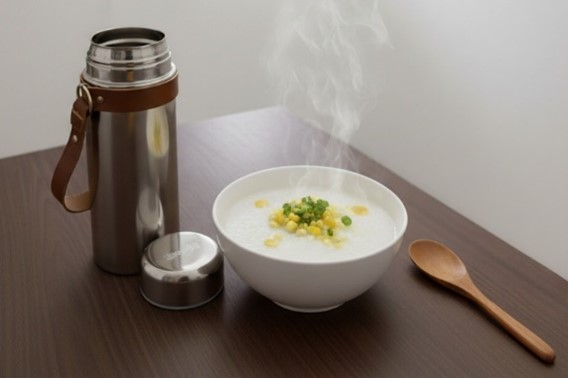
Figure : Corn congee prepared with vacuum-insulated flask
Case 2 – The Mystery of Sour Congee, A Close Call
Helen, a software developer, liked the idea of saving time in the morning. Before bed, she poured rice, corn, and boiling water into her vacuum-insulated flask, imagining a hearty meal waiting for her at her office desk the next day. At lunch time, she opened the flask with excitement – only to be hit by a sour smell. Disappointed, she poured the congee away, but in truth, that sourness might have spared her from something worse.
The hidden risk: A vacuum-insulated flask is not a cooking apparatus. Overnight, the congee had entered the temperature danger zone of 4°C to 60°C. The spores of Bacillus cereus, typically found in rice, could survive boiling and might have produced toxins. Meanwhile, corn, which contains natural sugars, provided an ideal environment for spoilage bacteria and yeasts to grow. Luckily, the sour corn warned Helen against consumption because most pathogens such as Bacillus cereus and their toxins that might be present in the rice congee would not be noticeable.
Tips: Keep hot food hot. Cook the congee until it is steaming hot. Pre-warm the flask with boiling water, then seal it tightly immediately after filling it to maintain the temperature. Do not leave food in a flask overnight.

Figure : Ham sandwich
Case 3 – Handy Ham Sandwiches, Sudden Upset
Simon, a construction site supervisor, often relied on sandwiches for lunch for convenience.
The night before work, he made himself a ham sandwich but did not wash his hands thoroughly beforehand. He stored the sandwich in the fridge and, the next morning, causally put it in the same bag with his hot coffee. At lunch time, he wolfed it down quickly before getting back to work. Not long after, he was hit with sudden nausea and repeated vomiting that left him unable to continue working that day.
The hidden risk: Staphylococcus aureus commonly lives on human skin, in the nose, and on hands. When Simon prepared the sandwich without washing his hands, the bacteria were transferred onto the ham. As the sandwich warmed up in his bag, the bacteria multiplied and produced heat-stable toxins. These toxins cannot be destroyed by reheating and are responsible for the rapid onset of symptoms – nausea, vomiting, stomach pain, and sometimes diarrhoea – typically within a few hours of eating the contaminated food.
Tips: Always wash hands thoroughly before handling food. Keep cold food cold – store sandwiches in the fridge until consumption, and transport them with insulated bags and ice packs. Do not pack them together with hot items. Never eat sandwiches that have been left at room temperature for more than four hours. Remember, once Staphylococcus aureus toxins form, they cannot be destroyed, even if the food is reheated.
Keep Your Food Safe
When bringing a packed meal, it is essential to follow the Five Keys to Food Safety: choose safe raw materials wisely; keep hands, utensils and surfaces clean; separate raw and cooked foods; cook and reheat food thoroughly; and keep food at a safe temperature (keep hot food at above 60°C and cold food at or below 4°C). For prolonged transport, make sure the food stays within the safe temperature range by using ice packs, insulated bags or pre-warmed flasks. This way, your packed lunch fuels you and keeps you going throughout the day.
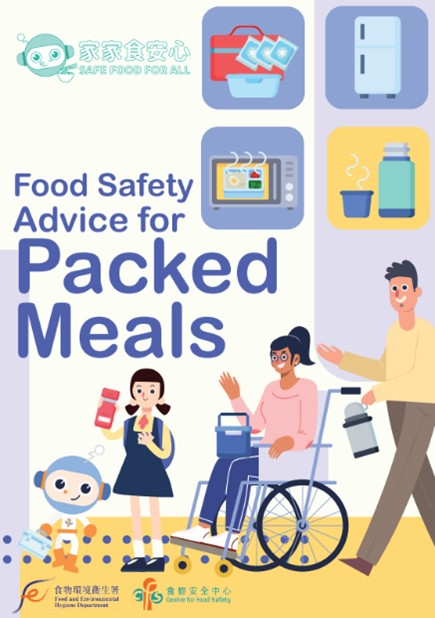
For more information about Food Safety Advice for Packed Meals, check out designated webpage:
https://www.cfs.gov.hk/english/multimedia/multimedia_pub/files/Packing%20Meal_e.pdf
Note 1: Guidelines for Safe Preparation and Handling of Poached Chicken:
https://www.cfs.gov.hk/english/food_leg/files/Guidelines_Poached_Chicken_Consumer_e.pdf
Note 2: Check out the Center of Food Safety’s designated webpage on Biological Hazards – Salmonella:
https://www.cfs.gov.hk/english/consumer_zone/foodsafety_bh_Salmonella.html
Note3: For more information about Bacillus cereus, check out “Food Safety Focus (174th Issue, January 2021) – Incident in Focus”: Bacillus cereus in Soybean Milk:
https://www.cfs.gov.hk/english/multimedia/multimedia_pub/multimedia_pub_fsf_174_01.html
Note 4: For more information about the “Five Keys to Food Safety”, please download the pamphlet Understanding Five Keys to Food Safety – Advice for Food Safety at Home:
https://www.cfs.gov.hk/english/food_leg/files/5_keys_brochure_e.pdf
Mascot ON in Lesson
1. Debunking the Myth of Leftover Vegetables
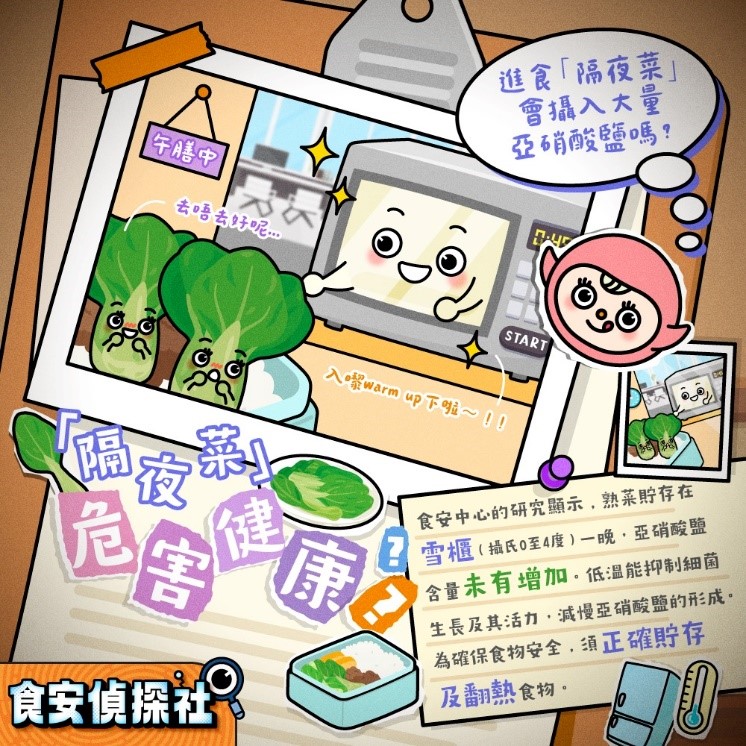
Rumour has it that you should never bring leftover cooked vegetables to work or school for lunch, otherwise you will end up with a high intake of nitrite, which is hazardous to health. Is there any truth? Let food safety detectives uncover the facts for us today.
A study conducted by the Centre for Food Safety (CFS) revealed that storing cooked vegetables in a fridge at 0°C to 4°C for 24 hours did not increase their nitrite levels. This is because a low temperature setting can slow down the conversion rate of nitrate naturally present in vegetables to nitrite.
It's worth noting that bacteria present in the air and utensils may contaminate cooked vegetables and covert the nitrate in cooked vegetables to nitrite. Therefore, proper handling and storage of cooked vegetables are what really matter.
Let's see what tips Mascot MUI have to share with you lunch-packers:
- Any cooked vegetables to be packed should be set aside before eating, placed in a clean, air-tight container, and put into a fridge at 0°C to 4°C within two hours of cooking;
- Keep cooked vegetables in the upper compartments of the fridge, and raw meat in the lower compartments;
- Eat the cooked vegetables in the fridge as soon as possible, and do not store cooked vegetables in the fridge for longer than three days;
- Put packed lunch in insulated bags with cold sources during transportation;
- Reheat food thoroughly until the core temperature reaches 75°C or above before eating;
- Reheat food once only and eat it all up as soon as possible.
Eating a variety of Vegetables in moderation is an important part of a balanced diet. To learn more about the levels of nitrate naturally present in vegetables, check out here:
https://www.cfs.gov.hk/english/programme/programme_rafs/programme_rafs_fc_01_23_Nitrate_Nitrite_Vegetables.html
2. Beware of Allergens in Food
Dining out can be a delightful experience, but it is essential for people who have food allergies to stay vigilant about food allergens. Many dishes may contain hidden ingredients that can trigger at any time allergic reactions, such as gluten in bread or crustaceans and fish in sauces. Furthermore, allergen cross-contamination due to prior handling of other food is possible if food handlers do not wash utensils and their hands thoroughly. You should proactively inform the waiter of any allergies before placing your order so that they can check with the kitchen team.
When shopping for prepackaged food, read the ingredient list carefully and select allergen free alternatives. In addition to common allergens like eggs, milk, soybeans, nuts, sulphites, fish, crustaceans and gluten in the ingredient list, look out for any “may contain” statements that warn of minute carry-over from previous production runs.
If you experience symptoms like swollen tongue, face or lips, breathing difficulties, or feeling unwell with generalised rash after eating, seek medical help immediately. Remember, awareness is key to enjoying your meals safely. For more information on allergens, visit the CFS's dedicated webpage on food allergies:
https://www.cfs.gov.hk/english/consumer_zone/safefood_all/food_allergy.html
Note 1: For more information on “Understanding Food Labels – Food Allergens”, check out this webpage:
https://www.cfs.gov.hk/english/multimedia/multimedia_pub/multimedia_pub_fsf_123_02.html
Dining Out
Freshwater Fish Dishes Must Be Thoroughly Cooked
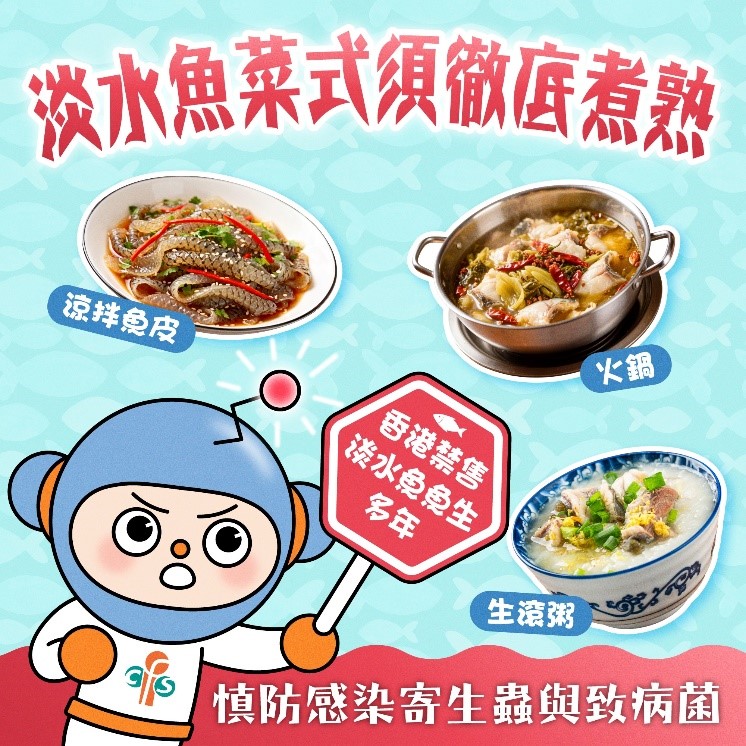
It's been a bit chilly recently, do you miss the piping hot congee with grass carp slices, fish stew with pickled vegetables, as well as the crisp and silky cold fish skin? While just hearing them makes you drooling, do remember that freshwater fish dishes must be thoroughly cooked before eating.
Freshwater fish, such as grass carp, bighead carp and snakehead, may carry Clonorchis sinensisNote 1, which can cause obstruction of the bile duct and inflammation of the liver. Group B Streptococcus (GBS)Note 2 may also be present in freshwater fish, which, if eaten raw or undercooked, can lead to infection. GBS can invade human blood, joints, heart, etc., causing sepsis, meningitis and infective endocarditis. Susceptible populations, such as the elderly, infants and young children, pregnant women and people with weakened immunity, may be at a higher risk of infection, which cannot be ignored. The sale of freshwater fish intended for raw consumption has already been prohibited in Hong Kong for a long time.
If you are going to handle or eat freshwater fish dishes, please keep Mascot ON's tips in mind:
- Do not consume raw or undercooked freshwater fish.
- Before handling raw freshwater fish or other aquatic products, clean your hands and, if possible, wear gloves; if you have any wounds on your hands, dress them properly first.
- Store raw and cooked foods separately and handle them with different knives and cutting boards to prevent cross-contamination.
Note 1: More information on Clonorchis sinensis is available at:
https://www.cfs.gov.hk/english/multimedia/multimedia_pub/multimedia_pub_fsf_52_01.html
Note 2: Further information on GBS is available at:
https://www.cfs.gov.hk/english/multimedia/multimedia_pub/multimedia_pub_fsf_184_03.html
Healthy Eating Basics and Smart Food Choices
Healthy Eating Basics
Read Food Labels to Reduce the Risk of Food Allergy
A food allergy is a reaction of the body’s immune system to some substances in food. Even a very low level of an allergenic substance can trigger an allergic reaction in susceptible individuals. The immune system normally protects the body from pathogens, but in cases of food allergies, it mistakenly identifies certain components of food as threats. Common known food allergens include gluten, crustaceans, eggs, fish, peanuts, soybeans, milk, tree nuts and sulphites.
Symptoms of food allergies include swelling of the face, tongue or lips. In severe cases, anaphylactic shock, an acute and potentially life-threatening allergic reaction, can occur after exposure to allergens. To prevent allergic reactions caused by food, members of the public should read allergen and ingredient information on food labels carefully to check for allergens of concern. The trade must comply with the requirements under the Food and Drugs (Composition and Labelling) Regulations (Cap. 132W) by legibly marking or labelling prepackaged food with a list of ingredients. If a food consists of or contains allergens, the name of the allergens must be specified in the list of ingredients.
More information on food allergies is available on the dedicated webpage at:
Smart Food Choices
Stuffed Tomato with Assorted Vegetables
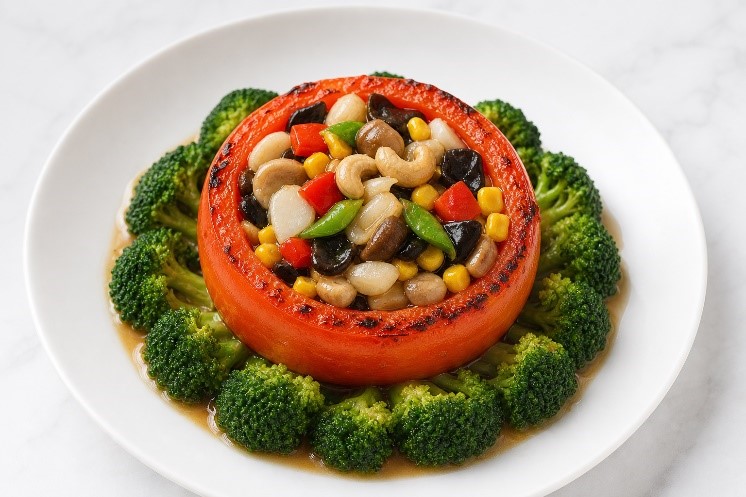
Stuffed Tomato with Assorted Vegetables, featuring the bright red tomato as the star ingredient, paired with a variety of ingredients such as wood ears, assorted mushrooms, corn kernels, lily bulbs, diced vegetables, and cashew nuts, makes a colourful and visually appealing dish. First, hollow out a tomato and pan-fry it until slightly brown. Then stir-fry the blanched vegetables until aromatic, thicken the sauce and stuff them into the cored tomato. Ring the stuffed tomato with broccoli, making the final plate beautifully layered and incredibly appetising. This dish is only seasoned with a touch of salt and sugar and cooked with canola oil. Each serving is just a little over 120 kcal, with relatively low sugar and sodium contents. It is definitely a healthy “low-salt, low-sugar” option.
(Serve 4)
- Ingredients:
Tomato 1
Wood ears 1 tael
Assorted mushrooms 1 tael
Corn kernels 1 tael
Lily bulbs 1 tael
Diced vegetables 1 tael
Cashew nuts 1 tael
Broccoli 4 heads
- Seasonings:
⅕ teaspoon of salt, ½ teaspoon of sugar, 4 teaspoons of cornstarch-water mixture, 2 teaspoons of canola oil and 8 taels of water.
- Cooking Method:
- Cut out and finely chop the core of the tomato. Place the cored tomato in a pan, then pan-fry it until slightly brown. Set aside.
- Blanch the wood ears, assorted mushrooms, corn kernels, lily bulbs and diced vegetables. Set aside.
- Stir-fry the cashew nuts in a wok without oil until aromatic. Set aside.
- Pour some oil into the wok and heat it up. Stir-fry the chopped core of the tomato until aromatic. Add water, salt and sugar, then put in 3 teaspoons of cornstarch-water mixture. Cook until the sauce is thickened. Pour the sauce onto a plate.
- Blanch the broccoli, then place it near the edge of the plate. Put the cored tomato in the centre of the plate.
- Heat some oil in the wok and stir-fry the ingredients in Step 2 until thoroughly cooked. Add 1 teaspoon of cornstarch-water mixture and cook until the sauce is thickened. Spoon the ingredients into the cored tomato. Sprinkle the cashew nuts.
Let's give it a try at home and enjoy with your family this creative vegetarian dish, which is both fresh and veggie-packed.
Check out here for details:
News on CFS
1. The 93rd Meeting of the Trade Consultation Forum
The 93rd meeting of the Trade Consultation Forum was held on 25 June 2026. The CFS and the trade exchanged their views on topics including “Frozen Confections Prepared at Points of Sale for Immediate Consumption - Food Safety Guidelines”, “Nutritional Labelling Scheme”, “Allergen Labelling Requirement of Coconut under Tree Nuts in Hong Kong”, and “Food Safety Day 2026”.

For details of the event, please visit the following webpage or scan the relevant QR code:
https://www.cfs.gov.hk/english/committee/Notes_and_Presentation_Materials_TCF93_20260625.html
2. Take Part in Food Safety Quizzes to Learn and Win Prizes
Curious about how much you know about food safety? Starting from September 2026, the CFS will introduce “Food Safety Quiz with Prizes” in Food Safety Bulletin and Food Safety Express. Everyone is welcome to join.
Entering the quiz is easy: answer three simple questions after reading carefully the articles on food safety in this issue. Interested participants could scan the QR code on the dedicated page of “Food Safety Quiz with Prizes” to access the designated online form, fill in the answers and personal particulars, and submit the form. Particuiparts who answer all questions correctly may visit the CFS's exhibition hall in person to collect an exquisite souvenir. The souvenirs are available while stocks last.
For enquiries, please contact the Communication Resource Unit of the CFS at 2381 6096.
3. Exploring the World of Food Safety in the Exhibition Hall of the Communication Resource Unit
Want to learn about food safety information without the hassle? The exhibition hall of the CFS's Communication Resource Unit at Room 401, 4/F, Food and Environmental Hygiene Department Nam Cheong Offices and Vehicle Depot, 87 Yen Chow Street West, Kowloon is a destination not to be missed. Located near Exit C of MTR Nam Cheong Station, the exhibition hall is easily accessible, making it convenient for members of the public to drop by for a visit.
Several sets of thematic exhibition panels on display in the exhibition hall provide information on local and overseas food safety cases, results of the CFS's risk assessment studies, and points to note in daily diets, etc. With the aid of audiovisual facilities, members of the public and the industry can grasp the latest food safety information in an interactive manner. What’s more, the public and trade corners offer a variety of leaflets, pamphlets, posters and teaching kits, which members of the public, schools and public bodies are welcome to collect or arrange for loan for free for teaching and promotional purposes.
The opening hours of the exhibition hall are 8:45 am to 1:00 pm and 2:00 pm to 5:30 pm, Monday to Friday. To make enquires or book a group visit, please call our hotline at 2381 6096.
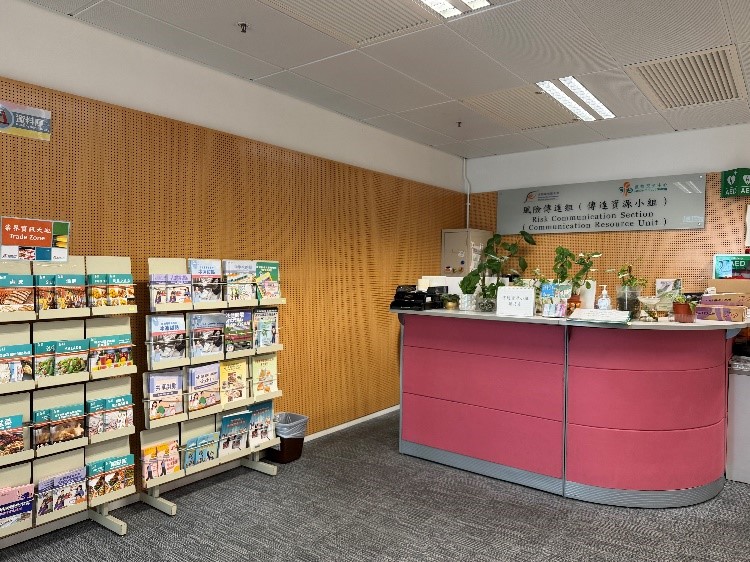
In addition, the Communication Resource Unit compiles the Food Safety Bulletin and the Food Safety Express, and holds Consumer Liaison Group meetings and focus group discussions from time to time to gather pubic views on food safety so as to tailor risk communication messages to better suit public needs.
4. Roving Exhibition on Food Safety Held at Hoi Fu Shopping Centre
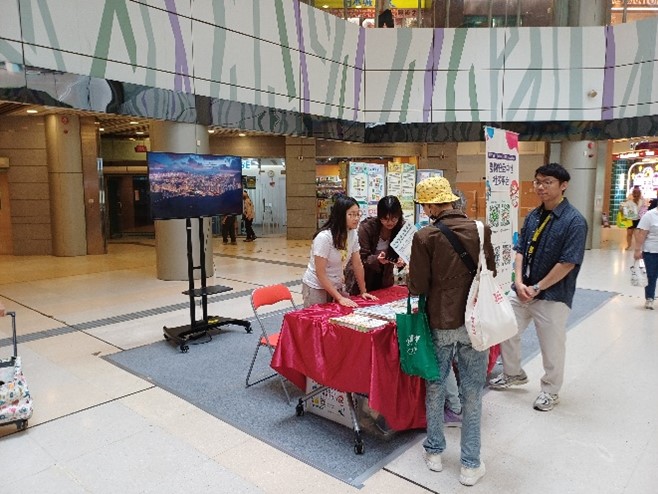
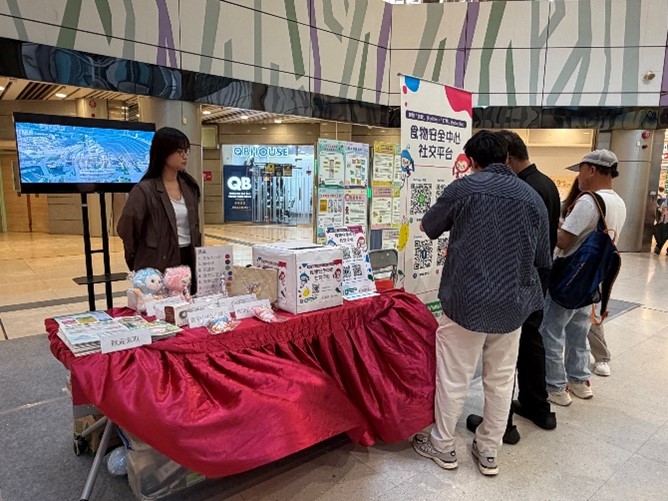
The CFS held a “Roving Exhibition on Food Safety” at Hoi Fu Shopping Centre on 13 June 2026, with the aim of enhancing public understanding and awareness of food safety. Focusing on the themes of “Nutrition Labelling”, “Trans Fat” and “Cross-contamination of Food”, the event enabled the public to have a deep understanding of how to properly read nutrition labels, reduce trans fat intake, and prevent cross-contamination of food in daily life through exhibition boards, on-site presentations and interactive sessions.
The event was bustling with visitors. Apart from getting practical food safety information, visitors could also join a lucky draw by following the CFS’s social media platforms on the spot to win exquisite gifts.
The CFS will organise a variety of promotional and educational events on an on-going basis to encourage the public to develop good eating habits and uphold food safety together.
Ask Our Mascots
Preparing for Safe Barbecuing
Barbecuing is a popular outdoor activity during the cooler months. While enjoying delicious food with family and friends, it is essential to ensure food safety to prevent foodborne illnesses. This article outlines key points of safe barbecuing, covering aspects from shopping for ingredients to cooking and eating.
Shopping for Ingredients
When shopping for ingredients at supermarkets or shops, it is advisable to buy chilled and frozen items, such as meat and seafood, last. This practice minimises the time these items stay at room temperature, thereby reducing the risk of bacterial growth. Furthermore, keep raw meat and seafood separate from other foods in the shopping cart, and check the expiry dates on packages.
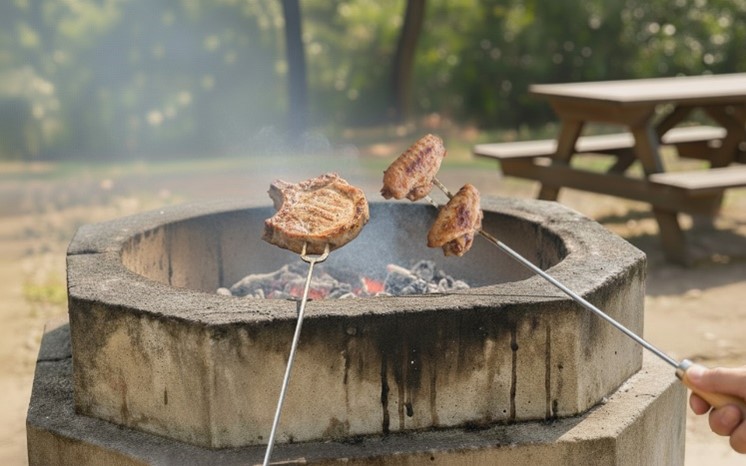
Figure: When barbecuing, cook food thoroughly to eliminate pathogens but avoid charring.
Defrosting
Frozen food must be completely defrostedNote 1 during the preparation process. Barbecuing meat with icy spots can easily lead to undercooking. Defrosting should be done in the chiller, where temperatures remain between 0°C and 4°C. Depending on the size of the meat, the defrosting process may take overnight or longer. Never defrost food at room temperature, as this encourages the growth of harmful bacteria.
Marinating and Handling
Marinating barbecue food items can enhance their flavour, but it is vital to do so safely. Keep marinated food chilled in a refrigerator. To observe hygiene and prevent cross-contamination, always use separate utensils, such as tongs, forks, disposable gloves and platters, when handling raw food. When preparing salads or side dishes, it is essential to wash fresh fruits and vegetables thoroughly under running water and to pack them separately from raw food.
Packing and Transport
When packing, use separate, leak-proof containers for raw or marinated foods to avoid cross-contamination. If food is transported to another location, insulated coolers should be used for keeping it cold. Ensure that the food is packed securely to prevent spills, and separate coolers are used for raw and ready to eat items. During transport, keep coolers out of direct sunlight and ensure that they maintain a temperature of 4°C or below for perishable items. It is also important to limit the time food is left at room temperature. Adhering to the “2-hour / 4-hour rule”Note 2 for cooked and ready-to-eat food is advisable: food that has been left at room temperature for more than four hours should be discarded.
Cooking Thoroughly and Safely
Cooking food thoroughly can effectively eliminate harmful bacteria that can cause illnesses. For most food, its core temperature should reach 75°C for at least 30 seconds. To ensure that food is thoroughly cooked, needle-type food thermometersNote 3 can be used for checking doneness. If in doubt, it is better to cook the meat a little longer than risk undercooking. Using foil to wrap food during barbecuing can help retain heat while shielding the food from fumes emitted by the heat source. Additionally, in order to reduce exposure to potentially harmful polycyclic aromatic hydrocarbonsNote 4 (PAHs), which may form during barbecuing when food is in direct contact with flames or when melted fat drips onto heat sources like hot charcoal, it is advisable to trim visible fat from meat and partially cook it (e.g. by boiling) before barbecuing, avoid dripping fat onto the charcoal, grill meat in foil packets to avoid contamination from smoke and flames, place the meat further from the heat source to avoid charring, and remove charred parts of food. In any case, the meat should still be cooked thoroughly to eliminate pathogens.
Enjoying with Peace of Mind
Once everything is cooked, it is time to enjoy the meal, but the following tips should be kept in mind. Consume food as soon as possible after it is cooked. Always use clean platters and utensils to prevent cross-contamination. Although barbecuing is a delightful experience, it is important to maintain a balanced diet that includes plenty of vegetables and fruits. Overindulgence in barbecued food items, which often contain more meat, should be avoided.
Key Points to Note:
- Defrost frozen food completely by keeping it in the chiller overnight or longer;
- Prevent cross-contamination during packaging, storing and handling food;
- Cook food thoroughly; and
- Minimise exposure to PAHs from BBQ food by removing charred parts, avoiding direct flame contact and preventing fat from dripping on the heat source.
By following these guidelines and maintaining proper hand hygiene, you will be all set for a safe and enjoyable barbecue. From shopping and defrosting to cooking and eating, ensuring food safety is key to having a worry-free outdoor feast. Enjoy your grilling while maintaining health and food safety.
Note 1: Scan the QR code to learn more about proper defrosting of food:
Note 2: Scan the QR code to learn about the temperature danger zone and “2-hour / 4-hour rule”:
Note 3: Scan the QR code to visit the dedicated webpage of “Food Thermometers”:
Note 4: Scan the QR code to visit the dedicated webpage of “Risk of PAHs in Barbecued Meats”:
Food Safety Prize Quiz
A simple test on food safety knowledge
This issue of Food Safety Bulletin features a “Food Safety Prize Quiz”. All are welcome to join. Taking part is super simple: just go to the following webpage, complete the designated online form, and then input the answers and required information. Participants who answer all questions correctly during the activity period may come to the CFS’s exhibition room to collect a souvenir. Prizes are limited in quantity, available on a first-come-first-served basis while stocks last.
Quiz page: https://c.fehd.gov.hk/index.php/apps/forms/s/NzQR4TZTCTEeLYcXLjddpg48
1. Which of the following statements about freshwater fish is correct?
- All fish species can be eaten raw
- Freshwater fish may carry Chinese liver fluke and Group B streptococcus (GBS)
- Eating freshwater fish raw is not harmful to health
- Only marine fish need to be thoroughly cooked before eating
2. Which of the following is the correct way to defrost BBQ ingredients?
- To save time, frozen foods can be defrosted quickly at room temperature.
- Defrosting should be done in the freezer, where temperatures remain between 0°C and 4°C; depending on the size of the meat, the defrosting process may take overnight.
- Some meat with icy spots can be directly barbecued to retain more meat juices.
- The defrosting time should not last too long and should not exceed two hours.
3. For reduced exposure to potentially harmful PAHs from BBQ food, which of the following suggestions is inconsistent with the content of the article?
- Trim visible fat from meat before barbecuing
- Quickly grill meat directly over the flame
- Grill meat in foil packets to avoid contamination from smoke and flame
- Avoid dripping fat onto the charcoal and remove charred parts of food
Terms and conditions
-
Participants must submit the answers and required personal particulars during the activity period through the online form designated by the CFS. The online form is accessible through the quiz’s weblink published in the Food Safety Bulletin.
-
Each participant is limited to one entry and one prize for each issue.
-
Participants must answer all questions correctly to be eligible for the prize.
-
The information submitted by the participants will be used solely for administering this quiz activity, verifying eligibility. They will not be used for any other purposes or disclosed to third parties.
-
The information provided by the participants must be true and correct. The CFS reserves the right to disqualify any participant or revoke their eligibility for the prize in case of incomplete or incorrect information, repeated entry or any fraudulent conduct.
-
Prizes must be collected in person by the winners at the exhibition room of the CFS within the specified timeframe. Information for identity verification (e.g. registered surname and last 4 digits of telephone number) must be provided at the time of collection.
-
Prizes are limited in quantity, available on a first-come-first-served basis while stocks last. Participants may call to check their availability before collection.
-
The address of the exhibition room is Room 401, 4/F, Food and Environmental Hygiene Department, Nam Cheong Offices and Vehicle Depot, 87 Yen Chow Street West, Kowloon. Its opening hours are from 8:45 a.m. to 1:00 p.m. and from 2:00 p.m. to 5:30 p.m. (Monday to Friday). It is closed on Saturdays, Sundays and public holidays. Telephone enquiries in advance are welcome where necessary.
-
The correct answers to this issue’s quiz will be published in the next issue of the same publication for readers' reference.
-
The CFS reserves the right to make all final decisions regarding this activity and prize arrangements, including the right to interpret, modify, suspend or terminate the activity
Diary of Mascot ON
Mad Honey Poisoning
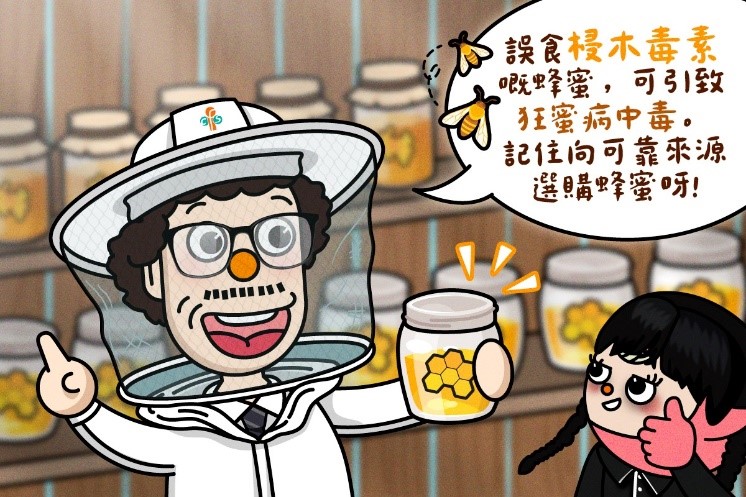
Wild honey sounds pure enough, and some believe it has a richer flavor and higher nutritional value. Whether travelling abroad or locally, people often buy a few bottles to “stock up” for the fall and winter months. So, is this kind of honey truly a gift from nature, or a sweet trap?
Honey originates from many sources, sometimes even including poisonous plants, such as plants of the Ericaceae family. If the primary source is flowering poisonous plants or honeydew from insects that feed on poisonous plants, the honey may accumulate substantial amount of natural toxins. Such as grayanotoxin Note 2 that causes mad honey poisoning Note 1. Symptoms of mad honey poisoning may include nausea, vomiting, dizziness, weakness, excessive perspiration, etc. In severe cases, low blood pressure, shock, and even death may occur.
For commercial honey, to dilute the natural toxins, pooling honey originating from different sources during processing is often carried out. However, raw or wild honey produced by some small-scale beekeepers or honey hunters may skip this step.
How can consumers reduce the risk?
- Buy honey from reliable sources; do not buy or consume products from unknown sources;
- Discard honey with a bitter or astringent taste as the consumption of grayanotoxin-containing honey may cause a burning sensation in the throat.
Check out the article titled “Beware of Mad Honey Poisoning” in Food Safety Focus (221st Issue) for relevant cases:
Note 1: Further information about cases of mad honey poisoning is available at:
Note 2: To find out more about grayanotoxin poisoning prevention, please scan the QR code