Feature Article
Norovirus in Ready-to-eat Food
Norovirus is a highly contagious pathogen and as few as 10 to 100 norovirus particles can make someone ill. It is also the leading cause of acute gastroenteritis worldwide. In 2022, it caused the highest number of human outbreaks in the European Union and about half of all outbreaks of foodborne illnesses in the United States. It is notoriously difficult to eliminate. Norovirus can survive a wide temperature range from freezing point to 60˚C, and endure chlorine-treated water at levels up to 10 ppm. Infection cases are more prevalent during colder months, and symptoms include abdominal pain, nausea, vomiting and diarrhoea. While most people will recover within a day or two, it can be severe for vulnerable people, such as the elderly, young children, and those with weakened immune systems, sometimes resulting in death.
How is Norovirus Transmitted?
The only known host of norovirus is humans; it is spread primarily through the faecal-oral route. It can also be transmitted from person to person via droplets of vomit, which has affected more people than foodborne outbreaks have in recent years as reported in some countries. The key transmission routes of norovirus are:
- Contaminated Food: Consuming food contaminated at its source is a major risk. Shellfish like oysters and other bivalves can accumulate norovirus in polluted water. Besides, cross-contamination of ready-to-eat food may occur if food handlers do not wash their hands after handling raw food, mobile phones, money, rubbish or using the toilet, especially when they are symptomatic.
- Environmental Contamination: Norovirus can survive on various surfaces like stainless steel, ceramic, countertops, etc. for a day or more, allowing transmission via contact with contaminated utensils or surfaces.
- Dirty Hands: Infected individuals can shed norovirus in their faeces and vomit, contaminating their hands. If they fail to wash their hands properly after using the toilet, they can spread norovirus to food and surfaces. Notably, alcohol-based hand sanitisers cannot substitute hand washing with liquid soap and clean water as they are ineffective in killing norovirus.
Ready-to-eat Foods Commonly Contaminated with Norovirus
Numerous ready-to-eat foods have been linked to norovirus outbreaks in many countries, including:
- Sandwiches: They often require extensive handling and are consumed without further heating, increasing the risk of contamination.
- Shellfish: Oysters and other bivalves, especially when consumed raw or undercooked, can accumulate norovirus in polluted waters.
- Salads: Fresh produce, especially leafy greens, may be contaminated by polluted irrigation water or during preparation.
- Fruits: Fresh fruits may be contaminated by unclean water or hands along the food chain. Frozen berries, such as raspberries, were predominant in past outbreaks, as freezing cannot kill norovirus
Importance of Maintaining Good Environmental Hygiene
Good Hygiene Practices (GHPs) are crucial. Besides handwashing, surfaces in food preparation areas must be cleaned and disinfected regularly. Norovirus can become airborne during vomiting, making clean-up essential. When cleaning up vomitus or stools, use a 1:49 diluted household bleach solution for disingection:

Figure 1: Foods that are likely to be contaminated with norovirus, including shellfish, fruits (particularly berries), salads and sandwiches
- Wear protective gears, including disposable gloves and face masks. Use disposable paper towels for cleaning up and avoid using mops.
- Disinfect the contaminated area by applying the 1:49 diluted bleach solution, leaving it for 15-30 minutes to effectively inactivate the virus.
- Rinse the area with water and wipe it dry.
- Remove disposable gloves and wash hands thoroughly afterwards.
Preventive Strategies
To prevent norovirus infections, it is vital to control norovirus at both farm and individual levels:
- Cook Food Thoroughly: Ensure that shellfish are cooked to a higher core temperature (i.e. 90°C) for 90 seconds, or are boiled at 100°C until their shells open and then for another three to five minutes.
- Maintain Good Hand Hygiene: Wash hands thoroughly with liquid soap and water for at least 20 seconds and ensure that liquid soap and paper towels are readily available for use by staff.
- Avoid Cross-Contamination: Use separate utensils and cutting boards for raw and ready-to-eat foods, and regularly clean and sanitise food preparation areas.
- Educate and Monitor Food Handlers: Provide regular training on GHPs and the risks associated with norovirus. Staff should understand the importance of adhering to good personal hygiene and proper food handling. Food handlers who exhibit symptoms of infection should refrain from handling food until they have been symptom-free for at least 48 hours.
In summary, norovirus poses a significant risk due to its ease of transmission. Preventing the spread of norovirus from farm to fork and from person to person can ensure food safety for all.
Mascot ON in Lesson
Ensuring Food Safety During Summer - Challenges and Best Practices
Summer time is filled with joy. Whether indoors (like schools and party rooms) or outdoors (such as beaches and yachts), you can happily share tasty food with family and friends. However, previous food poisoning outbreaks occurring during summer events starkly remind us that factors such as preparing increased quantities of food, large gatherings and extended meal times will increase the risk of food poisoning outbreaks. Common challenges including cross-contamination and improper storage temperatures can easily turn celebrations into health hazards. Generally speaking, summer time is favourable for the growth of foodborne pathogens, and the growth rate of microbial cells doubles when the temperature increases by 10°C until it reaches the optimal growth temperature. In particular, the optimal growth temperatures for both Vibrio parahaemolyticus and Staphylococcus aureus are 37°C. This article will explore major food safety challenges during large food gatherings in summer, and share practical tips so that everyone can eat safely and have a great time.
Encountering the Challenges – Cross-contamination and Improper Storage Temperatures
A variety of foods, including those raw, ready-to-eat (RTE) and cooked, are often handled in food preparation areas and kitchens. Cross-contamination may occur if these foods are handled with the same set of utensils, kept in the same storage compartments or processed in close proximity in the same area. Certain high-risk ingredients, such as eggs contaminated with Salmonella or oysters carrying norovirus, will pose serious food safety threats if not handled or processed properly. Contamination can also occur if food handlers do not properly wash their hands during food preparation. Consumption of contaminated food can lead to foodborne illnesses.
Another critical risk is improper temperature control, which allows food to remain in the temperature danger zone between 4°C and 60°C for a prolonged period, facilitating the proliferation of food poisoning-causing bacteria. Preparation of food in bulk in advance, improper defrosting procedures and insufficient manpower can easily lead to prolonged storage of food ingredients at unsafe temperatures, especially in hot summer. In addition, for some food serving methods like party catering services, food may be displayed without proper temperature control if it is not properly handled. Some foods such as frozen confections may melt when they are stored at improper temperatures, while others may show no obvious signs of spoilage even when pathogens have begun to multiply.
Inadequate or uneven heat treatment can also lead to the survival and multiplication of microorganisms in food after cooking. Dishes prepared in bulk, such as thick cuts of barbecued or smoked meats, may have undercooked portions underneath the food surface. Likewise, frying and microwave oven heating may fail to deliver sufficient heat penetration, leaving some parts of the food at unsafe temperatures and allowing pathogens to survive and multiply.
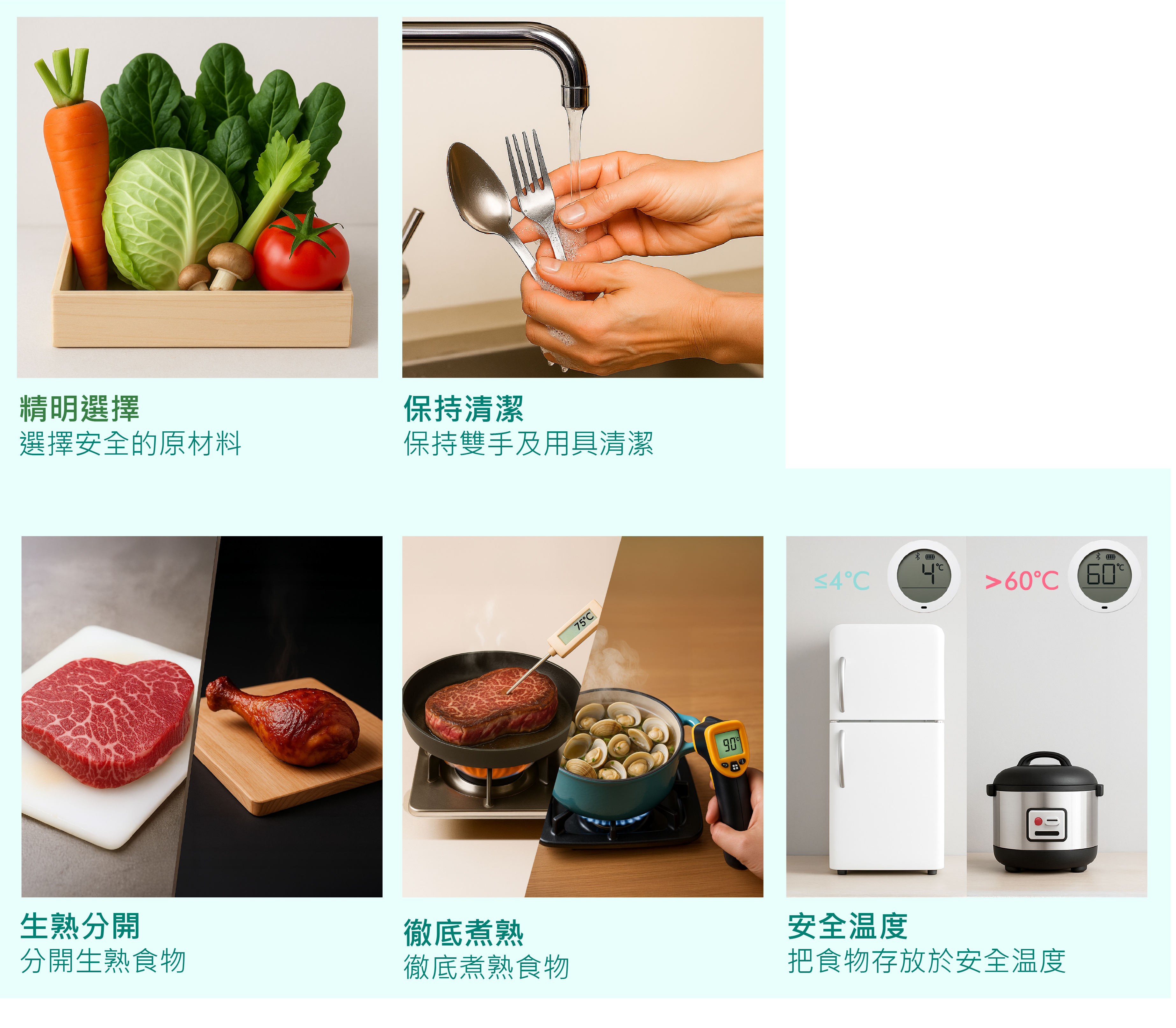
Figure 2: Five Keys to Food Safety.
Best Practices to Reduce the Risks - Five Keys to Food Safety?
To effectively reduce food safety risks, it is essential to implement the Five Keys to Food Safety Note 1:
(i) separate raw and cooked foods – store raw, RTE, and cooked foods separately (ideally in different refrigerators). If foods are to be stored in one shared unit, put raw foods in covered containers and place them below RTE and cooked foods; (ii) prevent cross-contamination – use separate and dedicated utensils for handling raw, RTE and cooked foods in different food preparation areas which are clearly delineated, and ensure all utensils and equipment are properly sanitised before use; and (iii) wash hands – rub hands with water and liquid soap for 20 seconds thoroughly to maintain good hand hygiene.
Maintaining safe food temperatures is critical for preventing food spoilage and bacterial growth. Store RTE and cooked foods not for immediate use at 4°C or below (cold foods) or above 60°C (hot foods). Defrost frozen foods only by moving them from the freezer to the fridge, placing them under cold running water or microwaving. Never defrost foods by leaving them at room temperature. Adhere to the "2-hour/4-hour rule" for food items in the temperature danger zone (between 4°C and 60°C).
To ensure foods are cooked thoroughly, insert a food thermometer into the centre of the thickest part of the food (avoiding bones and internal surfaces of the container) to confirm the core temperature reaches 75°C or above for at least 15 seconds. Oysters and shellfish must be heated to 90°C for 90 seconds, or boiled at 100°C until their shells are open and then cooked for another three to five minutes. The thermometer should not touch a bone or the sides of the container. If no food thermometer is available, cook or reheat the food thoroughly, such as boiling soups and stews for at least one minute and cooking eggs until the yolks are firm. When microwaving, stir and rotate the food between each heating cycle to eliminate cold spots and ensure even heat distribution.
Note 1: More information on "Five Keys to Food Safety" is available at:
https://www.cfs.gov.hk/english/consumer_zone/safefood_all/five_keys.html
Dining Out
Making Street Food Safer: Survey Insights and Practical Tips
Street food is beloved by both locals and tourists. A dazzling array of stalls offer a wide range of delicious foods from savoury siu-mais, curry fish balls and lo-shui skewers to sweet egg waffles and refreshing fruit tea. Yet, the growing popularity of street food has caused much concerns about food safety and hygiene issues, which cannot be ignored.
Street food has not been the major source of food poisoning over the past two decades. Uncooked or undercooked dishes, such as raw oysters and egg products, served in restaurants are indeed the main causes of food poisoning. Nonetheless, there have been sporadic incidents in recent years, including Salmonella contamination in cold-served lo-shui pig oviduct skewers, and salty chicken at food expos, which highlight that street food safety remains a concern. Salmonella can cause severe food poisoning, with symptoms like nausea, vomiting, abdominal pain and fever. It is especially dangerous for young children and the elderly.
Street food stalls often operate in crowded places and serve large numbers of customers every day, making it easy to overlook safety measures. To identify knowledge gaps and areas for improvement, the Centre for Food Safety (CFS) conducted a survey on the knowledge, attitudes and practices of street food handlers through questionnaires, site visits and face-to-face interviews in 2024. The results showed that most handlers demonstrated basic hygiene knowledge, particularly the necessity to cook food thoroughly. They also generally had a positive attitude to food safety and adhered to basic hygiene principles, such as practising the "first-in-first-out" principle in handling ingredients and food, as well as carrying out daily deep cleaning. However, the study also found that the hygiene practices of some handlers were less their ideal, such as not changing gloves between tasks, handling money and food simultaneously, thawing frozen meat at room temperature, failing to keep cold foods below 4°C, and storing cooked food uncovered in refrigerators. These malpractices will compromise food safety. Food handlers of permanent stalls, who are usually full-time, showed a stronger commitment to food safety than those of temporary stalls, or part-time workers. Notably, food handlers with relevant training or holding a food hygiene supervisor certificate scored significantly higher in knowledge and attitude. The CFS also collected consumers' views during the same period through the Consumer Liaison Group Note 1. Some members indicated that the use of unclean utensils during food preparation or the presence of flies and cockroaches in the stalls would put them off, and that they would pay attention to the hygiene conditions of both the staff and stalls when choosing street food.
Based on these findings, the CFS issued trade guidelines on street food stalls Note 2, covering personal hygiene, environmental hygiene and food handling, with highlights on areas of concern. The guidelines also contain notes to temporary food stall organisers and operators and links to the bazaar application guide and hygiene supervisor training courses of the Food and Environmental Hygiene Department (FEHD). The FEHD strongly encourages all food handlers to regularly attend food safety talks provided for free by the CFS, and operators of street food stalls to acquire a hygiene supervisor certificate. The hesitation of some consumers to buy food from street food stalls owing to concerns over the stalls' hygiene conditions showed that food safety is closely tied to business success.In a competitive market, overlooking hygiene risks will harm both customers' health and business reputation.
Consumers visiting street food stalls should choose vendors that have good hygiene and handle food properly, and opt for items that are cooked on the spot and served hot instead of those that have been left out for a long time. They should thoroughly wash or sanitise their hands before eating. Susceptible groups such as the elderly, young children, pregnant women, and persons with weakened immunity should avoid high-risk street foods. These include cold dishes and drinks such as prepared cold noodles, lo-shui skewers, salads, frozen confections and iced drinks, which are prone to bacterial growth. They should also refrain from eating any raw or undercooked food.
Overall, street food stalls are an important part of urban food culture, yet operators must strike a balance between keeping their stalls appealing and staying vigilant about food safety. By adopting the CFS's guidelines, actively pursuing training, and prioritising hygiene, operators can ensure their businesses thrive while safeguarding public health.
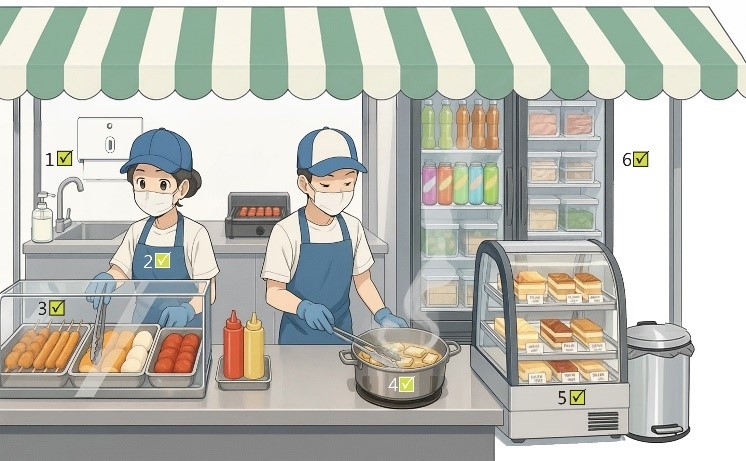
Figure 3: What to look for when choosing a street food stall
- A clean stall, with handwashing facilities and covered trash bins.
- Food handlers wear clean clothing, tie back or cover their hair, wear a mask, and do not serve food with bare hands.
- Food is protected by barriers, has a fast turnover, and is not kept at room temperature for long.
- Hot foods are cooked or reheated on the spot.
- Cold foods are displayed in a chiller.
- Foods are covered and stored neatly in a refrigerator.
Note 1: Welcome to join the Consumer Liaison Group. For details, please scan the QR code:
Note 2: Download the Street Food Stalls – Food Safety Guidelines for Food Businesses:
Healthy Eating Basics and Smart Food Choices
Healthy Eating Basics
Be a Responsible Snacker, Read the Labels

As soon as the recess bell rings, the first thing students think of is rushing down to the tuck shop to grab some snacks. Crisps, spicy strips, prawn crisps, and fizzy drinks in front of you all look tasty, but what "secrets" are hidden behind them? What should you look out for before buying? The key is knowing how to read a food label.
For a prepackaged food product, the food label is like its "identity card", which contains a lot of important information:
Nutrition labels
Compare the nutrition labels of different food products/drinks and choose those with less sodium, sugar and fat.
The CFS's resource materials on nutrition labelling:
List of Ingredients
The ingredients on the list of ingredients are listed in descending order of weight or volume determined as at the time of their use when the food was packaged. Students with food allergies should also check the ingredients carefully for any allergens.
The CFS's webpage on Labelling Guidelines on Food Allergens, Food Additives and Date Format:
Durability
A "best before" date is about food quality, indicating the date up to and including which the food can reasonably be expected to retain its specific properties if properly stored. A “use by” date, on the other hand, is related to food safety and is applicable to foods which, from the microbiological point of view, are highly perishable and likely after a short period to constitute an immediate danger to human health. Do not eat food past its "use by" date.
Let's learn how to read food labels together so we can look after our health while enjoying our snacks. And mind your manners when you eat: "sit still, take small bites and chew slowly" and watch out for foods with a high choking risk. You might also want to check out the dedicated webpage:
Smart Food Choices
Baked chicken with lemongrass and garlic – both healthy and tasty
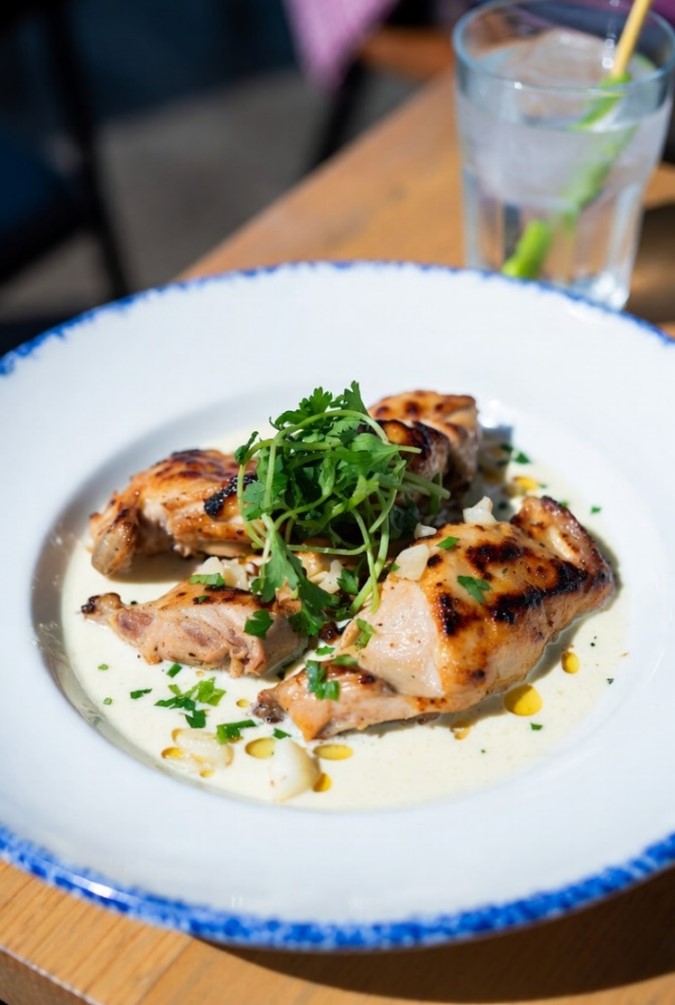
Want to eat healthily without sacrificing great taste, why not try "Baked chicken with lemongrass and garlic"? This dish uses vegetable oil (e.g. canola oil), which contains unsaturated fatty acids, and is "baked" instead of "pan-fried", cutting down the amount of oil significantly. After removing the fat from the chicken thighs, marinate them with lemongrass, garlic slices and other ingredients. Then bake until golden brown. Served with crispy garlic slices, this dish is aromatic, and low in oil, salt and sugar. Easy to make, it is a perfect choice for busy Hongkongers. Hurry up! Follow the recipe and give it a try!
- Ingredients: (Serve 4)
Chicken thighs 2 (approx. 320g)
Garlic 5 cloves
Corn oil 1/4 teaspoon
- Ingredients for marinade:
Lemongrass, finely chopped 1 stalk
Salt 1/2 teaspoon
Sugar 1/2 teaspoon
Cornstarch 1/2 teaspoon
Shaoxing wine 2 teaspoons
- Steps:
- Rinse the chicken thighs, and remove the fat. Mix well with the marinade and let stand for about 30 minutes.
- Preheat the oven to 200℃.
- Rinse and slice the garlic, and lay the garlic slices in a cooking pan.
- Brush corn oil on the chicken thighs. Place them on top of the garlic. Bake for about 30 minutes.
- Remove the tray from the oven and turn the chicken thighs over. Then continue baking until the chicken thighs are well done.
- Remove the pan from the oven and skim the fat off the chicken thighs. Layer a plate with garlic slices. Remove the skin and the bone, and chop the thighs into smaller pieces, then put the chicken pieces on top of the garlic slices and serve
If you are interested in finding out more, check out the "Recipes":
News on CFS
1. The 92nd Meeting of the Trade Consultation Forum
The 92nd meeting of the Trade Consultation Forum was held on 26 March 2026. The CFS and the trade exchanged their views on topics including Sushi, Sashimi and Meat to Eaten Raw - Food Safety Guidelines for Food Business, Trade Guidelines on Regulation of Konjac-containing Jelly Confectionery, Microbiological Quality of Ready-to-eat Sauces and Like Products, Food Labelling of Prepackaged Food in Hong Kong, Food Safety Guidelines for Serving Raw Oysters, Updated Situations of "Advance Release Arrangement for Hong Kong-manufactured Food Products Entering the Mainland Market", and The Guangdong-Hong Kong-Macao Greater Bay Area Food Standards.

For details of the event, please visit the following webpage or scan the relevant QR code:
https://www.cfs.gov.hk/english/committee/Notes_and_Presentation_Materials_TCF92_20260326.html
2. Promotion of the Habit of Eating Adequate Fruit by CFS and the Department of Health (DH)
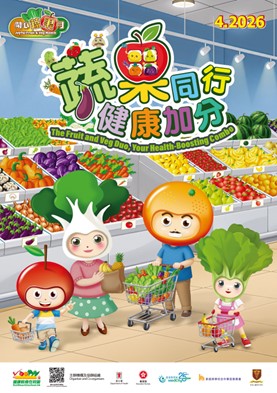
The CFS has always supported the "Joyful Fruit Month" initiated by the DH. The campaign aims to promote the habit of eating adequate fruit every day and has received widespread support from schools and various sectors of the community over the years.
In April this year, the CFS even put up community posters with the theme of "oyful Fruit Month" in public markets under the FEHD to continue to create a cheerful atmosphere and disseminate health messages.
3. CFS's New Exhibition Boards
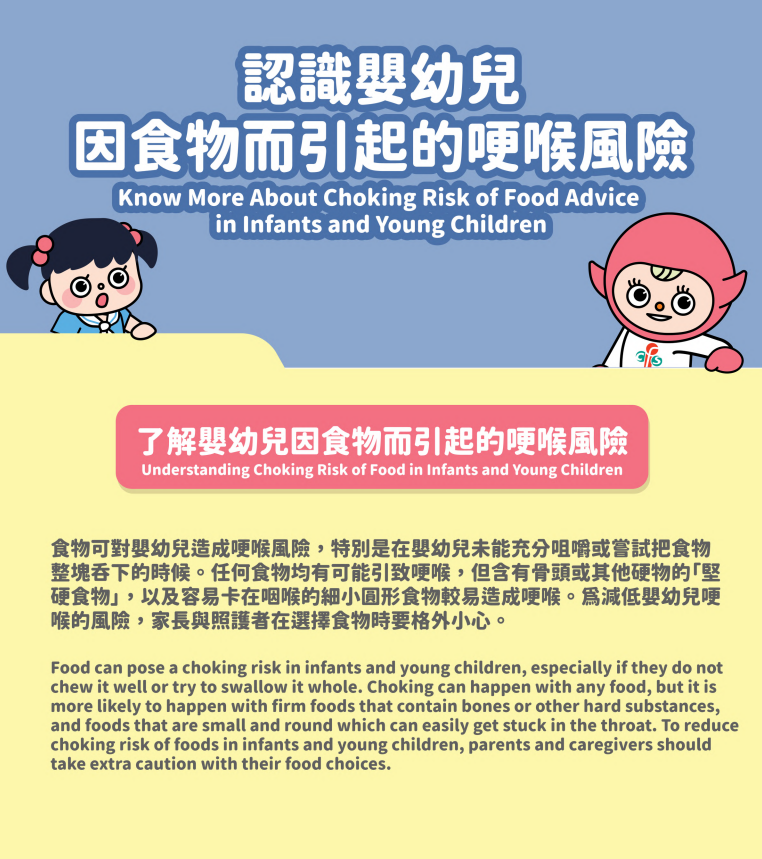
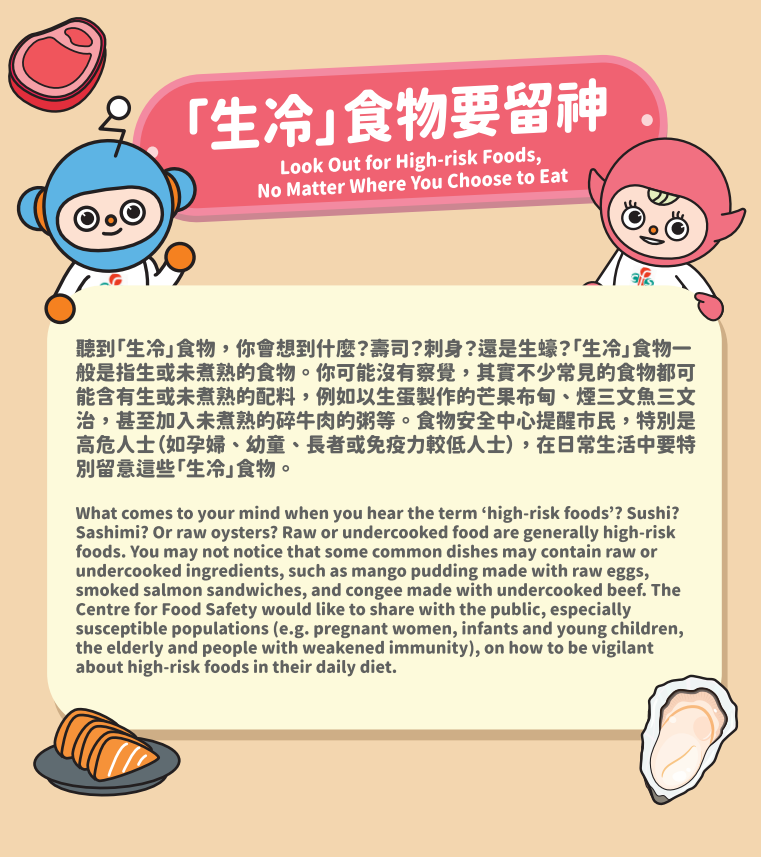
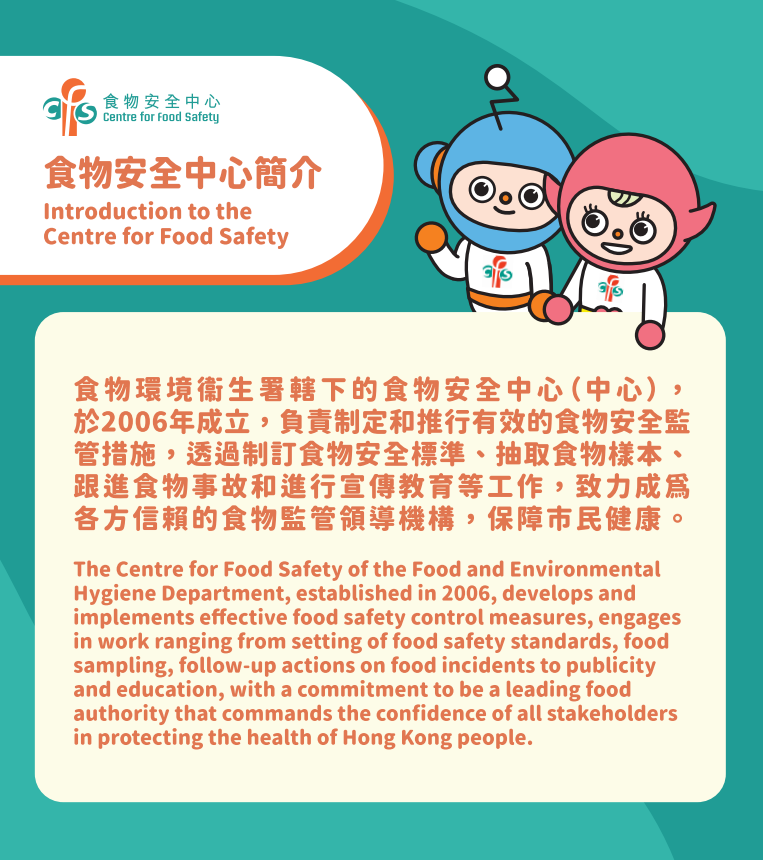
Recently, three sets of new exhibition boards are on display in the exhibition room of the Communication Resource Unit of the CFS. Centred around the themes of "Know More about Choking Risk of Food in Infants and Young Children", "Look Out for High-risk Foods, No Matter Where You Choose to Eat" and "Introduction to the Centre for Food Safety", the exhibition boards provide information such as the choking risk of food in infants and young children, risks of high-risk foods, and the work of the CFS.
- Know More about Choking Risk of Food in Infants and Young Children
Please scan the QR code for details:
- Look Out for High-risk Foods, No Matter Where You Choose to Eat
Please scan the QR code for details:
- Introduction to the Centre for Food Safety
Please scan the QR code for details:
For people concerned with food safety, if they have any questions and want to learn more, they are welcome to visit the exhibition room, where relevant leaflets are also available for free. The address and opening hours of the exhibition room of the Communication Resource Unit are as follows:
Address: Room 401, 4/F, Food and Environmental Hygiene Department Nam Cheong Offices and Vehicle Depot, 87 Yen Chow Street West, Sham Shui Po, Kowloon
Office hours:
Monday to Friday: 8:45 am to 1:00 pm; 2:00 pm to 5:30 pm
Saturday, Sunday and Public Holiday: closed
4. CFS's Online Talks on regulatory amendments to prepackaged konjac-containing jelly confectionery
The Food and Drugs (Composition and Labelling) (Amendment) Regulation 2025 came into effect on 1 April 2026, setting out new regulatory requirements for prepackaged konjac-containing jelly confectionery. To help the trade and school personnel understand the relevant requirements, the CFS held several online talks in March 2026.
The CFS held thematic talks for the food trade on 23 March and for personnel of primary and secondary schools, kindergartens and child care centres on 24 and 25 March, to explain the main provisions, points to note and enforcement arrangements of the amended regulation.
The CFS hopes that through these talks, the trade and educational institutions will have a better understanding of the new regulation and work together to create a safer catering environment.

Ask Our Mascots
Low-temperature Slow-cooking Not for Beans




In recent years, more and more foods have been cooked using low-temperature slow-cooking method to keep them tender and reduce moisture loss. However, not all food ingredients are suitable for this cooking method. These include beans, which contain the natural toxin phytohaemagglutinin.
Lectins are present in many types of beans such as red kidney beans, soya beans, green beans and yard-long beans. Among these lectins, phytohaemagglutinin is involved in defence against plant pests and pathogens.
However, this lectin can agglutinate mammalian red blood cells, and interfere with cellular metabolism and absorption of minerals by the human body.
Consumption of raw beans can even cause phytohaemagglutinin poisoning, with symptoms including upper and lower gastrointestinal illness, vomiting and diarrhoea.
That said, we do not have to worry too much because the phytohaemagglutinin toxin in beans can be destroyed by soaking and boiling the beans thoroughly in fresh water (e.g. soaking for at least 12 hours and then boiling vigorously for at least 10 minutes in water). It is worth noting that previous studies showed that low-temperature cooking (at 85℃ for an hour) failed to inactivate the toxin. Therefore, beans should not be cooked at a low temperature, e.g. in a crock pot or slow cooker.
Here's how to eat beans: Soak them well, then boil them thoroughly!
Further information on phytohaemagglutinin poisoning:
Food Safety Quiz
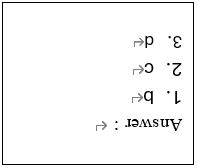
- Which of the following is the major mode of transmission of norovirus?
-
Airborne transmission
-
Faecal-oral route
-
Vector bites and stings
-
Contact with animals
.
-
- Which of the following preventive measures is effective in eliminating norovirus?
-
Clean hands with alcohol sanitiser
-
Heat food at 60℃
-
Disinfect the contaminated area by applying a 1:49 diluted bleach solution
-
Keep food frozen below 0℃
-
- Which of the following practices of street food handlers are less than ideal and can compromise food safety, according to a survey conducted by the CFS?
-
Cooking food thoroughly and adhering to the "first-in-first-out" principle
-
Carrying out daily deep cleaning and keeping cold foods below 4°C
-
Changing gloves between tasks and keeping cooked food covered
-
Handling money and food simultaneously and thawing frozen meat at room temperature
-
Diary of Mascot ON
Coral Fish and Ciguatoxins

To many, a deep-sea fish is something a decent meal cannot do without on festive occasions. Potato grouper, Hump Head Wrasse, Leopard Coral Grouper, Tiger Grouper…my mouth is watering just thinking of them! Some large-size coral fish living in deep water, however, may contain ciguatoxins, which are tasteless, odourless and heat-stable.
Ciguatoxin poisoning can cause gastrointestinal, neurological and cardiovascular symptoms, including vomiting, diarrhoea, dizziness, and numbness and tingling around the mouth, and hot and cold reversal (i.e. a burning sensation induced by contact with cold objects) is a classic symptom.
Here are the key points to note if you want to eat delicious fish with peace of mind:
- Ciguatoxins are more commonly found in large coral fish, especially those weighing three catties or more. On the contrary, the risk of ciguatoxin poisoning from eating farmed fish is very low.
- Avoid eating the head, skin, viscera (e.g. liver and intestine) and roe of coral fish, where ciguatoxins tend to accumulate.
- Avoid alcoholic beverages, peanuts, nuts or beans when consuming coral fish so as not to exacerbate the condition.
- In case of suspected poisoning, seek medical attention at once.
To find out which fish are coral fish, scan the relevant QR code to check out the designated webpage on ciguatoxins.