Risk Assessment Studies
Report No. 19
Microwave Cooking and Food Safety
June 2005
Food and Environmental Hygiene Department
The Government of the Hong Kong Special Administrative Region
Correspondence:
Risk Assessment Section
Food and Environmental Hygiene Department
43/F, Queensway Government Offices,
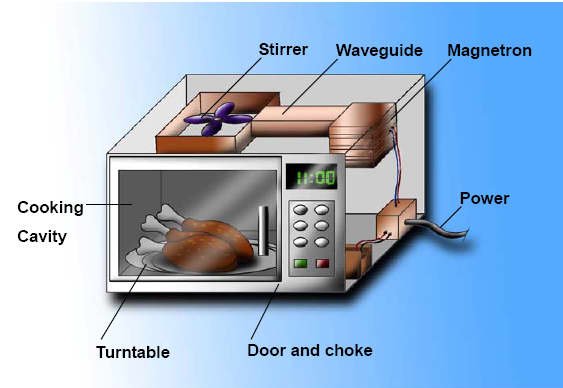
66 Queensway, Hong Kong
Email: enquiries@fehd.gov.hk
Abstract
Microwaves refer to the electromagnetic waves in the frequency range of 300 to 300,000 mega hertz. Once microwave energy is absorbed, polar molecules and ions inside the food will rotate or collide according to the alternating electromagnetic field and heat is subsequently generated for cooking. The use of microwave oven provides a convenient way to thaw, cook and reheat foods. However, the safety of the microwaved food has on and off aroused some public interest. This study reviewed the basic principles of microwave cooking, the associated potential food hazards and the health risks, if any, posed to consumers as a result of consumption of microwave food. Our review of available evidences suggested that the use of microwave cooking results in foods with safety and nutrient quality similar to those cooked by conventional cooking, provided that the consumers followed the given instructions. Advice to the public when using a microwave oven was also given.
OBJECTIVES
The aims of this study are
(i) to present the basic principles of microwave cooking;
(ii) to identify any food hazards associated with microwave cooking; and
(iii) to determine the health risk posed to consumers as a result of consumption of microwaved food.
INTRODUCTION
2. During World War II, scientists found that birds collided with radar masts would drop to the ground, become sizzling and well cooked. From then the idea of cooking food with microwaves emerged [1]. Shortly after the War, microwave oven was introduced to the public [2] .
3. Thawing, cooking or reheating foods by microwave oven is convenient and is becoming popular nowadays [3]. Most of the families and restaurants would install microwave ovens for meal preparation. However, the safety of the microwaved food has on and off aroused some public interest. This includes concern on whether harmful chemicals would be formed or nutritional quality of food would be lowered during microwave cooking.
PRINCIPLES OF MICROWAVE COOKING
Nature of microwaves
4. Microwaves refer to the electromagnetic waves in the frequency range of 300 to 300,000 mega hertz (MHz) (million cycles per second). Electromagnetic waves are waves of electrical and magnetic energy moving together through space. They include gamma rays, x-rays, ultraviolet radiation, visible light, infrared radiation, microwaves and the less energetic radio waves. Microwaves can pass through materials like glass, paper, plastic and ceramic, and be absorbed by foods and water; but they are reflected by metals[1] [4] [5] [6] [7] .
Figure 1. Electromagnetic waves spectrum

5. Microwaves have many applications. They are used to detect speeding cars, send telephone, radio and television communications and treat muscle soreness, dry and cure plywood, cure rubber and resins, raise bread and doughnuts, as well as cook potato chips. However, its application in microwave oven is most commonly used by consumers [6].
The heating process
6. Generally speaking, the alternating electromagnetic field generated inside the microwave oven would lead to excitation, rotation/collision of polar molecules and ions inside the food. These molecular frictions would generate heat and subsequently lead to temperature rise. The two major mechanisms, namely dipolar and ionic interactions, explain how heat generated inside food.
Dipolar interaction
7. Once microwave energy is absorbed, polar molecules such as water molecules inside the food will rotate according to the alternating electromagnetic field. The water molecule is a "dipole" with one positively charged end and one negatively charged end. Similar to the action of magnet, these "dipoles" will orient themselves when they are subject to electromagnetic field. The rotation of water molecules would generate heat for cooking [1] [5] [7] .
Ionic interaction
8. In addition to the dipole water molecules, ionic compounds (i.e. dissolved salts) in food can also be accelerated by the electromagnetic field and collided with other molecules to produce heat [1] [5] [7] .
9. Hence the composition of a food will affect how it will be heated up inside the microwave oven. Food with higher moisture content will be heated up faster because of the dipolar interaction. As the concentration of ions (e.g. dissolved salts increase, the rate of heating also increases because of the ionic interaction with microwaves. Even though oil molecules are much less polar than water molecules and are non-ionic, food products with high oil content has a fast heating rate because the specific heat of oil is about less than half that of water [8] .
Structure of a microwave oven
10. Nowadays, microwave oven generally consists of the following basic components [1] [7] –
- power supply and control: it controls the power to be fed to the magnetron as well as the cooking time;
- magnetron: it is a vacuum tube in which electrical energy is converted to an oscillating electromagnetic field. Frequency of 2450 MHz has been set aside for microwave oven for home use;
- waveguide: it is a rectangular metal tube which directs the microwaves generated from the magnetron to the cooking cavity. It helps prevent direct exposure of the magnetron to any spattered food which would interfere with function of the magnetron;
- stirrer: it is commonly used to distribute microwaves from the waveguide and allow more uniform heating of food;
- turntable: it rotates the food products through the fixed hot and cold spots inside the cooking cavity and allows the food products to be evenly exposed to microwaves;
- cooking cavity: it is a space inside which the food is heated when exposed to microwaves; and
- door and choke:it allows the access of food to the cooking cavity. The door and choke are specially engineered that they prevent microwaves from leaking through the gap between the door and the cooking cavity.
Figure 2. Basic structure of a microwave oven
Comparison with conventional oven
Heating process
11. Food cooked in conventional oven is heated by surrounding hot air whereas food cooked in microwave oven is heated as a result of the alternating electromagnetic field. The electromagnetic field generated is not uniformly distributed inside the cooking cavity and hence it leads to uneven heating of food [1].
12. Fat will be heated more quickly than water because of its relatively low heat capacity. On the other hand, food of high fat content can be heated at a temperature greater than 200oC whereas food of high moisture content would be cooked at temperature no greater than 100oC unless all water was evaporated. It is because water has a lower boiling temperature. Generally speaking, the time and temperature of the heating process depends on a number of factors including composition, size, quantity, shape, density and physical state of the food item. The depth of penetration of microwaves decreases when the degree of absorbency increases. Food with higher water or salt content would have greater heating at the surface as it tends to absorb more microwaves and limits the penetration of microwaves. The heating is also greater at the defrosted portion of a frozen food as water has higher microwave absorbency than ice [1] .
13. The uneven heating process may produce food items with hot and cold spots, which in turn may give rise to microbiological food safety concern. Nowadays, there have been improvements in the design of microwave oven such that the problems of uneven heating are minimised. Nevertheless, standing of food item for a while before consumption may allow time for heat re-distribution to other parts of the food item [1] [7] .
Organoleptic properties of food
14. Another difference between microwave oven and conventional one is that microwave oven cannot induce browning or crisping of food. However, this can be resolved by using microwave packaging materials called microwave susceptors when heating food. Typically susceptors are made of polyester film with particulate aluminium and paper or board. The aluminium layer would absorb microwaves and get hot quickly to make the food crispy [1] . In addition, some models of microwave oven have been specially designed with the addition of a grill heating system. Food would get crispy and brown faster when cooked in an oven with the combination of microwave cooking and grill heater.
Efficiency
15. Inside the conventional oven, heat is lost when the hot air inside the oven escapes to the outside, whereas for microwave cooking, heat is produced inside the food and there is less energy loss. On average most microwave oven takes only about 20% of time required by conventional oven and saves at least 20% of energy depending on the food type [1] .
CHEMICAL RISKS ASSOCIATED WITH MICROWAVE COOKING
16. Cooking processes, especially the high temperature ones (e.g. grilling, baking, etc.) are known to induce the production of potential carcinogens. There have been concerns that microwave cooking may also increase the production of carcinogens or mutagens in foods.
17. Currently there is no scientific evidence that the production of any carcinogenic substances would increase upon the application of microwave heating. A study examined mutagen production in cooked lamb and beef found no evidence of mutagenicity in microwave-cooked lamb chops, sirloin steak, leg of lamb or rolled beef loaf [9] . Results of another study also indicated no adverse effects of diets cooked by microwaves compared with those cooked conventionally when fed to rats [10].
18. Of the carcinogens, the formation of the chemicals heterocyclic amines (HCAs), polyaromatic hydrocarbons (PAHs) and nitrosamines are of particular concern. Many studies have been conducted to compare the effect of microwave cooking with other conventional methods on the formation of these chemicals and their findings are summarised below –
Heterocyclic amines (HCAs)
19. HCAs are a group of compounds that are present in cooked muscle meat after high-temperature cooking such as grilling / barbecuing, broiling or pan-frying. The International Agency for Research on Cancer (IARC) of the World Health Organization has classified one of the HCAs, 2-amino-3-methylimidzo[4,5-f]quinoline, as probable human carcinogen (Group 2A) [11] and comprehensively genotoxic whereas nine other HCAs as possible human carcinogens (Group 2B). Negligible amounts of HCAs are formed when meats are cooked at or below 100oC and with shorter cooking time [12] . Hence, cooking methods like microwaving and boiling can result in food with lesser amounts of HCAs. A study found that the formation of certain types of HCAs in chicken legs could be reduced by microwave cooking when compared with frying [13]. Also, precook meat in microwave oven before barbecuing would significantly reduce the formation of HCAs [1] [14] . Another study also found that compared with non-microwaved beef patties fried under identical conditions, the amount of selected HCAs decreased three- to nine-fold after microwave pretreatment [15] .
Polyaromatic hydrocarbons (PAHs)
20. PAHs refer to a large group of organic chemicals containing two or more fused aromatic rings made up of carbon and hydrogen atoms. It is generally considered that incomplete combustion is involved during the formation of PAHs. Food processing or cooking steps such as roasting, grilling, barbecuing and smoking generate PAHs and increase the level of PAHs in the food being cooked [16] . Charred food of almost any composition contains PAHs [17] while only very low level of PAHs was detected when food was cooked by some cooking steps such as steaming and microwave cooking. A study found that significant amount of PAHs was formed when beef cooked in corn oil by conventional frying and reheating whereas negligible amount was formed when cooked by microwave cooking and reheating [1] .
Nitrosamines
21. Nitrosamines are formed by a reaction between a nitrosating agent (e.g. nitrites) and a secondary or tertiary amine. The reaction may take place in certain types of foods as a result of curing, drying or cooking [18] . The most common and studied nitrosamine, N-nitrosdimethylamine (or dimethylnitrosoamine, or NDMA), has been classified as a probable human carcinogen (Group 2A) by IARC [19]. A study found that microwave cooked bacon samples gave significantly lower levels of nitrosamines than fried samples1. Results of another study revealed that cooking of dried seafood products using indirect heating such as microwave cooking and steaming caused less increase in NDMA, as compared with direct heating such as a gas range [20] .
22. In conclusion, microwave cooking did not produce significant amount of HCAs, nitrosamines or PAHs in meat products. The use of microwave cooking to precook meats before grilling or barbecuing has in fact been recommended so as to minimise the formation of HCAs and PAHs. It is probably due to the lower cooking temperature (temperature of microwave cooking normally would not exceed 100oC) and shorter cooking time of microwave cooking.
23. It has also been alleged that other chemicals may be formed as a result of microwave cooking. However, their associations with microwave cooking have not been documented scientifically.
MICROBIOLOGICAL RISKS ASSOCIATED WITH MICROWAVE COOKING
24. Nearly all foods may be contaminated by microorganisms to a certain extent. Concerns have arisen regarding whether microwave cooking can kill the food-borne pathogens as effective as conventional methods since microwave cooking generally requires shorter times and may sometimes result in lower temperatures at the food surface. Results of many studies concluded that the effectiveness of microwave cooking in killing microorganisms and spores is comparable with conventional methods provided that appropriate temperature and time are reached [1] [21] [22] . The same temperature-time relationship applies to both cooking methods, i.e. it is generally advised that raw animal food should be heated to a temperature of at least 75oC for 15 seconds to kill any foodborne pathogen that may be present in the food. Studies indicated opposite results can be attributed to uneven heating of the foods which could have been avoided by ways including covering the food during microwave cooking [23] . Therefore, during the design of microwave oven and microwave cooking instructions, the heating process and characteristics of microwave cooking have to be taken into account to ensure that adequate temperatures are reached to kill microorganisms [1] .
25. Questions have also been raised whether there are any athermal activities of microwave oven resulting in bacteriocidal effects, i.e. killing microorganisms not due to the effect of heat. The current evidence does not suggest such an effect [1] [21] .
NUTRIENT LOSSES ASSOCIATED WITH MICROWAVE COOKING
Proteins
26. Proteins would be denatured with the modification in molecular structure upon heating. The degradation rates depend on the heating time and temperature. It has been shown that the nutritive value of proteins in foods treated by conventional and microwave heating are comparable [1] [24] .
Lipids
27. Heating of food would lead to various decomposition reactions (i.e. thermolytic and oxidative reactions) of its lipid components, including triglycerides, saturated and unsaturated fatty acids, as well as cholesterol in the presence of oxygen. The subsequent increase in fat oxidation products is of particular health concern. Various studies have been conducted to investigate the stability of lipids upon microwave cooking, including studying the hydrolysis of triglycerides in soya, egg yolk and meats; fatty acid profiles in chicken and beef patties, chicken fat, beef tallow, bacon fat, rainbow trout and peanut oil; peroxidation of polyunsaturated fatty acids in meat, egg yolk and chicken. Available evidence suggested that microwave cooking did not result in significantly more chemical modifications [1] .
Vitamins
28. Many studies have been conducted to compare the retention of vitamins in different types of meat and vegetables subject to conventional and microwave cooking. Generally speaking, water soluble vitamins such as vitamin B and C are more susceptible to heat treatment. The retention of vitamins varies with size and shape of the food, cooking time, internal temperature, etc. Review of available literature showed that vitamin retention in microwaved foods is equal or better than conventionally prepared foods because of the shorter heating time of microwave cooking [1] [25] .
Minerals
29. Minerals are generally not destroyed during cooking including microwave cooking. However, they might be lost in cooking water or meat drippings. Nevertheless, a study comparing microwave and conventional braised beef found that significantly more phosphorus and potassium were retained in microwave cooking [1] .
30. Therefore, it can be concluded the nutritional values of food cooked by microwave would be comparable with those by conventional methods.
FOOD CONTACT METERIALS FOR MICROWAVE COOKING
31. Nowadays, common materials for packaging or containing foods are plastic, paper, glass, ceramics and metal. However, not all of these materials are suitable for microwave cooking. Materials like plastics, paper, glass and ceramics are generally transparent to microwaves. Nevertheless, some of them may absorb certain amount of microwave energy and hence reduce the amount of energy to be absorbed by food.
32. On the other hand, there have been concerns on the possibility of chemical migration from such food contact materials (e.g. plastics, etc.) into food during microwaving. Safety issues on the application of common food contact materials for microwaving are detailed below:
Plastics
33. Plastic containers are commonly used for microwave cooking and re-heating food and it is getting popular nowadays for carrying take-away meals. Not all types of plastic materials are suitable for microwave cooking. Even though high density polyethylene can be used for foods with high water content, it cannot be used for foods with high fat or high sugar content as these foods may reach temperature above 100oC during microwave cooking. Among plastic materials, the most commonly used ones for microwave cooking are polypropylene and crystalline polyethylene terephthalate (CPET), which have melting points of 210-230oC [1] .
34. For plastic wraps, commonly used materials are poly-vinyl chloride (PVC) and polyethylene. To enhance the flexibility of PVC films, plasticisers like di-(2-ethylhexyl) adipate (DEHA) may be added. There have been concerns regarding the potential carcinogenicity of DEHA which may migrate into foods. IARC evaluated the carcinogenicity of DEHA and concluded that there was no data relevant to the carcinogenicity to human and limited evidence for its carcinogenicity to animals. It was therefore not classifiable as to its carcinogenicity to humans (Group 3) [26] . Very low level of DEHA exposure occurs when ingesting certain types of fatty foods wrapped in plastics, for example, meat and cheese. The levels of plasticiser that might be consumed as a result of the use of plastic wrap are well below the levels showing toxic effect in animal studies [27] [28] . However, a study conducted in the UK in 1986 found that DEHA migration from PVC films to food cooked in microwave oven might be higher under certain conditions and considered that it might not be appropriate to use PVC films for lining dishes or wrapping foods in a microwave oven [1] .
Paper
35. Paper and board can also absorb some microwave energy. However, it is not ideal for microwaved food because the strength of the paper would be affected when wet [1] and not all types of paper are suitable for microwave cooking. A study found that food wrapped with waxed papers or wax bags may be contaminated with waxed hydrocarbons after microwave cooking [29] . The public should therefore check the label/package of the waxed paper utensils whether they are microwave safe before use.
Glass
36. When food is microwaved, heat is also retained in the glass. The degree of energy absorption depends on the types of glass. Moreover, microwave energy can be superimposed at the centre after passing through the glass containers, particularly the ones with small radius. Hence, the temperature at the centre might be much higher than the outside [1] .
Ceramics
37. Ceramics itself is suitable for microwave cooking. However, it has been observed that sparks caused by electric arcing occurred when ceramic container with a metal gilded rim was used in a microwave oven. The arcing effect was resulted from reflection or bouncing-off microwaves from the metallic components. Then the air between two metallic components nearby would become ionised and luminous electric current would in turn pass across the gap between the two components. Extensive arcing is undesirable because it would damage the magnetron inside the microwave oven [1].
Metals
38. Generally speaking, microwave energy would be reflected by metals and not be able to penetrate it. Because of the potential arcing effect occurred in the microwave oven as described in para. 37, the use of metal containers for microwave cooking is therefore not recommended. However, some special types of packaging materials, e.g. susceptors or popcorn bags, are lined with a metal layer such that the foods can reach higher temperatures for browning or popping effects.
39. In conclusion, appropriate usage of packaging materials during microwave cooking help minimise the risks resulted from chemical migration from packaging materials.
OTHER ISSUES ASSOCIATED WITH MICROWAVE COOKING
Physical burns
40. Heating of only water in a clean cup using microwaves may result in superheated water, i.e. water reached temperature higher than the boiling point without appearing to boil. Any disturbance of the water, e.g. movement of the cup or addition of other ingredients, would lead to eruption of boiling water out of the cup and causing injuries. To avoid superheated water, one should avoid excessive heating of water or liquids in the microwave oven, or let the water stand for at least 30 seconds before moving it or put other ingredients into the water [6] .
41. Cooking an egg within its shell would lead to steam built-up inside the shell and subsequent explosion of the egg. To avoid this problem, eggs can be cooked in microwave oven when the shell is removed or cracked and the egg yolk / white is pierced several times.
Radiation hazard
42. There have been some concerns about leakage of microwaves from the microwave ovens. Generally speaking, microwave ovens are specially designed such that the power is cut off when the door is open. Microwaves may be leaked out if the door does not fit well or if it is damaged. On the other hand, various international organisations and regulatory authorities have laid down safety standard for microwave oven, including the amount of microwaves that can leak out from the oven, such that there will be little or no detectable leakage of microwaves if the oven is in good condition and operates properly. The users are advised to stop using the microwave oven and arrange a qualified technician for further inspection when any problems arise [3] [6] .
CONCLUSION
43. The use of microwave oven provides a convenient way to thaw, cook or reheat foods nowadays. Many studies have been conducted to assess the safety as well as possible nutrient loss associated with microwave cooking. The best available evidence supports that the use of microwave cooking resulted in foods with safety and nutrient quality similar to those cooked by conventional methods, provided that the consumers followed the given instructions.
Advice to the public
44. The public is advised to take note of the following handling techniques and cooking practices when using a microwave oven:
General rules
- Purchase microwave ovens made by reputable manufacturers.
- Read the oven manual carefully for recommended handling techniques and cleaning methods.
- Do not operate the microwave oven if the door does not close firmly or the oven is not working properly.
- Keep the microwave oven clean.
Cookware and wraps
- Use cookware and plastic wraps specially manufactured for microwave cooking.
- Do not use containers with metallic decoration, plastic storage bags, plastic grocery bags, foam trays or aluminium foil for microwave cooking.
- Do not reuse containers that came with microwave convenience foods or take-away because they might be designed for one-time use only.
Cooking
- Observe good hygiene practices such as washing hands before and after handling food.
- Cover the food with a microwave safe lid / plastic wrap; however, leave a small part uncovered to let steam escape. The plastic wrap should not be in contact with the food during cooking.
- Cook large pieces of meat at medium power for longer periods. This allows heat to reach the centre of meats without overcooking the outer portions.
- For uniform cooking,
- cut food into smaller pieces and debone larger pieces of meat;
- put food items evenly on a dish;
- place larger / thicker portions of food towards the outside of a dish;
- stir or rotate the food several times during cooking;
- let the food stand for two minutes after cooking.
- Cook food thoroughly. Return undercooked food to the microwave oven for further cooking until it is completely cooked. Poultry and meat should be cooked until juices run clear and no pink colour remains.
- Do not over-heat water or liquids as water may be superheated without appearing to boil.
- Do not cook an egg within its shell as the steam built-up inside the shell will explode the egg. Eggs can be cooked in microwave oven when the shell is removed or cracked and the egg yolk / white is pierced several times.
Defrosting
- Remove food from packaging and put it on microwave safe cookware for defrosting. Rotate and rearrange food during defrosting.
- Defrost frozen food completely before cooking them in the microwave oven. Thawed and frozen parts in the same food may lead to uneven cooking.
- Cook thawed food immediately because some areas of the frozen food may begin to cook during defrosting in the microwave oven. Avoid keeping partially cooked food for later use.
Reheating
- Cover foods with a microwave safe lid / plastic wrap to provide safe and uniform heating.
- Vent the cover at a corner or side of the dish when using plastic wrap since some wraps tend to tighten and split upon heat.
- Leave at least an inch of air space when heating high fat or high sugar content food covering by plastic wrap as these foods might get extremely hot and melt the wrap.
- Reheat leftovers and pre-cooked food to steaming hot.
REFERENCES
- Hill, A and ILSI Europe Microwave Oven Task Force. Microwave Ovens. Brussels: ILSI Europe; 1998.
- Decareau, R.V. Chapter one: History of the microwave oven. In: Microwave foods: new product development. Trumbull: Food & Nutrition Press, Inc.; 1992. p.1-46.
- Health Canada. Radiation safety of microwave ovens. Available from: URL: http://www.hc-sc.gc.ca/english/iyh/products/micro_ovens.html
- Mullin J. Microwave processing. In: Gould, GW, editor. New methods of food preservation. London: Chapman& Hill; 1995. p. 112-134.
- Ohlsson, T. Domestic use of microwave ovens. In: Macrae R, Robinson, RK and Sadler, MJ, editors. Encyclopaedia of food science food technology and nutrition. Vol. 2. London: Academic Press; 1993. p. 1232-1237.
- Center for devices and radiological Health. Microwave oven radiation. U.S. Food and Drug Administration; 2000. [cited 04 Aug 17] Available from: URL: http://www.fda.gov/cdrh/consumer/microwave.html
- Buffler, CR. Microwave cooking and processing: engineering fundamentals for the food scientist. New York: Van Nostrand Reinhold; 1993.
- Singh, RP and Heldman, DR. Introduction to Food Engineering. San Diego: Academic Press, Inc.; 1993.
- Barrington, PJ et al. Mutagenicity of basic fractions derived from lamb and beef cooked by common household methods. Food and Chemical Toxicology 1990; 28(3): 141-6.
- Jonker, D and Til, HP. Human diets cooked by microwave or conventionally: comparative sub-chronic (13-wk) toxicity study in rats. Food and Chemical Toxicology 1995; 33(4): 245-256.
- IARC. IQ (2-Amino-3-methlyimidazo[4,5-f]quinoline): Vol. 56. France: IARC 1993. [cited 2003 Oct 31] Available from: URL: http://monographs.iarc.fr/htdocs/monographs/vol56/05-iq.htm
- National Cancer Institute. Cancer facts – heterocyclic amines in cooked meats. National Cancer Institute; 1996. [cited 2003 Nov 3] Available from: http://cis.nci.nih.gov/fact/3_25.htm
- Chiu CP, Yang DY and Chen BH. Formation of heterocyclic amines in cooked chicken legs. Journal of Food Protection 1998; 61(6): 712-9.
- Skog K and Solyakov A. Heterocyclic amines in poultry products: a literature review. Food and Chemical Toxicology 2002; 40: 1213-1221.
- Felton JS, Fultz E, Dolbeare FA and Knize MG. Effect of microwave pretreatment on heterocyclic aromatic amine mutagens/carcinogens in fried beef patties. Food Chemical Toxicology 1994; 32(10); 897-903.
- Scientific Committee on Foods of EC (SCF). Opinion of the Scientific Committee on Food in the risk to human health of PAHs in food. Brussels: SCF; 2002.
- Phillips DH. PAHs in the diet. Mutation Research 1999; 443:139-47.
- Scanlan RA. Nitrosamine. In: Macrae R, Robinson, RK and Sadler, MJ, editors. Encyclopaedia of food science food technology and nutrition. Vol. 5. London: Academic Press; 1993. p.3245-49.
- IARC. N-nitrosodimethylamine: Vol. 17. France: IARC 1978. [cited 2004 Oct 3] Available from: URL: http://www-cie.iarc.fr/htdocs/monographs/vol17/n-nitrosodimethylamine.html
- Lee SJ, Shin JH, Sung NJ, Kim JG, Hotchkiss JH. Effect of cooking on the formation of N-nitrosodimethylamine in Korean dried seafood products. Food Additives and Contaminants 2003; 20(1): 31-6.
- Welt BA, et al. Effect of microwave radiation on inactivation of Clostridium sporogenes (PA 3679) spores. Applied and Environmental Microbiology 1994; 60(2): 482-488.
- Celandroni F, et al. Effect of microwave radiation on Bacillus subtilis spores. Journal of Applied Microbiology 2004; 97(6): 1220-7.
- Decareau, R.V. Chapter eight: Microbiological considerations. In: Microwave foods: new product development. Trumbull: Food & Nutrition Press, Inc.; 1992. p.189-201.
- Petrucelli L, Fisher GH. D-aspartate and D-glutamate in microwaved versus conventional heated milk. Journal of American College of Nutrition 1994; 13(2): 209-10.
- Decareau, R.V. Chapter seven: Nutrition. In: Microwave foods: new product development. Trumbull: Food & Nutrition Press, Inc.; 1992. p.165-187.
- IARC. Di(2-ethylhexy) adipate: Vol. 77. France: IARC 2000. [cited 2001 Feb 15] Available from: URL: http://www-cie.iarc.fr/htdocs/monographs/vol77/77-02.html
- Meadows M. Plastics and the Microwave. In: FDA Consumer (November-December 2002). Washington, DC: FDA; November-December 2002. [cited 2004 Aug 17] Available from: URL: http://www.cfsan.fda.gov/~dms/fdacplas.html
- Food Standards Australia New Zealand. FSANZ finds plastic drink bottles not a safety risk. Media releases & publications – Fact sheet: 3 October 2003. [cited 2003 Oct 11] Available from: URL: http://www.foodstandards.gov.au/mediareleasespublications/factsheets/factsheets2003/
plasticdrinkbottlesf2230.cfm - Castle L, Nichol J, Gilbert J. Migration of mineral hydrocarbons into foods: waxed paper for packaging dry goods including bread, confectionery and for domestic use including microwave cooking. Food Additives and Contaminants 1994; 1191): 70-89.