Risk Assessment Studies
Report No. 6
MICROBIOLOGICAL RISK
ASSESSMENT OF SIU-MEI AND LO-MEI IN HONG KONG
AUGUST2001
Foodand Environmental Hygiene Department HKSAR
Correspondence:
Risk Assessment Section
Food and Environmental Hygiene Department
43/F, Queensway Government Offices,
66 Queensway, Hong Kong.
Email: enquiries@fehd.gov.hk
Table of Contents:
- Legal provision
- Manufacturing of Siu-mei and Lo-mei
- Microorganisms of Public Health Concern
- Physicalproperties of Siu-mei and Lo-mei
- Environmentalfactors
- Microbiological Quality of Siu-mei and Lo-mei in Hong Kong
- Hygienicquality
- Presenceof specific pathogens
- Discussions
- Conclusion and Recommendations
- Reference
- Figure 1: Flow Diagram of Siu-mei production
- Figure 2: Flow Diagram of Lo-mei production
- Table 1: Results of Microbiological Examination of Siu-mei and Lo-mei in 2000
- Annex 1: FEHD Microbiological Guidelines for Ready-to-eat Food
Risk Assessment Studies
Report No. 6
MICROBIOLOGICAL RISK
ASSESSMENT OF SIU-MEI
AND LO-MEI
IN HONG KONG
Abstract
Siu-mei and lo-mei are specially processed meat, poultry and offal products in Chinese cuisines. By definition, siu-mei would have been roasted at temperature over 200°C in the preparation. Lo-mei are braised and soaked in large volume of seasoning sauce for a period of time for flavour enrichment. In both, roasting and cooking are the critical steps to destroy the microorganisms present in raw food. However, microbiological hazards might be introduced after heat treatment. Physical properties, namely pH value, salinity value, water activity, nutrient value, and the ambient environment such as relative humidity, temperature and gaseous atmosphere, are factors influencing the microbial growth in siu-mei and lo-mei. In 2000, out of the total 596 samples, the overall unsatisfactory rate of hygienic quality was 2.2% and the unsatisfactory rate of pathogenic contamination was 0.8%. The hygienic quality of siu-mei was better at an unsatisfactory rate of 1% (4 out of 406 samples), as compared with 4.7% (9 out of 190 samples) of lo-mei. As far as specific pathogens were concerned, Salmonella spp. was found in 2 sui-mei (roasted pork and BBQ pork) and 1 lo-mei (steamed plain chicken); S. aureus was found in 1 siu-mei (BBQ pork) and in 1 lo-mei (steamed plain chicken). Post contamination and prolonged storage at ambient temperature might be the main contributing factors.
Microbiological RiskAssessment of Siu-mei and Lo-mei in Hong Kong
INTRODUCTION
Siu mei and lo mei(燒味鹵味)aregeneral terms covering a wide range of processed meat and poultry productsin the Chinese cuisines. They are often treated as a group and consideredhigh-risk items in terms of microbiological risks. However, upon closed examinations,it is identified that their characteristics are very different.
Objective
- This paper evaluates the microbiological hazards associated with consumption of siu-mei and lo-mei, examines the local food surveillance findings for the period of 2000, identifies the critical control points in the manufacturing practices and recommends improvement measures to the trade.
Definitions
- Though a traditional Chinese food originated from Guandong, there is no documented definition for the terms "siu-mei" and "lo-mei". A review on their generic production procedures and way of consumption provides some insights on the classification. The following definitions are suggested and used in this paper.
- Siu-mei is a group of meat products that has been roasted at a temperature of 200°C or above. Pork and poultry meat are often used for manufacturing siu-mei. Examples include roasted duck(燒鴨), roasted goose(燒鵝), roasted pork(燒肉、燒豬、燒排骨) and BBQ pork(义燒).
- Lo-mei is the foodstuffthat has been soaked or immersed in large volume of seasoning sauces priorto cooking. Some lo-mei items may be braised again after cooking and/or atthe time of serving. Food groups that are commonly used to produce lo-meiinclude poultry meat(貴妃雞、豉油雞、鹵水鵝、鹵水雞肶及雞翼), red meat(鹵水牛𦟌)and offal products(雞腸、鵝腸、生腸).
Legal provision
- Siu-mei and lo-mei areclassified as restricted food under Schedule 2 of the Food Business Regulationof the Public Health and Municipal Services Ordinance, Cap. 132. Manufacturingand sale of siu-mei and lo-mei in Hong Kong are subject to licensing control.A specific licence or endorsement must be obtained for the siu-mei and lo-meibusiness.
- As of March 2001, some1,700 food premises are allowed to sell siu-mei and lo-mei. The operatorsshould comply with and observe the relevant licensing requirements and conditions,and maintain their premises in satisfactory hygienic conditions. These licensingrequirements and conditions basically require the vendors to put in placeappropriate hygienic measures in the establishment for proper handling offood. For instance, there should be separate food preparation tables for siu-meiand lo-mei. The finished products should be displayed in an isolated showcasefor sale. In addition, hand-washing facilities including soap and clean watersupply should be provided for the food handlers. Health inspectors carry outregular checks to monitor compliance to these licensing requirements and conditions.
MANUFACTURING PRACTICE OF SIU MEI AND LO MEI
- The key steps of preparingsiu-mei and lo-mei are illustrated in the schematic diagrams at Figure1 and Figure 2 respectively. The raw ingredients ofsiu-mei are either fresh or frozen meat or poultry. They have to undergo pre-roastingpreparation including defrosting, washing, marinating, and even pre-cooked.Roasting is the critical step to cook siu-mei products. At a temperature of200°C or above, almost all microbiological hazards would be eliminated. Theproducts are then cooled, delivered and displayed for sale.
- As for lo-mei, the mainstep involved is the use of marinade to impart the special taste and textureof meat and offal. The meat and offal are first cooked with seasoning sauceor water, and then braised in the sauce for a period of time to enrich theirflavour. The finished products can be served hot or cold. If it is servedcold, chilling should take place at the time of braising. Pig knuckle(熏蹄)isan example of lo-mei served cold.
MICROORGANISMS OF PUBLIC HEALTH CONCERN
- Some microorganisms,such as Campylobacter spp., Salmonella spp., Clostridiumbotulinum, Clostridium perfringens and Bacillus cereus,are the normal floras naturally present in raw meat and offal (1).Some could also be introduced during food preparation, such as Staphylococcusaureus. However, whether such organisms may persist in siu-mei and lo-meiis the combined results of the physical properties of siu-mei and lo-mei andthe ambient environment.
Physical Properties of Siu-mei and Lo-mei
- Nature of food playskey role in affecting activities of the microbes, like growth, stasis anddeath (2). The most important physical properties that canaffect microbial growth in food are pH value, salinity value (salt content),water activity (aw) and nutrient value. There is scarce documentationabout these properties of siu-mei or lo-mei in the literature. However, basingon the understanding of the food preparation steps of siu-mei and lo-mei,it is recognized that most of them have relatively high salinity level andlow water activity as compared with other meat and poultry products. One studyconducted by the Department of Health Services in the State of California,USA in 1990 reported that the water activity (aw) of skin of roastedpig was low at a range of 0.72 to 0.81 (3). Low water activitywould put some microorganisms at a competitive disadvantage and have difficultiesto grow. Such inherent properties offer some protective effects to siu-meiand lo-mei against microbiological hazards.
Environmental Factors
- In addition, the characteristicsof the ambient environment, including relative humidity, temperature and gaseousatmosphere, can influence the growth of microorganisms (2,4). Water activity in food could be increased when placedin an environment with a high relative humidity. In addition, warm storagetemperature, such as room temperature, is the other factor affecting the bacteriallevels. All these contribute to a favourable environment for microbial growth.
MICROBIOLOGICAL QUALITY OF SIU-MEI & LO-MEI IN HONG KONG
- The Food and EnvironmentalHygiene Department has conducted a surveillance on siu-mei and lo-mei availableon the market for microbiological risk assessment. All samples are assessedfor the hygienic quality and pathogenic contamination. The results of 2000are analyzed and compared with the Department's Microbiological Guidelinesfor Ready-to-eat Foods. The unsatisfactory microbiological criteria for siu-meiand lo-mei are shown in Annex 1.
- A total of 596 sampleswere taken for microbiological examinations. Of these, 406 (68%) and 190 (32%)samples were siu-mei and lo-mei respectively. Details are shown in Table1.
Hygienic Quality
- The hygienic qualityof siu-mei was better as compared with lo-mei. The unsatisfactory rate forsiu-mei was lower at 1% as compared with lo-mei which was at 4.7%. Of the13 unsatisfactory samples, nearly 70% were lo-mei.They were steamed plainchicken (3 samples), pig knuckle (2 samples), cooked chicken (1 sample), redmeat (1 sample), lo shuo goose (1 sample), and duck gizzard (1 sample). Theremaining ones were siu-mei samples including 2 roasted pork , 1 BBQ porkand 1 mixed dish of rice with chicken and BBQ pork.
Presence of specific Pathogens
- Of the 406 siu-mei samplesexamined, 3 samples (0.7%) were found to contain unsatisfactory level of pathogens.Salmonella spp. was present in 1 roasted pork and 1 BBQ pork. In addition,excessive amount of S. aureus was detected in another BBQ pork sample.
- Of the 190 samples oflo-mei tested, 2 samples (1.1%) were found to contain unsatisfactory amountof pathogens. Two steamed plain chickens were found unsatisfactory due topresence of Salmonella spp. in a sample and excessive amount of S.aureus in the other.
DISCUSSIONS
- Comparing the hygienicquality of siu-mei and lo-mei, the unsatisfactory rates of lo-mei were obviouslyhigher than that of siu-mei. There were two possible reasons. First, the qualityof lo-mei seasoning sauce from different food premises may vary a lot andsome may provide favourable medium for microbial growth due to prolonged storagetime. Second, lo-mei would have higher water activity as it is soaked in asauce for a longer time. This may flavour the microbial growth.
- Of all lo-mei products,the hygienic quality of steamed plain chicken was relatively poorer. Inadequatecooking, improper handling and poor personal hygiene might be the main contributingfactors. In general, steamed plain chicken is usually not thoroughly cookedand displayed at ambient temperature for a long period of time. Before consumption,reheating is commonly not applied at all.
- Of all samples takenin 2000, two specific pathogens, unsatisfactory level of Salmonellaspp. and S. aureus were isolated in the food samples. Both bacteriacan be readily destroyed by heat treatment. The steps of roasting and cookingin siu-mei and lo-mei production could have eliminated these microbiologicalhazards theoretically. Post-heat treatment contamination was the most likelyreason for introduction of such microbiological hazards from the environment,other raw or cooked food and food handlers to siu-mei and lo-mei products.Salmonella spp. is commonly transmitted due to poor food and environmentalhygiene. S. aureus is the normal flora found in hands and noses; andpoor personal hygiene is the main concern.
- To further improve thesesituations, we have identified the following handling practices at siu-meiand lo-mei shops that might have contributed to introduction of microbiologicalhazards:
- siu-mei and lo-mei are often stored at room temperatures within the danger zone of 4-60°C, which are warm beds for growth of micro-organisms;
- they are often handled by bare hands, and occasionally the same staff may handle siu-mei and lo-mei products with other foodstuffs and cash;
- leftover without adequate reheating may be sold; and
- to attract customers, some vendors defy the sanitary requirement and expose siu-mei and lo-mei in open air without cover.
-
Among the above, improper handling procedure and sub-optimal storage conditions could be the main factors contributing to the introduction and perpetuation of specific pathogens. To improve the situation, application of HACCP principles in manufacturing practices is the key to successful microbiological risk management.
CONCLUSION AND RECOMMENDATIONS
- Siu-mei and lo-meiare two distinct types of food preparation. Roasting and cooking are the criticalsteps in the production to destroy the bacteria. This study showed that thehygienic quality of lo-mei is less satisfactory than siu-mei, especially thesteamed plain chicken. For pathogenic contamination, Salmonella spp.and S. aureus are the organisms of concern. Post-heat treatment contaminationis the main route to introduce microbiological hazards. In addition, prolongedstorage time at ambient temperature is flavourable for the microbial growth.In view of these, we recommend the application of HACCP-based safety planto control siu-mei and lo-mei.
- The following criticalcontrol measures at the key steps of preparation are recommended to the trade.
- Purchasing
- Buy raw materials from such as raw meat and offal from approved and reliable sources.
- Inspect the incoming goods and documents before acceptance to verify that there is no sign or indication of contamination or damage to the goods.
- Appropriate and clean vehicles should be used to transport the siu-mei and lo-mei. During transportation, siu-mei and lo-mei should be properly protected to avoid cross contamination.
- Preparation
- Raw and cooked meats should be handled with separate utensils to avoid cross contamination.
- The demand of siu-mei and lo-mei should be carefully estimated to avoid over-production. This can prevent prolonged storage duration of siu-mei and lo-mei displayed at ambient temperatures.
- Observe good personal hygiene. Refrain from smoking, eating or playing with their hair during preparation. Open wound should be covered.
- Wash hand thoroughly with soap and water before and after handling siu-mei and lo-mei.
- Siu-mei and lo-mei should be thoroughly cooked.
- Display and Storage
- Store raw and cooked meats separately.
- Siu-mei and lo-mei should be stored and displayed in an insect- and dust-proof showcase.
- Food, other than siu-mei and lo-mei, especially raw food such as seafood and Chinese preserved sausage, should not be stored in showcase for siu-mei and lo-mei.
- Equipment including trays, towels, chopping boards and knives should be maintained in hygienic conditions and regularly cleansed or regularly.
- Different staff should be deployed for handling cash and food.
- Purchasing
- Consumers are advisedto take note of the following as food safety measures.
- Patronize clean and well-maintained food premises
- Observe whether food handlers follow good personal hygiene. They should not be smoking, playing with their hair or have any open wounds
- Observe whether the siu-mei and lo-mei are covered or displayed in insect- and dust-proof showcase
- Observe whether raw food is placed in the siu-mei and lo-mei showcase
- Consume siu-mei and lo-mei as soon as possible
- Store the leftover in a refrigerator and reheat them thoroughly before consumption
REFERENCE
- ICMSF. Microorganisms in Foods 6 - Microbial Ecology of Food Commodities. Blackie Academic & Professional. London. 1998.
- Adams, MR and Moss, MO. Food Microbiology. The Royal Society of Chemistry. London. 1995.
- York, GK. Microbial Evaluation of Chinese-style Roasted, Whole Pig. Jointed project conducted by Department of Health Services, State of California, and Department of Food Science and Technology, University of California. 1990.
- Garbutt, J. Essential of Food Microbiology. Arnold. London. 1997.
Figure 1: Flow diagram of siu-mei production
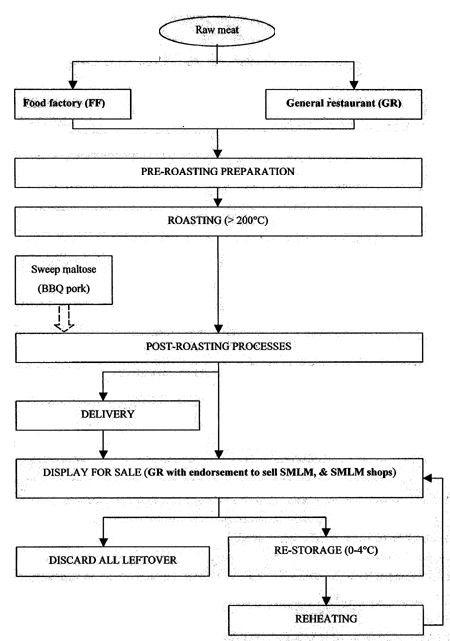
Figure 2: Flow diagram of lo-mei production
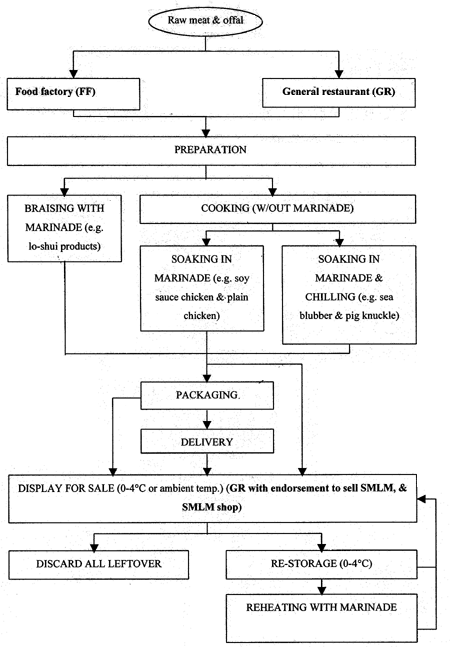
Table 1: Results of microbiological examination of siu-mei and lo-mei in 2000
| Unsatisfactory results | ||||
|---|---|---|---|---|
| Total no. of sample | Hygieneic quality(Unsatisfactory rate) | Presence of Pathogens(Unsatisfactory rate) | Remarks | |
| Siu-mei | 406 |
4 (1.0%) |
3 (0.7%) |
Salmonella spp. S. aureus |
| Lo-mei | 190 |
9 (4.7%) |
2 (1.1%) |
S. aureus |
| Total | 596 |
13 (2.2%) |
5 (0.8%) |
---- |
Annex 1
FEHD Microbiological Guidelines for Ready-to-eat Food *
Unsatisfactory Hygienic quality (for Siu-mei and Lo-mei):
| TBC | >= 106 per gram |
|---|---|
| E. coli (total) | >= 104 per gram |
Unsatisfactory level of specific pathogens:
| Salmonella spp. | present in 25g |
|---|---|
| Campylobacter spp. | present in 25g |
| E. coli O157:H7 | present in 25g |
| L. monocytogenes | present in 25g |
| V. paraheamolyticus | >=1,000 per gram |
| S. aureus | >=10,000 per gram |
| C. perfringens | >=10,000 per gram |
| B. cereus | >=100,000 per gram |
* The "Microbiological Guidelines for Ready-To-Eat Food" has been updated and the above guidelines may no longer be applicable. Please refer to the latest version at Microbiological Guidelines for Ready-to-eat Food.