Risk Assessment Studies
Report No. 14
Chemical Hazard Evaluation
POLYCYCLIC AROMATIC HYDROCARBONS IN BARBECUED MEAT
July 2004
Food and Environmental Hygiene Department
The Government of the Hong Kong Special Administrative Region
This is a publication of the Food and Public Health Branch of the Food and Environmental Hygiene Department of the Government of the Hong Kong Special Administrative Region. Under no circumstances should the research data contained herein be reproduced, reviewed, or abstracted in part or in whole, or in conjunction with other publications or research work unless a written permission is obtained from the Department. Acknowledgement is required if other parts of this publication are used.
Correspondence:
Risk Assessment Section
Food and Environmental Hygiene Department
43/F, Queensway Government Offices,
66 Queensway, Hong Kong.
Email: enquiries@fehd.gov.hk
Table of Contents
Polycyclic Aromatic Hydrocarbons
Barbecued Meat
Sampling Plan
Laboratory Analysis
Data Analysis
Discussions
Conclusion and Recommendations
Annex I: Production flow chart of dried meat
Annex II: Production flow chart of BBQ pork
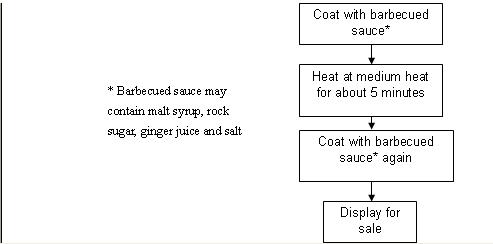
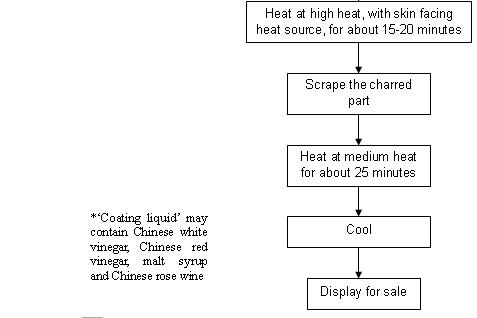
Annex III: Production flow chart of roasted pork
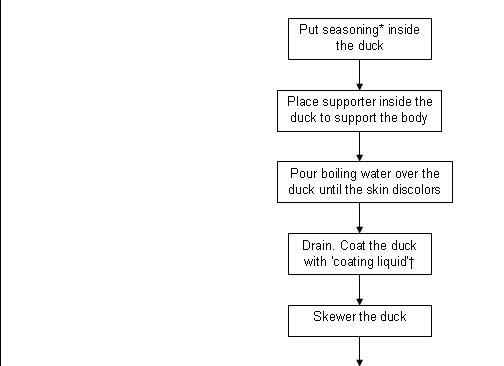
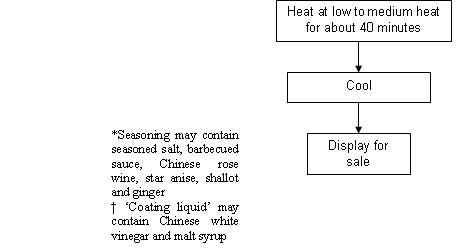
Annex IV: Production flow chart of roasted duck
Annex V: Median concentration for PAHs in barbecued meat samples
Abstract
This study investigated the levels of polycyclic aromatic hydrocarbons (PAHs) in different barbecued meat and the effect of cooking methods on PAH levels. PAHs refer to a large group of organic chemicals that may be present in the environment as pollutants, and they may be generated during the preparation of barbecued meats. Some PAHs are considered as possibly or probably carcinogenic to humans.
Two types of barbecued meats, namely dried meat and "Siu Mei" were studied. The types of "Siu Mei" included in the study were BBQ pork, roasted pork and roasted duck. A total of 60 barbecued meat samples were collected from local food factories or general restaurants, and control samples of boiled pork and duck meat were also obtained. Laboratory analysis for PAHs was conducted by the Food Research Laboratory of the Food and Environmental Hygiene Department.
Results showed that grilling or roasting would generate PAHs. Among the three methods of preparing "Siu Mei", charcoal grilling gave rise to the highest amount of PAHs when compared with gas grilling or electric oven roasting. Grilling of meat at a lower temperature or further away from the heat source would result in lower levels of PAHs. PAHs were mainly found in the outer part of barbecued meat. Dried meat prepared by gas or electric grilling was found to contain similar PAHs levels as formed in "Siu Mei" prepared by charcoal grilling.
Exposure to PAHs should be as low as reasonably achievable. In preparing "Siu Mei", gas grilling or electric oven roasting is preferable to charcoal grilling. When preparing barbecued meat, measures should be taken to avoid meat from direct contact with the flame and to avoid fat from dripping onto the heat source. The meat could be grilled at lower temperature and should not be overcooked. Members of the public are advised not to overindulge in barbecued meat particularly charcoal grilled "Siu Mei" and the "skin and fat" portion, to remove charred part of the meat, and to have a balance diet with plenty of fruits and vegetables.
OBJECTIVE
This study aims (i) to investigate the levels of polycyclic aromatic hydrocarbons (PAHs) in barbecued meat and (ii) to recommend appropriate measures on the reduction of risks associated with PAHs in barbecued meat.
BACKGROUND
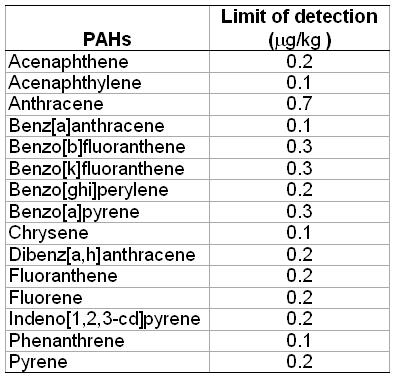
Polycyclic Aromatic Hydrocarbons
2. PAHs refer to a large group of organic chemicals containing two or more fused aromatic rings made up of carbon and hydrogen atoms. PAHs are lipophilic and chemically stable.
3. Over 100 PAHs are present in the environment as pollutants. PAHs are formed during processing of coal, crude oil and natural gas, and incomplete burning of coal, oil, gas, garbage, and other organic substances. They are also present in vehicle emissions and tobacco smoke. Some PAHs are manufactured by industry and are used in the production of PVC, plasticisers, pigments, dyes and pesticides. They are ubiquitous in the environment, being present in air, soil, water and food1.
Sources of Exposure
4. The main source of exposure to PAHs for the adult is food, which contributed to more than 90% of total exposure.1,2 However for smokers, significant contribution of PAHs exposure may be attributed to cigarette smoking. The additional intake of one of the PAHs, benzo[a]pyrene, for a person smoking 20 cigarettes per day was estimated to be 210 ng, which is in the same order of magnitude of the mean intake from food (the mean benzo[a]pyrene intake from food was about 110 ng per day).2,3 Other minor routes of exposure to PAHs are inhalation of polluted ambient and indoor air, ingestion of house dust, and dermal absorption from contaminated soil and water.1
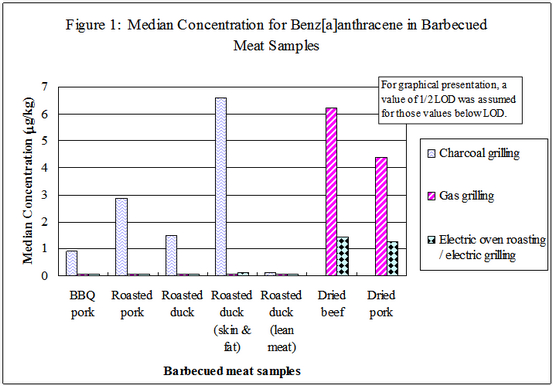
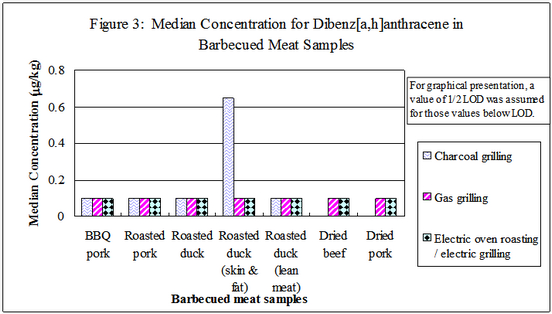
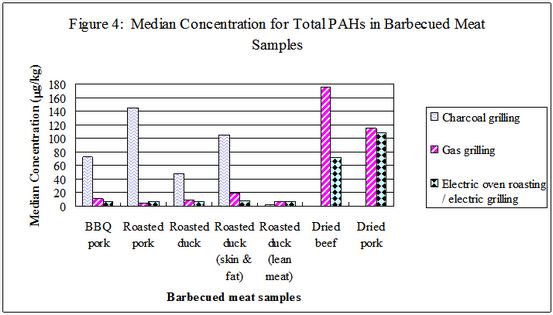
Occurrence in diet
5. As PAHs are ubiquitous in the environment, it is not surprising that they are present in almost all food. For example, it has been reported that cereals were found to contain PAHs at levels of 6 - 14μg/kg, fats and oils at 8 - 11μg/kg and seafood at 7 - 8μg/kg respectively.3,4 However, a high level of PAHs is not usually observed in raw food.1
6. Food processing or cooking steps such as roasting, grilling, barbecuing and smoking generate PAHs and increase the level of PAHs in the food being cooked.2 Charred food of almost any composition contains PAHs5 while only very low level of PAHs was detected when food was cooked by some cooking steps such as steaming. A study on the level of total PAHs formed in duck meat showed that levels as high as 130 and 320μg/kg were found when the duck meat was cooked by roasting and charcoal grilling respectively, whereas only less than 8.6μg/kg was detected when cooked by steaming.6
7. In overseas studies, cereals were found to be the main dietary source of PAHs, accounting for some 27 to 35% of total dietary exposure, a result probably due to the high amount of consumption.7 Although barbecued food only contributed a smaller part of the PAHs intake, people with a diet rich in roasted, barbecued or grilled, smoked food may have significant intake of PAHs.2, 7
Formation during processing or cooking
8. The exact mechanism of PAHs formation in food processing or cooking is not precisely known.2 However, it is generally considered that incomplete combustion is involved.2, 5, 8, 9 Regarding cooking methods, a dry heat cooking method is often involved.
Pyrolysis of fat and other organic matters on food
9. Formation of PAHs occurs through pyrolysis of fat at temperatures of above 200oC2, and is favoured at a temperature range of 500-900oC, especially above 700oC.8 More PAHs is formed at higher cooking temperatures 10. Pyrolysis of other organic matters such as proteins and carbohydrates might be involved 10, but the greatest concentrations of PAHs have been shown to arise from fat pyrolysis.8
10. When food is in direct contact with a flame, pyrolysis of fats in the meat generates PAHs.5 Alternatively, the melted fat from food dripping onto the heat source generates PAHs and the PAHs will in turn be deposited on the meat surface as the smoke rises. 2, 5, 9, 11, 12
Incomplete combustion of fuel
11. Another possible mechanism for the formation of PAHs is the incomplete combustion of the fuel itself. Incomplete combustion of charcoal generates PAHs 13, which are brought onto the surface of the food and are adsorbed.12
Factors affecting PAHs formation
12. A host of factors affecting PAHs formation has been identified which include (i) the distance of food from the heat source 5, 9, 10; (ii) fat content of the food 1, 10; (iii) duration of cooking1, 7, 9; (iv) temperature used1; (v) whether melted fat is allowed to drop onto the heat source 7, 9; and (vi) type of fuel used 7.
Toxicity
Toxicokinetics and metabolism
13. PAHs are absorbed through the gastrointestinal tract when ingested14. After being absorbed, they are distributed throughout the body, including almost all internal organs.1
14. The metabolism of PAHs is complex. In short, PAH compounds undergo metabolic transformation, forming either products that are excreted, or active metabolites that can finally bind to DNA to form covalent adducts. Given that DNA adduct formation is considered as an initial event in chemical carcinogenesis, the formation of active metabolites is considered to be closely related to the carcinogenicity of PAHs.
Toxicity and carcinogenicity
15. While the median lethal dose (LD50) values of individual PAHs indicate that they have moderate to low acute toxicity1, carcinogenicity is the critical endpoint for health risk evaluation of PAHs.15
16. Some PAHs have been shown to have genotoxic effects both in vivo in rodents and in vitro in mammalian (including human) cell lines and prokaryotes.1 On the other hand, some PAHs do not appear to be genotoxic. The genotoxicity of PAHs is summarised in Table 1.
17. The International Agency for Research on Cancer (IARC) of the World Health Organization has evaluated the carcinogenicity of some PAHs based on evidence in human and experimental animals. The IARC's classification of some PAHs are summarised in Table 1. Most of the PAHs evaluated are classified as Group 2B (possibly carcinogenic to humans) or Group 3 (not classifiable as to its carcinogenicity to humans). Three PAHs, namely, benzo[a]pyrene, benz[a]anthracene and dibenz[a,h]anthracene, cause greater health concerns since they are classified as Group 2A (probably carcinogenic to humans). None of the PAHs are classified as Group 1 (carcinogenic to humans).
Table 1 : Genotoxicity and Carcinogenicity of some PAHs

18. The carcinogenicity of the three PAHs of more concern is summarised as follows. Benzo[a]pyrene, when administered by the oral route, produced tumours of the gastrointestinal tract (forestomach), liver, lung and mammary glands of mice and rats.2, 16, 17 Dibenz[a,h]anthracene and benz[a]anthracene produced tumours of the gastrointestinal tract (forestomach), lungs and liver in mice.2, 17 Benz[a]anthracene also induced papillomas of the forestomach in mice when administered by gavage, and induced lung adenomas and hepatomas in mice in another gavage study. 17
Level of safe intake of PAHs
19. Since carcinogenicity is the critical endpoint of toxicity of PAHs and that some PAHs are genotoxic, it is not possible to define a level of intake which is without possible risk.
20. Benzo[a]pyrene was the only PAH compound that has been evaluated by the Joint FAO/WHO Expert Committee on Food Additives (JECFA), but the Committee was unable to establish a level of tolerable intake for benzo[a]pyrene. The Committee however commented that there was a large difference between estimated human intakes of benzo[a]pyrene and the doses producing tumours in animals. Thus any effects on human health are likely to be small. Despite this, JECFA was of the opinion that efforts should be made to minimise human exposure to benzo[a]pyrene as far as practicable.16
21. JECFA and the Codex Committee on Food Additives and Contaminants (CCFAC) have scheduled to study food safety issues relating to PAHs in food at their coming meetings to be held in 2005.
Barbecued Meat
22. "Barbecued meat" is defined in this study as meat cooked by a dry heat method. It is a method of cooking without liquid. The heat is transferred during the cooking process by convection of dry air, radiation or conduction through a minimum amount of hot fat. A golden brown, crispy crust with a characteristic aroma is induced in the meat being cooked. Examples of this kind of cooking method are broiling, grilling, and roasting. Two types of barbecued meat, namely dried meat and Cantonese-style barbecued meat called "Siu Mei", are discussed in greater details below.
Dried meat
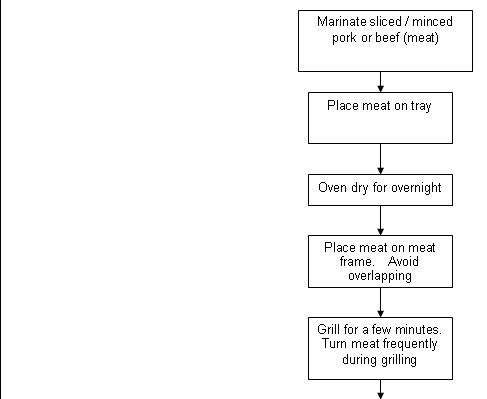
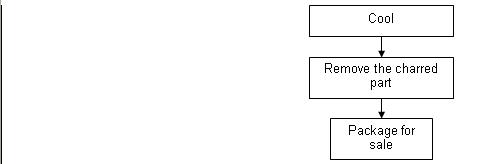
23. Dried meat (肉乾) is a popular meat snack commonly consumed in Asia. It is a thin slice of grilled meat of varying sizes. Pork and beef are the two commonest types of meat used for making dried meat. Meat is placed on a metal rack and cooked above or in between the heat source. The heat source could be an electrical heating element or a naked flame. Production flow of dried meat is illustrated in Annex I.
Siu Mei
24. "Siu Mei" (燒味) is a kind of Cantonese-style meat dish. Marinated cuts of meat or whole animal are cooked using a naked flame or other heat sources. Being sold ready-to-eat, "Siu Mei" is popular in Hong Kong. It is consumed throughout the year and especially popular during Chinese festivals and special occasions. Examples of "Siu Mei" are "BBQ pork" (叉燒), "roasted pork" (燒肉) and "roasted duck" (燒鴨).
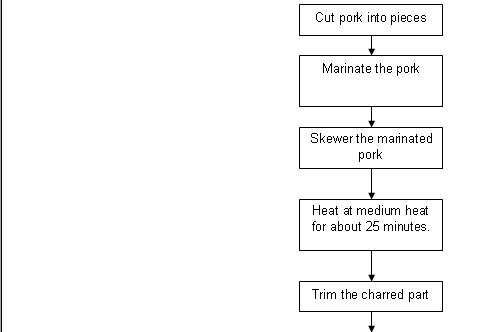
25. There is no standardised method for the production of "Siu Mei" and their processing may vary among different manufacturers. The cooking process of "Siu Mei" usually takes place inside a large oven or heating chamber of varying sizes. Different cooking methods may be used to prepare "Siu Mei", such as grilling by charcoal or gas, and roasting in an electric oven. Also, the position of heat source relative to the food varies. Among the three types of commonly consumed "Siu Mei", roasted pork is grilled/roasted normally with medium to high heat (over 330oC), BBQ pork with medium heat (over 220oC) whereas roasted duck is normally grilled/roasted with low to medium heat (160 - 200oC). The generic flow charts illustrating the production of BBQ pork, roasted pork and roasted duck are shown in Annexes II, III and IV respectively.
SCOPE OF STUDY
26. Given the public health significance of PAHs, the Food and Environmental Hygiene Department (FEHD) examined this issue by conducting a study to determine the PAH levels in barbecued meat since (i) barbecued meat is one of the most popular traditional Chinese food in Hong Kong; (ii) they usually contain high level of fats and their production involves processes such as roasting and grilling which might introduce PAHs to foods; and (iii) the level of PAHs in barbecued meat can be reduced by appropriate measures.
27. This study covered dried meat and "Siu Mei". The effect of different cooking methods on PAH levels in the barbecued meat was also studied.
PAH compounds analysed
28. Occurrence of a mixture of PAHs, rather than any single compound of the group, is common.1 However, no specific list of PAHs to be analysed in food is recommended by international bodies. In this study, 15 PAHs, as listed in Table 1, including the three PAH compounds which were classified as Group 2A by IARC, were analysed. Their selection depends on their toxicity and availability of testing of individual PAHs locally.
METHODS
Sampling plan
29. A survey was conducted in the local market to obtain a list of premises that manufactured barbecued meats including "Siu Mei" and dried meat. As a result, some 1000 premises manufacturing "Siu Mei" and 5 premises manufacturing dried meat were identified in the local market. Of the premises that manufactured "Siu Mei", the majority (over 85%) used gas grilling (town gas or liquid petroleum gas [LPG]), about 10% used electric oven roasting, while less than 2% of the premises used charcoal grilling including wood grilling. Of the 5 premises that manufactured dried meat, 2 of them used gas grilling and 3 used electric grilling.
30. Dried meat and "Siu Mei" prepared by different cooking methods were sampled from the premises in different parts of Hong Kong.
31. For the dried meat category, dried beef (牛肉乾) and dried pork (豬肉乾) were collected for study. For the "Siu Mei" category, BBQ pork (叉燒), roasted pork (燒肉) and roasted duck (燒鴨) were collected for study. They represented three types of barbecued meat, i.e., barbecued meat without skin (BBQ pork), barbecued meat with thick crispy skin (roasted pork) and barbecued meat with thin crispy skin (roasted duck).
32. Based on the mechanisms for the formation of PAHs, the cooking methods were categorised into three groups, namely (i) charcoal grilling including wood grilling, (ii) gas grilling including those using LPG and town gas, and (iii) electric grilling (for dried meat) / electric oven roasting (for "Siu Mei").
33. Raw pork and raw duck meat samples were also collected and boiled. They were then analysed for PAHs and these served as the control and baseline reference.
34. In order to study the distribution of PAHs formed in the skin and lean meat, the roasted duck samples were separated into two portions: (i) skin and fat and (ii) lean meat, and they were analysed separately.
Laboratory analysis
35. Laboratory analysis was performed by the Food Research Laboratory of FEHD. All food samples were homogenised and dried by lyophilisation. A representative portion equivalent to about 5g sample on wet basis was tested. This portion was saponified and then extracted by cyclohexane and the extract was cleaned up on solid phase extraction column, and subsequently tested on the Gas Chromatograph - Mass Spectrometer (GC/MS). C13-labelled PAH was used as surrogate for the analysis. The limits of detection (LOD) for the 15 PAHs ranged from 0.1 to 0.7μg/kg respectively. The LOD are similar to those in overseas studies with the similar analytical methods. Table 2 shows the list of PAHs analysed and their respective limits of detection.
Table 2 : List of PAHs Analysed and Limits of Detection
Data Analysis
36. For each sample tested, the levels of the 15 PAHs analysed were summed to produce a "total PAHs" level while the levels of the three PAHs of more concern were reported individually.
37. The levels of PAHs in roasted duck were calculated from the sum of the proportional concentrations in "skin and fat" and "lean meat" portions.
RESULTS
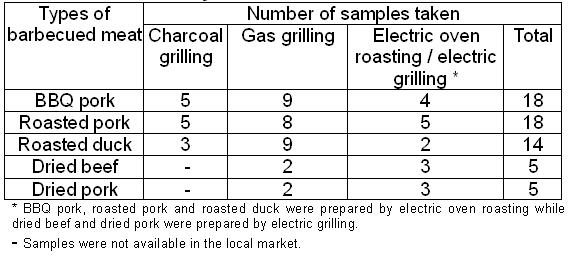
38. A total of 60 barbecued meat samples were collected from food factories and general restaurants manufacturing barbecued meat. The number of samples taken in each food category was summarised in Table 3. In addition, nine samples each of raw duck meat and raw pork were taken, blended into three composite samples for each of duck meat and pork and were boiled and they acted as controls.
Table 3: Number of Barbecued Meat Samples Taken for PAHs Analysis
39. In all the control samples, levels of benz[a]anthracene, benzo[a]pyrene and dibenz[a,h]anthracene were all below detection limits while total PAHs levels were low (Table 4).
40. Among all the barbecued meat samples, 55% of the test results were below LOD. PAH levels varied widely among samples, including among samples of the same food type prepared by the same cooking method. The levels of PAHs among various food types and cooking methods were given in Table 5 and graphically presented in Annex V.
Table 4 : Median Concentration with Range for PAHs in Boiled Samples

Table 5 : Median Concentration with Range for PAHs in Barbecued Meat Samples

41. The levels of total PAHs of barbecued samples on the whole were significantly higher than those of boiled samples (t-test, p<0.001). Among the three PAHs of more concern, only benz[a]anthracene and benzo[a]pyrene of barbecued samples were significantly higher in levels than those of boiled samples (t-test, p<0.001 for both cases). As for dibenz[a,h]anthracene, no significant difference was found in levels between barbecued and boiled samples as dibenz[a,h]anthracene was not detected in most (94%) of the barbecued samples.
42. For all three types of "Siu Mei" samples, samples that were prepared by charcoal grilling were found to contain significantly higher levels than those that were prepared by gas grilling or electric oven roasting with respect to total PAHs (t-test, p<0.001 for both cases), benz[a]anthracene (t-test, p=0.001 for both cases) and benzo[a]pyrene (t-test, p=0.002 for both cases). However, no significant difference in PAH levels was detected between those that were prepared by gas grilling and electric oven roasting.
43. Among those "Siu Mei" samples that were prepared by charcoal grilling, roasted pork (median concentration: 144.7μg/kg) was found to contain the highest median concentration of total PAHs, followed by BBQ pork (72.6μg/kg) and roasted duck (48.6μg/kg). However, analysis of variance did not show that the differences were statistically significant. No such pattern was observed for samples prepared by gas grilling or electric oven roasting. No significant difference in levels of benz[a]anthracene and benzo[a]pyrene was found among different types of "Siu Mei".
44. For roasted duck samples that were prepared by charcoal grilling, significant higher levels of total PAHs (median concentration: 105.6μg/kg) were detected in the "skin and fat" portion than those detected in the "lean meat" portion (median concentration: 2.1μg/kg) (t-test, p=0.042). The same pattern was observed in roasted duck samples that were prepared by gas grilling (median total PAHs: 18.9μg/kg for "skin and fat" and 6.9μg/kg for "lean meat") or electric oven roasting (median total PAHs: 8.7μg/kg for "skin and fat" and 7.0μg/kg for "lean meat") but the differences were not statistically significant. No significant difference in benz[a]anthracene and benzo[a]pyrene levels was found.
45. For dried meat samples, no significant difference in PAH levels was found between beef and pork samples. As compared with samples that were prepared by electric grilling, those prepared by gas grilling were found to contain significantly higher levels of total PAHs (t-test, p=0.027), benz[a]anthracene (t-test, p<0.001) and benzo[a]pyrene (t-test, p=0.001).
46. When comparing the levels of PAHs in dried meat samples with those in BBQ pork samples that were prepared by similar cooking methods, dried meat samples were found to contain significantly higher levels of the total PAHs (t-test, p<0.001), benz[a]anthracene (t-test, p =0.006) and benzo[a]pyrene (t-test, p=0.011).
DISCUSSIONS
Effect of cooking methods
47. Results of the present study revealed that grilling or roasting generated PAHs whereas charcoal grilling gave rise to the highest amount of PAHs. Although no significant difference was detected between "Siu Mei" samples that were prepared by gas grilling or electric oven grilling, significant higher level was found in dried meats that were prepared by gas grilling. The finding was consistent with those reported elsewhere.2, 6, 16 On the other hand, PAH levels in barbecued meat detected in our study were in general lower than those reported in other studies (see paragraph 6). This may be due to a combination of factors, which may include the design of heating chambers used in most of the local "Siu Mei" manufacturers that can avoid fat dripping onto the heat source during grilling or roasting.
48. With reference to the results from overseas studies, the levels of total PAHs in our "Siu Mei" samples that were prepared by gas grilling or electric oven roasting were comparable with the levels of total PAHs found in other foodstuffs such as cereals, seafoods, oils and fats (ranged from 6 to 14μg/kg).3, 4
Effect of cooking temperatures
49. Our results showed that lower levels of PAHs were detected in roasted duck when compared with those in BBQ pork and roasted pork. Roasted duck was in general cooked at a lower temperature of below 200oC. The results were consistent with the findings that lower PAHs were generated at a lower temperature.10
Effect of distance from the heat source
50. Our results showed that PAH levels formed in dried meat were much higher than those in BBQ pork that were prepared by the similar cooking methods. This may be due to a larger surface area per unit weight for dried meat and that the meat was cooked at a closer distance to the heat source in grilling dried meat than in preparing BBQ pork.
Distribution of PAHs
51. Our results showed that in roasted duck, the PAHs were concentrated on the "skin and fat" portion (i.e., the outer layer) of the roasted duck. The results were consistent with the postulation that PAHs were produced mainly on the outer surface of barbecued food1 where the food was closer to the heat source and was subject to higher temperature. Also, PAHs generated by incomplete combustion of the fuel were also absorbed by the outer surface of the meat.
Effect of fat content
52. Although it has been mentioned in literature that the formation of PAHs is related to the fat content of the meat7, the associations between fat contents in the final products and PAH levels were inconsistent among different types of barbecued meat in our study.
Limitations
53. This study examined the effect of different cooking methods on the generation of PAHs. It did not, however, take account of the exact processing of the barbecued meat. For example, the position of the food relative to the heat source may be different in different cooking methods or different manufacturers. Moreover, as there is no standardised method for the production of barbecued meat, the actual practices may vary even with the same cooking method, and this may affect the formation of PAHs. Also, the heating power, especially in charcoal and gas grilling, may vary between batches. Therefore, it was not surprising why the PAH levels in barbecued meat varied even with the same cooking methods.
Other issues
54. There is a trend that the barbecued meat industry is switching from using charcoal to using electric and gas grilling. The change is partly due to the fact that new buildings usually do not cater for the ventilation structure which is needed for charcoal burning.
CONCLUSION AND RECOMMENDATIONS
55. Among the three types of cooking methods, charcoal grilling gave rise to the highest PAHs levels in "Siu Mei" as compared with gas grilling or electric oven roasting. Grilling of meat at a lower temperature or further away from the heat source would result in lower levels of PAHs. PAHs were found mainly in the outer part of barbecued meat.
56. Dried meat prepared by gas or electric grilling was found to contain levels of PAHs similar to those in "Siu Mei" prepared by charcoal grilling.
57. As exposures to PAHs should be as low as reasonably achievable, appropriate measures should be taken to lower their exposures. The following advices are given to the trade and consumers on the reduction of risks associated with PAHs in barbecued meat.
Advice to trade
(a) For making "Siu Mei", gas grilling or electric oven roasting is preferred to charcoal grilling. For making dried meat, electric grilling is preferred to gas grilling.
(b) Heating chamber should be properly designed to avoid fat dripping onto the heat source.
(c) When barbecuing meat:
i. Direct contact of meat with flame should be avoided. This could be achieved by placing the meat further from the heat source.
ii. Fat dripping onto the heat source should be avoided. This could be achieved by trimming the visible fat from meat before barbecuing.
iii. Meat could be cooked at lower temperature and avoid overcooking. However, the meat should be cooked thoroughly to destroy foodborne pathogens.
iv. Prior to grilling or roasting, the meat could be cooked partially by a method which employs a lower cooking temperature such as boiling.
Advice to consumers
(a) Do not overindulge in barbecued meat, particularly charcoal grilled "Siu Mei" and the "skin and fat" portion.
(b) Remove the charred parts of food.
(c) Have a balanced diet and eat more fruits and vegetables.
(d) When going for barbecuing, members of the public are advised to
i. trim visible fat from meat before barbecuing;
ii. partially cook the meat, e.g. by boiling, before barbecuing;
iii. avoid dripping fat onto the charcoal when barbecuing meat by putting the charcoal on sides of the stove and grilling food in the centre;
iv. consider to grill meat in foil packets to avoid contamination from smoke and flame; and
v. place the meat further from the heat source when barbecuing meat and avoid overcooking of meat. However, the meat should be cooked thoroughly to destroy foodborne pathogens.
REFERENCES
- World Health Organization (WHO). Environmental Health Criteria 202, Selected Non-heterocyclic PAHs, Geneva: WHO;1998. Available from : URL: http://www.inchem.org/documents/ehc/ehc/ehc202.htm
- Scientific Committee on Foods of EC (SCF). Opinion of the Scientific Committee on Food in the risk to human health of PAHs in food. Brussels: SCF; 2002.
- Food Standard Agency of UK (FSA). PAHs in the UK Diet: 2000 Total Diet Study Samples. Food Survey Information Sheet No.31/02. UK: FSA; 2002. Available from: URL: http://www.food.gov.uk/science/surveillance/fsis-2002/31pah
- Falco G, Domingo JL, LLobet JM, Teixido A, Casas C and Muller L. PAHs in Foods: Human Exposure through the Diet in Catalonia, Spain. Journal of Food Protection 2003; 66(12): 2325 - 31
- Phillips DH. PAHs in the diet. Mutation Research 1999; 443:139 - 47
- Chen BH and Lin YS. Formation of PAHs during processing of duck meat. Journal of Agricultural and Food Chemistry 1997; 45:1394 - 1403
- SCF. Annex: PAHs - Occurrence in foods, dietary exposure and health effects. Brussels: SCF; 2002.
- Bartle KD. Analysis and Occurrence of PAHs in Food. In: Creaser CS, Purchase R, editors. Food contaminants: sources and surveillance. Cambridge: Royal Society of Chemistry; 1991. p.41 - 60
- Nawrot PS, Vavasour EJ and Grant DL. Food irradiation, heat treatment, and related processing techniques: safety evaluation. In: Van der Heijden K, Younes M, Fishbein L, Miller S, editors. International Food Safety Handbook. New York: Marcel Dekker; 1999. p. 306 - 8
- Knize MG, Salmon CP, Pais P and Felton JS. Food Heating and the Formation of Heterocyclic Aromatic Amine and PAH Mutagens/Carcinogens. In: Jackson LS, Knize MG, Morgan JN, editors. Impact of processing on food safety. New York: Kluwer Academic; 1999. p. 179 - 193
- Lijinsky W. The formation and occurrence of polynuclear aromatic hydrocarbons associated with food. Mutation Research / Genetic Toxicology 1991; 259 (3-4): 251-61
- Wu J, Wong MK, Lee HK, Shi CY and Ong CN. Determination of PAHs in Rougan, a traditional Chinese barbecued food, by capillary gas chromatography. Environmental Monitoring and Assessment 1997; 44: 577 - 585
- Dyremark A, Westerholm R, Overvik E, Gustavsson J. PAH emissions from charcoal grilling. Atmospheric Environment 1995; 13: 1553 - 8
- WHO. Guidelines for drinking-water quality, 2nd ed: Addendum to Vol. 2 Health criteria and other supporting information. Geneva: WHO; 1998. Available from: http://www.who.int/water_sanitation_health/dwq/en/2edaddvol2a.pdf
- WHO Regional Office for Europe. Chapter 5.9 PAHs. In WHO Regional Office for Europe. Air Quality Guidelines 2nd ed. Denmark: WHO Regional Office for Europe; 2000.
- WHO. WHO Food Additives Series 28 - Benzo[a]pyrene. Geneva: WHO; 1991. Available from: URL: http://www.inchem.org/documents/jecfa/jecmono/v28je18.htm
- National Toxicology Program. Tenth Report on Carcinogens: PAHs, 15 Listings. US: Department of Health and Human Services; 2002. Available from: URL: http://ehp.niehs.nih.gov/roc/tenth/profiles/s150pah.pdf
Annex I: Production flow chart of dried meat
Annex II: Production flow chart of BBQ pork
Annex III: Production flow chart of roasted pork

Annex IV: Production flow chart of roasted duck
Annex V: Median concentration for PAHs in barbecued meat samples