How Can I Distinguish Genetically Modified Foods?
Are They Safe to Eat?
Having fruits in our meals is enjoyable and refreshing, especially during the hot summer. In recent decades, different “new” varieties of fruits, such as oranges with red flesh, kiwis with yellow or red flesh, and white or pale pink strawberries, have emerged in the local market to provide a wider range of choices to consumers. You may have wondered whether these fruits that look or taste different from many other varieties are genetically modified (GM), and whether GM foods are safe to eat. You may have also heard of some people saying that the “4-digit number” on the sticker label of a fruit provides some hints to tell whether the fruit is GM. But is this true? Let’s take a closer look in this article.
How can I distinguish GM foods from conventional varieties?
In fact, by July 2025, some fruits commonly consumed by members of the public such as oranges, kiwis and strawberries which we have just mentioned do not have any GM varieties that have passed safety assessments in other countries or places and are commercially available in the international market.
At present, the most common GM food items are GM crops including soybean, corn and canola. The majority of these GM crops are developed for particular benefits such as tolerance to herbicides and resistance to insects. Most GM crops generally look the same as their conventional counterparts and therefore cannot be distinguished simply from their appearance or taste. Biochemical analyses are commonly employed to identify GM ingredients in foods.
The Food and Agriculture Organization of the United Nations (FAO) has maintained an online platform called the FAO GM Foods Platform, which contains information on the results of food safety assessments of GM foods. This includes the commodities with GM varieties which have already passed the safety assessments and are allowed to be sold for human consumption in other countries or places. If you are interested to know more about the kinds of crops which have GM varieties and may be commercially available, you may access the online platform at this link:
https://www.fao.org/food/food-safety-quality/gm-foods-platform/browse-information-by/commodity/en/
You may wonder the “4-digit numbers” on the sticker labels of fresh produce such as fruits are clues on GM status. The answer is “No” - these numbers are Price Look Up (PLU) codes (see Figure 1) assigned by the International Federation for Produce Standards (IFPS) composing of fruit and vegetable associations from around the globe. PLU codes are used by supermarkets only to make check-out and inventory control easier, faster, and more accurate. PLU codes can be 4 or 5-digit codes randomly assigned within a series of numbers, with no intelligence built into the code. For instance, no one number within the 4-digit code carries a particular meaning, although a prefix “9” would be placed in front of the 4-digit PLU code of a conventionally grown crop for organic produce. To verify if a food item is a certified organic product, consumers are encouraged to read organic labels which are based on established organic standards before purchase.

Figure 1: The 4-digit PLU code on fresh produce. There is no intelligence built into the code and we cannot tell if the produce has been GM simply from the code.
Are GM foods safe to eat?
You may have wondered whether GM foods are safe to eat. In fact, some countries and regions with more developed agricultural production and technology have been implementing pre-market safety assessment schemes for GM foods to tie in with their development of relevant industries and confirm the safety of newly emerging GM varieties.
Although the operational details of the safety assessment schemes in different places may vary, they are all generally implemented using the same framework, i.e., in accordance with the internationally recognised scientific principles and guidelines formulated by the Codex Alimentarius Commission (Codex) as well as the Organisation for Economic Co-operation and Development (OECD). The approach of the safety assessment is based on the principle of the comparative approach (see Figure 2), focusing on the determination of similarities and differences between the GM food and its conventional counterpart in identifying potential safety and nutritional issues.
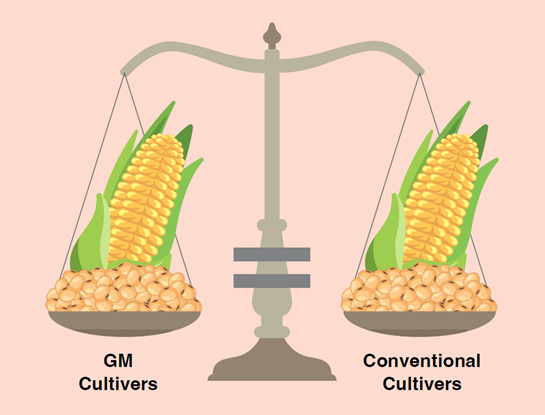
Figure 2: The safety assessment of GM food crops is based on the principle of the comparative approach to compare the GM food and its conventional counterpart for similarities and differences, in terms of the potential food safety and nutritional aspects which impact human health.
The safety of the GM food is assessed relative to its conventional counterpart having a history of safe use, taking into account both intended and unintended effects. The comparative approach is aimed to establish the relative safety of a GM product with its comparator, i.e. the conventional or non-modified counterpart, by determining if a GM product has new or altered hazards, or any changes in key nutrients relevant to human health (see Figure 3). The comparator is usually considered safe on the basis of its long history of consumption.
To date, the World Health Organization (WHO) has stated that GM foods currently available on the international market have passed safety assessments and are not likely to present risks to human health. In addition, there is no evidence showing that GM foods have resulted in any food safety issues in the countries where they are available for sale after assessment.

Figure 3: The safety assessment of GM food includes analyses of the transgenic proteins and their metabolites for potential toxic and allergic effects, compositional analyses and the evaluation of potential changes in the nutritional value and processing characteristics of the GM food.