Feature Article
Reducing Aflatoxin Contamination in Food
In November 2025, the Centre for Food Safety (CFS) issued a press release regarding a prepackaged pistachio paste suspected to be contaminated with aflatoxins. Aflatoxins belong to the family of mycotoxinsNote 1(toxic substances naturally produced by moulds), which can pose risks to human health. Ingesting a large dose of aflatoxins can result in acute poisoning, while long-term consumption of food contaminated with aflatoxins can cause liver cancer. In this article, various practices for reducing and preventing aflatoxin contamination in food will be discussed.
What are aflatoxins? Why are they found in food?
Among different types of aflatoxins identified, aflatoxins B1, B2, G1 and G2 are of particular health concern in humans, and are produced by certain moulds, including Aspergillus flavus and Aspergillus parasiticus. Under suitable temperature (above 10℃) and humidity (relative humidity above 70%) conditions, these moulds can grow and produce aflatoxins. Foods more susceptible to aflatoxin contamination include cereals, oilseeds, spices and tree nuts. Aflatoxins M1 and M2 can also be found in the milk of animals fed with contaminated feed.
What can be done to reduce aflatoxin contamination in food?
Aflatoxin contamination can occur during various stages of food production, including during crop growth in the field, and throughout post-harvest operations and storage. Therefore, an integrated control approach covering the whole chain of food production is necessary for effective prevention of aflatoxin contamination.
Aflatoxin-producing moulds cannot grow in properly dried and stored food. Therefore, efficient drying of food and maintenance of the dry state through proper storage are the most effective ways to prevent aflatoxin contamination. Other important practices for reducing aflatoxin contamination are as follows:
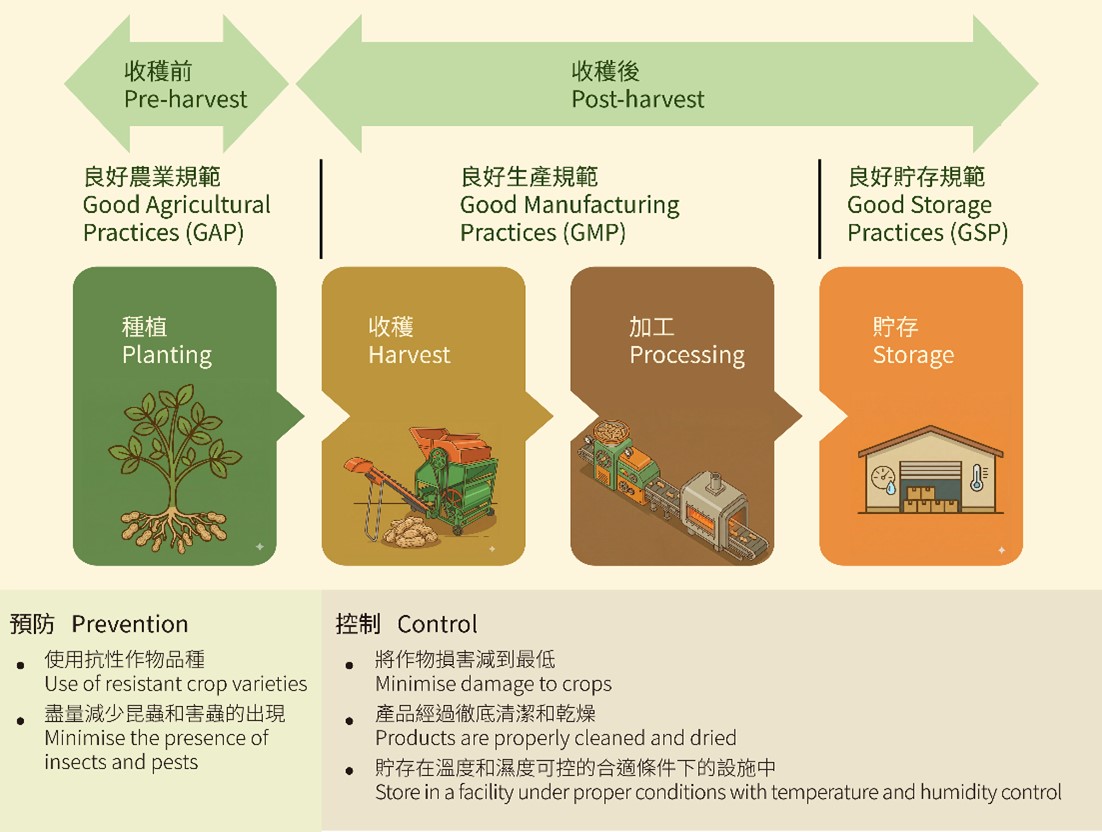
Figure: An integrated control approach should be adopted to reduce the risks of aflatoxin contamination throughout the whole chain of food production.
Pre-harvest stage
Control of aflatoxin contamination during crop growth in the field can be achieved by minimising insect infestations, since pests will attack crops, making them more susceptible to mould infection and aflatoxin contamination. As such, it is essential to use crop varieties resistant to insects and mould infection. Moreover, an effective pest management system should be adopted to minimise the presence of pests in the fields.
Post-harvest stage
During the post-harvest stage, damage to crops should be avoided to protect them from invasion by aflatoxin-producing moulds. After harvesting, crops should be properly cleaned and dried, and stored under suitable conditions in a warehouse with temperature and humidity control.
To sum up, food producers should adopt Good Agricultural Practices (GAP) during the pre-harvest stage. During the post-harvest stage, it is equally critical to follow Good Manufacturing Practices (GMP) and Good Storage Practices (GSP) during the handling, processing, storage and distribution of food for human consumption.
How can consumers reduce their exposure to aflatoxins?
Consumers should purchase food from reliable sources and store it in a cool and dry place. Moreover, food should not be stored for prolonged periods, and mouldy or damaged food should be discarded. Lastly, maintaining a balanced and varied diet can avoid excessive exposure to contaminants, including aflatoxins, from prolonged consumption of a limited range of food.
Regulation of aflatoxins in food in Hong Kong
In Hong Kong, regulatory limits for aflatoxins in food are stipulated in the Harmful Substances in Food Regulations (Cap. 132AF). The maximum limits of aflatoxins in certain tree nuts, peanuts and dried fruits more susceptible to aflatoxin contamination have been established by making reference to Codex Alimentarius Commission (Codex) standards. The CFS has also compiled the Guidance for Trade on the Prevention and Reduction of Aflatoxin Contamination in PeanutsNote 2 to provide recommendations for the trade.
Efforts of international organisations to reduce aflatoxins in food
Aflatoxin contamination in food is of global concern. The World Health Organization, in collaboration with the Food and Agriculture Organization of the United Nations, has assessed the risks of aflatoxin-contaminated food and recommended relevant control measures. Codex has established food safety standards for aflatoxins in food and published various Codes of Practice on the prevention and reduction of aflatoxin contamination in various foods, such as tree nuts, peanuts and dried figs.
Key Points to Note
- Aflatoxin contamination can occur throughout the whole chain of food production and an integrated control approach is necessary for effective prevention.
- In general, efficient drying of food and maintenance of the dry state through proper storage are the most effective measures to prevent aflatoxin contamination.
- Hong Kong has, by making reference to Codex standards, established regulatory limits for aflatoxins in various types of food. The CFS has also published guidelines to assist the trade in preventing aflatoxin contamination.
Note 1: For more information, please refer to “Moulds on Food – Potential Health Risks?” in Food Safety Focus.
Note 2: For more information on preventing and reducing aflatoxin contamination in peanuts, please scan the relevant QR code to read or download the pamphlet Guidance for Trade on the Prevention and Reduction of Aflatoxin Contamination in Peanuts.
Mascot ON in Lesson
1. AMR Bacteria Hunters in Action

Hey brave Antimicrobial Resistance (AMR) Bacteria Hunters, do you know that cooked and raw foods should be kept totally separate in your kitchen and fridge to prevent terrifying cross-contaminationNote 1? Those drug-resistant superbugs in raw food are trying to invade human bodies and render future antibiotic treatments ineffective!
Apart from high-heat santisation, that is cooking food thoroughly to kill AMR bacteria, we should also bear in mind the following “separate cooked from raw” rule when handling raw, cooked or ready-to-eat ingredients:
- Separate by compartments: keep raw ingredients and cooked food/ready-to-eat food in different compartments of the fridge. Cooked food/ready-to-eat food should be kept in the upper compartments, and raw food in the lower compartments.
- Separate packaging: raw meat and uncooked seafood should be wrapped properly with cling film or kept in airtight containers to prevent their juices from dripping onto cooked food/ready-to-eat food and causing contamination.
- Dedicated utensils: handle cooked and raw foods with separate utensils (like separate chopping boards, knives and containers), preferably those in different colours or made of different materials for easy identification.
For more information on AMR and food safety, please visit this dedicated webpage on “Antimicrobial Resistance and Food Safety” :
Note 1: Do you want to know how to prevent cross-contamination? Check out the relevant dedicated webpage.
2. Fight Superbugs with the Five Keys to Food Safety

Gamers dread running into Big Bosses - they’re not only difficult to defeat, but may also keep evolving. In the bacteria world, there are microbial Big Bosses called superbugs, some of which are resistant to multiple antimicrobials or even to some antibiotics of last resort.
Superbugs may not cause symptoms, but they’re capable of transmitting AMR genes to other bacteria inside the intestines of humans, reducing the effectiveness of antimicrobials (including antibiotics). Superbugs love seeking hideouts in raw or undercooked food, and may spread to other cooked or ready-to-eat food through unclean hands or kitchen environments.
To take them down, besides knowing the “Antimicrobial Resistance and Food Safety” guide off by heart,
you also have to perform the following killer moves — Five Keys to Food Safety:
- Choose: Buy food from hygienic and reliable shops.
- Clean: Keep your hands and the food preparation area clean to prevent the invasion of bacteria.
- Cook: Cook food thoroughly, which is the most powerful move for eliminating “superbugs” in food.
- Separate: Raw and cooked foods, should be handled and stored separately to prevent cross-contamination.
- Safe Temperature: Keep cold food at or below 4°C❄️and hot food at above 60°C.
Our mascots are ready for the challenge, are you?
Spot Check
Safe Preparation of Sauces to Prevent Food Poisoning
Sauces are versatile and can enhance the palatability of dishes. However, food safety is of paramount concern when it comes to the preparation of sauces. Cases of food poisoning caused by consumption of different types of sauces, which involve meat sauces (e.g. pasta sauces, chilli meat sauce), gravies (e.g. curry sauce), dips (e.g. guacamole) and egg-based sauces like mayonnaise and hollandaise sauce, have been reported from time to time. These cases may be partially attributable to preparation of large batches of sauces in advance, coupled with slow cooling in uncovered pots at room temperature. This article explores common causes of food poisoning involving sauces and offers practical tips on prevention.
1. Cook Sauces Thoroughly
Many common food ingredients may harbour pathogens from the environment, e.g. SalmonellaNote 1 in meat and eggs, Bacillus cereusNote 2 in fruits, vegetables and herbs, and Clostridium perfringensNote 3 in gravies, thick soups and cooked beans. Thorough cooking (i.e. with the core temperature of food reaching at least 75℃ for 30 seconds) can kill vegetative bacteria. Avoid consuming undercooked sauces as bacteria can survive in ingredients of uncooked or slightly-cooked sauces.
To prevent pathogens surviving in food, it is important to cook the sauce thoroughly. If the recipe calls for the use of raw eggs, raw milk or raw milk cheese to make the sauce, alternatives like their pasteurised counterparts should be used instead.
2. Cool Sauces Rapidly
After thoroughly cooked, sauces should be kept at above 60℃; if not intended for immediate consumption, they should be cooled down quickly within two hours. Pathogens like Bacillus cereus and Clostridium perfringens can form spores, which is a tough dormant form of bacteria that can survive unfavourable conditions like cooking and without nutrients. If cooked sauces are kept in the “temperature danger zone”Note 4, which is between 4℃ and 60℃, for a long time (e.g. the whole pot of sauce is left in the kitchen overnight to cool down, or is held in an underheated lukewarm water bath for a whole afternoon), the heat-resistant spores of the pathogens can germinate. They will then multiply rapidly with less competition as most other microorganisms have been killed during cooking. Once ingested, these bacteria will produce toxins inside the intestines, leading to food poisoning symptoms such as gastrointestinal illness. Bacillus cereus can also produce toxins in food and form protective spores in a warm environment. Therefore, reheating alone cannot render the sauces contaminated by spores and toxins safe for consumption.
To cool down sauces rapidly, reference can be made to Figure 2 below: cool the sauce to 20℃ or below within two hours and then cool it further to 4℃ in a refrigerator within two to four hours. Other ways to speed up the cooling include preparing sauces in small batches, putting the sauces in shallow, covered containers in a well-ventilated area, and placing pans of hot sauces in an ice water bath and then stir them. Keep the sauces separate from raw food during cooling. Where feasible, use a blast chiller to rapidly chill small portions of food to 4℃ within 1.5 hours. Sauces should be marked with production dates and stored separately from raw food in a refrigerator (at 4℃ or below). Apply the “first-in-first-out” (FIFO) principle to stock rotation.
3. Reheat Sauces Properly
Reheating sauces properly means re-cooking them instead of just warming them up. When reheating, bring the sauce to a full boil or heat it to at least 75℃. Sauces can be reheated once only and reheated sauces should not be put back into the refrigerator. Only after the sauces have been thoroughly reheated to 75℃ or above can they be kept at above 60℃ for hot holding to ensure they are safe for consumption. Do not reheat sauces with a bain marie or similar equipment as this kind of equipment is for the hot holding of reheated food. If it is used for reheating, it will either take too long or lack sufficient heating power to do so.
4. Prevent Cross-contamination
Maintain good hygiene practicesNote 5 (including good personal and environmental hygiene) to prevent cross-contamination of cooked food with raw meat, poultry, seafood, vegetables, fruits or eggs that may have been contaminated with Salmonella or other pathogensNote 6. Cross-contamination can also occur when hands of food handlers, utensils, equipment and worktop surfaces which have come into contact with contaminants are not cleaned thoroughly.
Key Points to Note:
To prevent food poisoning caused by sauces, one should:
- Cook sauces thoroughly;
- Cool sauces rapidly;
- Reheat sauces properly; and
- Prevent cross-contamination.
In conclusion, equipping yourself with relevant knowledge and remaining cautious in the kitchen are essential to preventing foodborne illnesses associated with sauce preparation. By adhering to safe cooking and food handling practices and employing rapid cooling techniques, the risk of food poisoning from consuming sauces can be significantly reduced. Always prioritise food safety to ensure that your food is not only delicious but also safe for consumption.
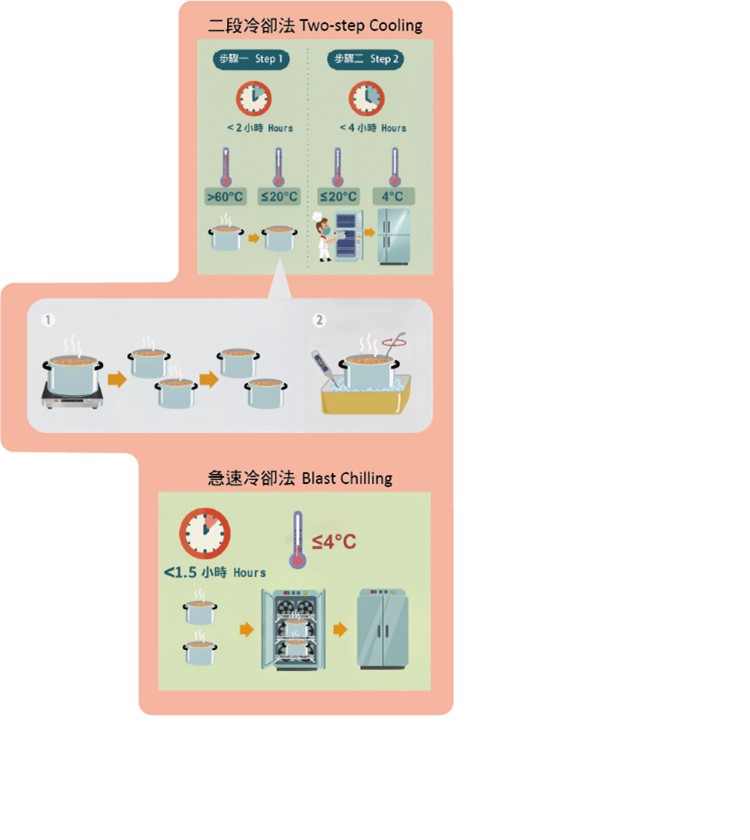
Figure 2: Sauces should be cooked thoroughly (with the core temperature of food reaching at least 75℃ for 30 seconds); and cooled down quickly (to 20℃ within two hours and then further to 4℃ in a refrigerator within two to four hours) if not intended for immediate consumption. They must be reheated to at least 75℃ before consumption.
Note 1: Information on food poisoning caused by Salmonella is available at:
Note 2: Scan the QR code for information on Bacillus cereus in processed food:
Note 3: To learn more about the threats of Clostridium perfringens to food safety, please scan the QR code:
Note 4: Information on the temperature danger zone is available at:
Note 5: Scan the QR code to learn more about Good Hygiene Practices (GHPs) of food premises:
Note 6: Check out the dedicated webpage on “Prevention of cross-contamination” at:
Safe Kitchen/Trade Talk/Food Safety Guidelines
Safe Kitchen
Introduction to “Safe Kitchen” Scheme
To facilitate the adoption of the 5 Keys to Food Safety and GHPs by trade members, and ensure food safety in their daily operation, the Centre for Food Safety (CFS) has integrated the existing channels of risk communication and launched a new platform, namely “Safe Kitchen”, to communicate with the trade. The platform provides food safety information of greater practical importance to meet the operational needs of catering outlets.
The “Safe Kitchen” platform disseminates up-to-date food safety information (including food safety guidelines and legislative amendments) to the trade through a host of channels including WhatsApp, emails and dedicated webpages.
Under the “Safe Kitchen” Scheme, training materials tailor-made for the trade and workshops for kitchen staff will be provided to enhance their food safety and hygiene awareness. Members of the trade are welcome to scan the relevant QR code to download the registration form for the “Safe Kitchen” Scheme in order to receive the latest food safety information in a timely manner.
Trade Talk
Trade Talks 2026
To publicise proper food handling among food trade practitioners, the CFS is organising trade talks and workshops on the HACCP System and GHPs from March through October in 2026, with a view to promoting GHPs through the trade’s active participation and collaboration with the government, and encouraging the trade to implement a Food Safety Plan in the food manufacturing process, so as to enhance food safety.
The talks will be conducted in Cantonese. Participants will be awarded a certificate of attendance. For details, please refer to “What's New” on the CFS's webpage:
https://www.cfs.gov.hk/english/whatsnew/whatsnew_act/whatsnew_act.html e.
e.
Food Safety Guidelines
Sushi, Sashimi and Meat To Be Eaten Raw – Food Safety Guidelines for Food Businesses
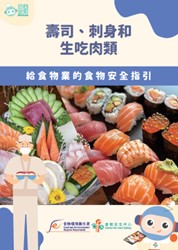
The CFS has compiled Sushi, Sashimi and Meat To Be Eaten Raw – Food Safety Guidelines for Food Businesses (the Guidelines) for reference by food trade practitioners who prepare and sell sushi, sashimi and meat to be eaten raw. The Guidelines explain that the food concerned is considered high-risk foods and outline common food safety problems, including the potential presence of pathogens and parasites in raw ingredients and their susceptibility to contamination during handling and storage, reminding the trade to adopt appropriate risk management measures. The Guidelines, based on the operational flow, offers advice on adhering to GHPs, including sourcing from reliable suppliers and verification of health certificates upon receipt of goods, storage and defrosting at proper temperatures, designation of separate working areas with the use of designated equipment for handling sashimi and meat to be eaten raw, handling of sushi rice within appropriate timeframes and at proper temperatures, proper handling of dressings and prepackaged ingredients, as well as proper packaging and transportation. Moreover, the Guidelines provide a production flow diagram marked with Critical Control Points to help the trade systematically manage food safety and provide wholesome food for consumers.
Please scan the relevant QR code to view the Guidelines online or download them for reference.
News on CFS
1. The 93rd Meeting of the Trade Consultation Forum
The 93rd meeting of the Trade Consultation Forum was held on 25 June 2026. The CFS and the trade exchanged their views on topics including “Frozen Confections Prepared at Points of Sale for Immediate Consumption - Food Safety Guidelines”, “Nutritional Labelling Scheme”, “Allergen Labelling Requirement of Coconut under Tree Nuts in Hong Kong”, and “Food Safety Day 2026”.

For details of the event, please visit the following webpage or scan the relevant QR code:
https://www.cfs.gov.hk/english/committee/Notes_and_Presentation_Materials_TCF93_20260625.html
2. Take Part in Food Safety Quizzes to Learn and Win Prizes
Curious about how much you know about food safety? Starting from September 2026, the CFS will introduce “Food Safety Quiz with Prizes” in Food Safety Bulletin and Food Safety Express. Everyone is welcome to join.
Entering the quiz is easy: answer three simple questions after reading carefully the articles on food safety in this issue. Interested participants could scan the QR code on the dedicated page of “Food Safety Quiz with Prizes” to access the designated online form, fill in the answers and personal particulars, and submit the form. Particuiparts who answer all questions correctly may visit the CFS's exhibition hall in person to collect an exquisite souvenir. The souvenirs are available while stocks last.
For enquiries, please contact the Communication Resource Unit of the CFS at 2381 6096.
3. Exploring the World of Food Safety in the Exhibition Hall of the Communication Resource Unit
Want to learn about food safety information without the hassle? The exhibition hall of the CFS's Communication Resource Unit at Room 401, 4/F, Food and Environmental Hygiene Department Nam Cheong Offices and Vehicle Depot, 87 Yen Chow Street West, Kowloon is a destination not to be missed. Located near Exit C of MTR Nam Cheong Station, the exhibition hall is easily accessible, making it convenient for members of the public to drop by for a visit.
Several sets of thematic exhibition panels on display in the exhibition hall provide information on local and overseas food safety cases, results of the CFS’s risk assessment studies, and points to note in daily diets, etc. With the aid of audiovisual facilities, members of the public and the industry can grasp the latest food safety information in an interactive manner. What's more, the public and trade corners offer a variety of leaflets, pamphlets, posters and teaching kits, which members of the public, schools and public bodies are welcome to collect or arrange for loan for free for teaching and promotional purposes.
The opening hours of the exhibition hall are 8:45 am to 1:00 pm and 2:00 pm to 5:30 pm, Monday to Friday. To make enquires or book a group visit, please call our hotline at 2381 6096.
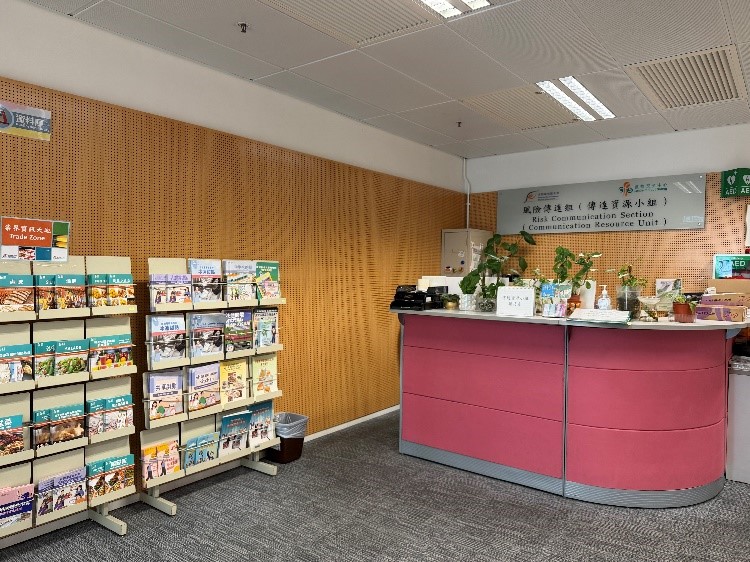
In addition, the Communication Resource Unit compiles the Food Safety Bulletin and the Food Safety Express, and holds Consumer Liaison Group meetings and focus group discussions from time to time to gather pubic views on food safety so as to tailor risk communication messages to better suit public needs.
4. Roving Exhibition on Food Safety Held at Hoi Fu Shopping Centre
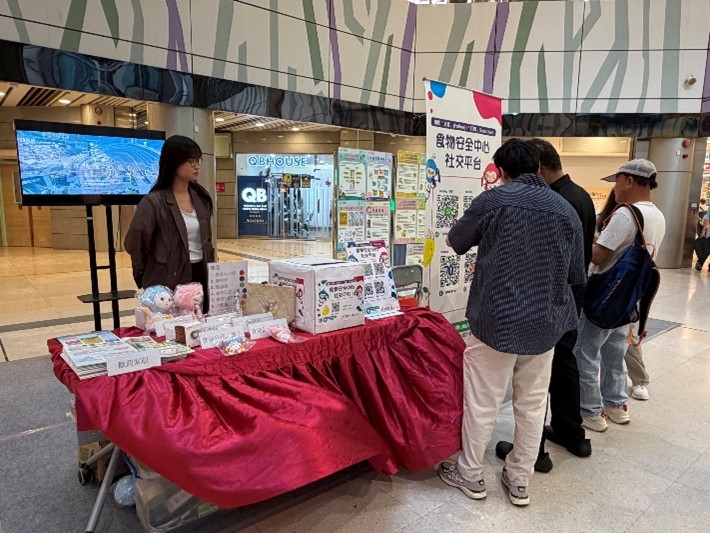
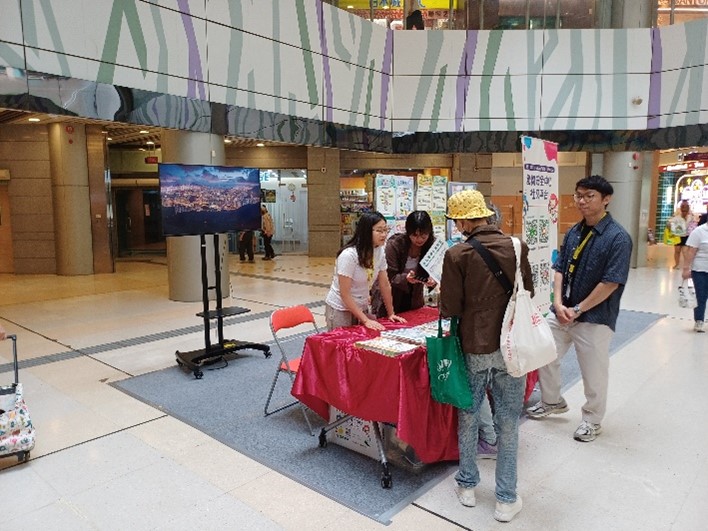
The CFS held a “Roving Exhibition on Food Safety” at Hoi Fu Shopping Centre on 13 June 2026, with the aim of enhancing public understanding and awareness of food safety. Focusing on the themes of “Nutrition Labelling”, “Trans Fat” and “Cross-contamination of Food”, the event enabled the public to have a deep understanding of how to properly read nutrition labels, reduce trans fat intake, and prevent cross-contamination of food in daily life through exhibition boards, on-site presentations and interactive sessions.
The event was bustling with visitors. Apart from getting practical food safety information, visitors could also join a lucky draw by following the CFS's social media platforms on the spot to win exquisite gifts.
The CFS will organise a variety of promotional and educational events on an on-going basis to encourage the public to develop good eating habits and uphold food safety together.
Ask Our Mascots
The Use of Sulphur Dioxide in Food
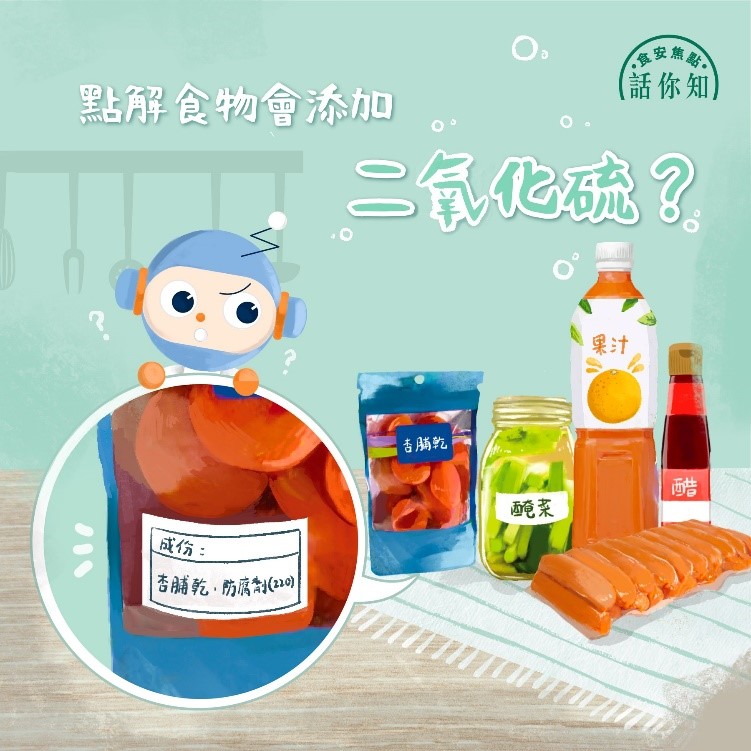
Sulphur dioxide (SO2) is a versatile food additive. It can act as a preservative to inhibit the growth of microbes and extend the shelf life of food products. It is also an antioxidant that prevents browning associated with oxidation in food and helps maintain the appearance and colour of food products. That’s why SO2 is added to many food products (e.g. dried fruits, pickled vegetables) and beverages (like fruit juices). However, the use of SO2 in fresh, unprocessed chilled or frozen meat is prohibited under the laws of Hong Kong. Using this method to preserve the colour of meat may mislead consumers.
The use of SO2 in food has a long history. Like other food additives, it has gone through rigorous assessments by international food safety authorities and has been ascertained as safe for food use. If SO2 is added to food products in accordance with Good Manufacturing Practice, the products should be safe upon normal consumption. However, some people are hypersensitive to SO2. They may experience allergic symptoms such as breathing difficulties, headache and nausea after consumption of food added with SO2.
In Hong Kong, there are legal requirements on the use of food additives as well as their labelling on food packaging. If SO2 is added to prepackaged foods, its functional class (i.e. preservative), and the specific name (i.e. sulphur dioxide), or its identification number under the International Numbering System (i.e. 220) must be stated in the ingredient list. In addition, for prepackaged food products containing sulphite in a concentration of 10 parts per million or more, the name of the sulphite and its functional class must be specified in the ingredient list for identification.
To learn more, you could read this article “A Closer Look at Sulphur Dioxide in Foods” :
Food Safety Prie Quiz
A simple test on food safety knowledge
This issue of Food Safety Express features a “Food Safety Prize Quiz”. All are welcome to join. Taking part is super simple: just go to the following webpage, complete the designated online form, and then input the answers and required information. Participants who answer all questions correctly during the activity period may come to the CFS's exhibition room to collect a souvenir. Prizes are limited in quantity, available on a first-come-first-served basis while stocks last.
Quiz page:
https://c.fehd.gov.hk/index.php/apps/forms/s/5foKpHLC2FFYabjjdrCzSSZz
- Which of the following is a correct way to prevent food cross-contamination?
a) Place raw and cooked foods in the same compartments of the refrigerator to save space.
b) Use the same set of knives and chopping boards for raw meat and ready-to-eat food, and wash them with clean water afterwards.
c) Place cooked or ready-to-eat food in the upper compartments of the refrigerator, raw food in the lower compartments, and seal raw food with cling film.
d) To protect the environment, use containers of the same colour for raw and cooked foods, but keep them separately. - According to the “separate cooked from raw” rule, which of the following is a correct way to keep raw and cooked foods in the refrigerator?
a) Keep cooked/ready-to-eat food in the lower compartments, and raw food in the upper compartments to prevent juices from dripping.
b) Keep cooked/ready-to-eat food in the upper compartments, and raw food in the lower compartments to prevent juices from dripping.
c) Raw and cooked foods can be placed in the same compartments as long as they are wrapped properly in cling film.
d) Keep raw ingredients in the upper compartments, and cooked/ready-to eat food in the lower compartments for easy access. - The key food safety points for prepared dishes can be summarised as “preparation, packaging and pending delivery”. Which of the following is not a key point of the “packaging” step?
a) Packaging staff should keep themselves, the environment and utensils clean at all times.
b) Keep prepared dishes at a proper temperature during storage and transportation.
c) Detailed handling instructions should be indicated on prepackaged prepared dishes.
d) Ensure that food is protected food from contamination during the packaging process.
Terms and conditions
1. Participants must submit the answers and required personal particulars during the activity period through the online form designated by the CFS. The online form is accessible through the quiz’s weblink published in the Food Safety Express.
2. Each participant is limited to one entry and one prize for each issue.
3. Participants must answer all questions correctly to be eligible for the prize.
4. The information submitted by the participants will be used solely for administering this quiz activity, verifying eligibility. They will not be used for any other purposes or disclosed to third parties.
5. The information provided by the participants must be true and correct. The CFS reserves the right to disqualify any participant or revoke their eligibility for the prize in case of incomplete or incorrect information, repeated entry or any fraudulent conduct.
6. Prizes must be collected in person by the winners at the exhibition room of the CFS within the specified timeframe. Information for identity verification (e.g. registered surname and last 4 digits of telephone number) must be provided at the time of collection.
7. Prizes are limited in quantity, available on a first-come-first-served basis while stocks last. Participants may call to check their availability before collection.
8. The address of the exhibition room is Room 401, 4/F, Food and Environmental Hygiene Department, Nam Cheong Offices and Vehicle Depot, 87 Yen Chow Street West, Kowloon. Its opening hours are from 8:45 a.m. to 1:00 p.m. and from 2:00 p.m. to 5:30 p.m. (Monday to Friday). It is closed on Saturdays, Sundays and public holidays. Telephone enquiries in advance are welcome where necessary.
9. The correct answers to this issue’s quiz will be published in the next issue of the same publication for readers’ reference.
10. The CFS reserves the right to make all final decisions regarding this activity and prize arrangements, including the right to interpret, modify, suspend or terminate the activity.
Diary of Mascot ON
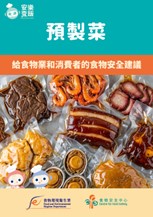
Food Safety Tips Gallery – Preparation, Packaging and Pending Delivery
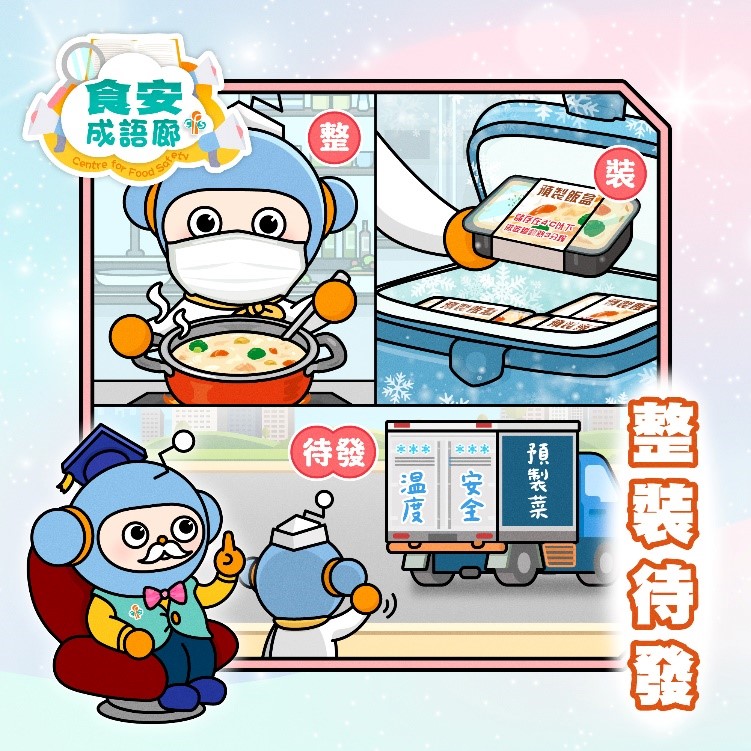
Everyone in Hong Kong is incredibly busy, and because it’s so convenient and fast, prepared dishes have been getting more and more popular lately.
Prepared dishes generally refer to foods made from one or more food ingredients. These products are subjected to processing methods (e.g. cutting, mixing, marinating, seasoning, etc.) and/or cooking techniques (e.g. frying, roasting, steaming, etc.), and are subsequently prepared as either finished or semi-finished dishes. What key food safety points should you note when making prepared dishes? Dr. On summarises them as “preparation, packaging and pending delivery” to help you understand:
- Preparation
- Obtain ingredients from approved and reliable sources;
- Strictly adhere to GHPs in the production of prepared dishes;
- Properly process and handle prepared dishes (e.g. heating thoroughly) to effectively reduce the risk of microbiological contamination in finished products.
- Packaging
- Packaging staff should keep themselves, the environment and utensils clean at all times to prevent food contamination;
- For prepackaged prepared dishes, detailed instructions for handling the products, such as storage conditions, cooking time, temperature and methods, should be indicated on the packaging so that consumers can follow them.
- Pending delivery
- After cooling, keep prepared dishes at a proper temperature (chilled state at 4°C or below; frozen state at -18°C or below) during storage and transportation.
When buying prepackaged prepared dishes, keep the following points in mind:
- Check the shelf lives of prepared dishes;
- Store, cook and heat prepared dishes according to the instructions on the packaging;
- Read nutrition labels to make healthier food choices.
For detailed recommendations on prepared dishes, check out here:
https://www.cfs.gov.hk/english/trade_zone/safe_kitchen/Prepared_dishes.html
Please scan the relevant QR code to read the leaflet Prepared Dishes - Food Safety Advice for Food Businesses and Consumers online or download it for reference: