Feature Article
Prepared Dishes - What Should We be Aware of?
In recent years, prepared dishes have gained popularity due to their convenience. However, concerns have been raised about their potential food safety risks. So, what should we be mindful of regarding this type of food?
What are Prepared Dishes?
Prepared dishes generally refer to finished or semi-finished dishes made from one or more food ingredients that have been processed (e.g., cutting, mixing, marinating, kneading, flavouring) and/or prepared (e.g., frying, roasting, boiling, steaming).
While the term “prepared dishes” is relatively new, the concept is not. From soft-centred eggs to spicy crayfish, a variety of familiar foods that can be classified as prepared dishes have long been available in the market.
Key Factors Affecting the Food Safety Risks of Prepared Dishes
Raw materials and manufacturing process
To ensure the quality and safety of prepared dishes, raw materials that meet local food safety standards should be used. The food trade should maintain proper food transaction records to enhance traceability.
Microbial contamination is the major concern during the manufacturing process of prepared dishes. Therefore, it is critical to ensure that prepared dishes are processed appropriately (e.g., adequate heating) to effectively control the microbiological risks of the final products.
Storage and transportation
Since quite a number of prepared dishes are stored refrigerated or frozen, it is crucial to ensure that the cold chain is well maintained throughout the storage and transportation process. The goal of maintaining the cold chain is to prevent prepared dishes from falling within the “temperature danger zone” between 4°C and 60°C, where bacteria grow rapidly. Moreover, the packaging of prepared dishes should include information such as storage conditions and cooking time, temperature and methods, for consumers’easy reference.
Safety Management of Prepared Dishes
Manufacturers of prepared dishes should consider adopting a food safety management system, such as the Hazard Analysis and Critical Control Point (HACCP) system, to identify and control food safety issues at every stage of the production process. HACCP focuses on proactive prevention by anticipating potential issues across all stages from production and processing to distribution and consumption. In Hong Kong, prepared dishes are subject to the food safety requirements as stipulated in the Public Health and Municipal Services Ordinance (Cap. 132). Besides, under Section 54 of Cap. 132, all food available for sale in Hong Kong, including prepared dishes, shall be fit for human consumption.
Currently, the Centre for Food Safety (CFS) implements a risk-based surveillance programme for food available for sale in Hong Kong, including prepared dishes. From 2023 to 2024, over 1 000 food samples that could be classified as prepared dishes were tested, with only one sample of pre-packaged chilled crayfish found unsatisfactory due to possible contamination with Listeria monocytogenes. Test results of the remaining samples were satisfactory. The CFS has taken appropriate follow-up actions on the unsatisfactory sample.

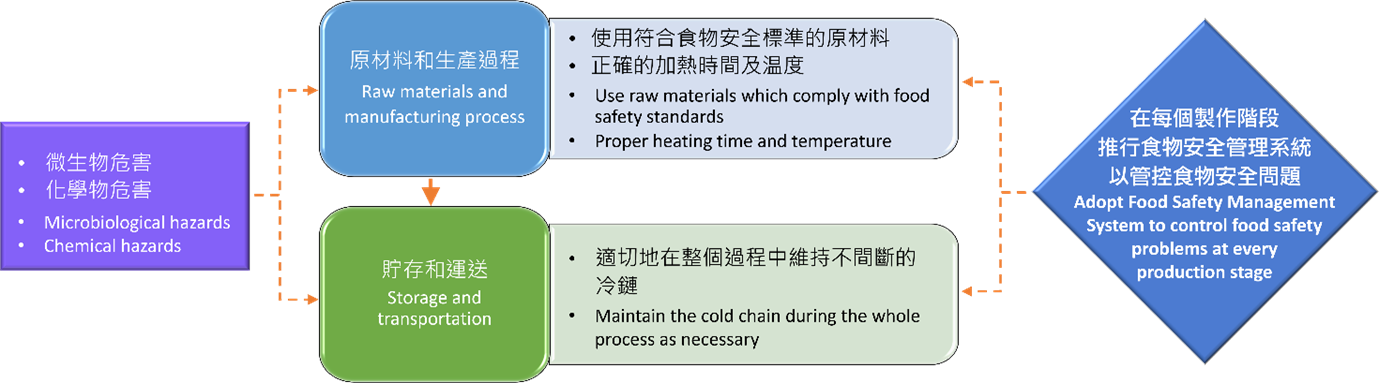

Figure 1: Key factors affecting the food safety of prepared dishes
Points to Note
- While the term “prepared dishes” is relatively new, the concept is not.
- Prepared dishes are subject to the food safety requirements as stipulated in the Public Health and Municipal Services Ordinance (Cap. 132).
- Raw material quality, manufacturing processes, and storage and transportation conditions are key factors for maintaining the safety of prepared dishes.
Advice to Trade
-
Obtain raw materials from approved and reliable sources.
-
Strictly adhere to Good Hygienic Practices (GHPs) and maintain good personal and environmental hygiene in the production of prepared dishes.
-
Ensure that the cold chain is well maintained during the whole storage and transportation process of prepared dishes.
- Detailed instructions for handling the products, such as storage conditions, cooking time, cooking temperature and cooking methods, should be indicated on the packaging so that consumers can follow correctly.
- Keep proper trade records to facilitate source tracing when necessary.
Mascot ON in Lesson
1. To Recap, Proper Defrosting is Crucial

In this world full of frozen pork, beef and chicken, defrosting different kinds of food to sort out our three meals has become our daily ritual.
Even when food is frozen, some of the bacteria it contains may still be alive in an inactive state. Once the food is thawed, bacteria will seize the opportunity to revive and start multiplying. If the wrong defrosting method is used, bacterial growth will spiral out of control.
There are three ways to properly defrost food:
- By storing food in the freezer of the fridge at 4°C or below
- Wrap the food with cling film or keep it in a leakproof container.
- Keep raw meat and other ready-to-eat food in the lower and upper compartments respectively.
- By putting food under running tap water
- Put raw meat or poultry in airtight containers before defrosting to avoid contamination of other food by bacteria through splashes or worktops.
- Clean the sink and the surrounding area thoroughly after defrosting.
- By microwave
- Put the food in containers or wrap it with cling film before defrosting in a microwave oven.
- Take the food out to stir or flip it for a more even defrosting effect.
To recap, never defrost food at room temperature. Cook the food thoroughly as soon as possible after proper defrosting.
2. AMR Bacteria Hunters in Action

Hey brave AMR Bacteria Hunters, do you know that cooked and raw food should be kept totally separate in your kitchen and fridge to prevent terrifying cross-contamination? Those drug-resistant superbugs in raw food are trying to invade human bodies and render future antibiotic treatments ineffective.
Apart from using high heat to santisise, that is cooking food thoroughly to kill antimicrobial resistant bacteria, we should also bear in mind the following “separate cooked from raw” rule when handling raw, cooked or ready-to-eat ingredients:
- Separate by compartments: keep raw ingredients and cooked/ready-to-eat food in different compartments of the fridge. Cooked food/ready-to-eat food should be kept in the upper compartments, and raw food in the lower compartments.
- Separate packaging: raw meat and uncooked seafood should be wrapped properly with cling film or kept in airtight containers to prevent their juices from dripping onto cooked/ready-to-eat food and causing contamination.
- Dedicated utensils: handle cooked and raw food with separate utensils (like separate chopping boards, knives and containers), preferably those in different colours or made of different materials for easy identification.
For more information on AMR and food safety, please visit this webpage:

Spot Check
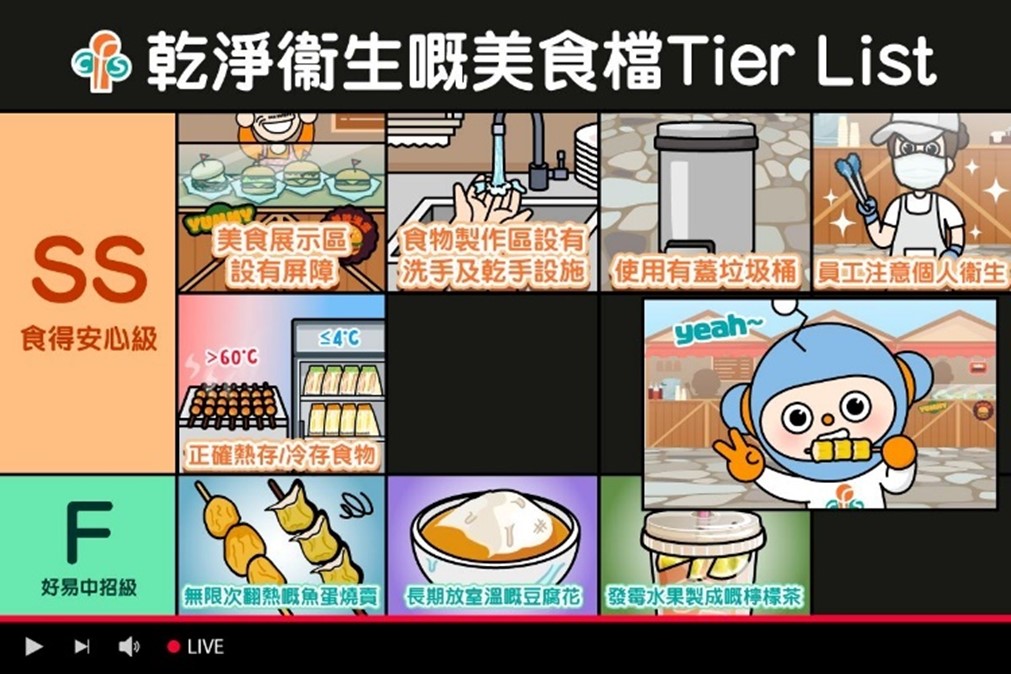
With a dazzling array of food carnivals, bazaars and night markets in Hong Kong, you are spoilt for choice! This time, let me, Mascot ON, lead the way on our food hunt and show you how to look for street food stalls selling safe and delicious food.
- Tier SS – Safe pick, go ahead!
- The food display area has a barrier to prevent foreign objects from falling onto the food.
- Food handlers wear clean work clothes and aprons, as well as face masks and gloves.
- Hand washing and drying facilities are provided in the food preparation area.
- Both cold- and hot-holding equipment is available, keeping hot food at above 60℃ and cold food at 4℃ or below.
- Covered rubbish bins are provided at the stall.
- Tier F – Questionable hygiene conditions, skip!
- The food in the display area is exposed to the air without any cover.
- Hot/cold food is left at room temperature for ages, making it easy for bacteria and mould to grow.
- Food displayed at room temperature are reheated again and again.
- The stall's environmental hygiene and the staff's personal hygiene are unsatisfactory.
Before indulging yourself in street food, make sure your hands are clean. What if you forget to wash your hands while there is no hand washing facilities nearby? Using 70%-80% alcohol-based hand sanitiser is just fine if your hands are not visibly dirty.
For more information, please check out Street Food Stalls – Food Safety Guidelines for Food Businesses:

Safe Kitchen/Trade Talks/Food Safety Guidelines
Safe Kitchen
Introduction to "Safe Kitchen" Scheme
To facilitate the adoption of the 5 Keys to Food Safety and Good Hygiene Practices (GHPs) by trade members, and ensure food safety in their daily operation, the CFS has integrated the existing channels of risk communication and launched a new platform, namely “Safe Kitchen”, to communicate with the trade. The platform provides food safety information of greater practical importance to meet the operational needs of catering outlets.
The "Safe Kitchen" platform disseminates up-to-date food safety information (including food safety guidelines and legislative amendments) to the trade through a host of channels including WhatsApp, emails and dedicated websites.
Under the "Safe Kitchen" Scheme, training materials tailor-made for the trade and workshops for kitchen staff will be provided to enhance their food safety and hygiene awareness. Members of the trade are welcome to scan the relevant QR code to download the registration form for the “Safe Kitchen” Scheme in order to receive the latest food safety information in a timely manner

Trade Talks
Trade Talks 2026
The CFS will organise trade talks and workshops on the HACCP System and GHPs from March through October in 2026 to publicise proper food handling among food trade practitioners, with a view to promoting GHPs through the trade’s active participation and collaboration with the government, and facilitating the trade’s implementation of a Food Safety Plan in the food manufacturing process, so as to enhance food safety.
The talks will be conducted in Cantonese. Participants will be awarded a certificate of attendance. For details, please refer to “What’s New” on the CFS’s webpage:
https://www.cfs.gov.hk/english/whatsnew/whatsnew_act/whatsnew_act.html
Food Safety Guidelines:
1. Cooling and Reheating Prepared Foods – Food Safety Guidelines for Food Businesses
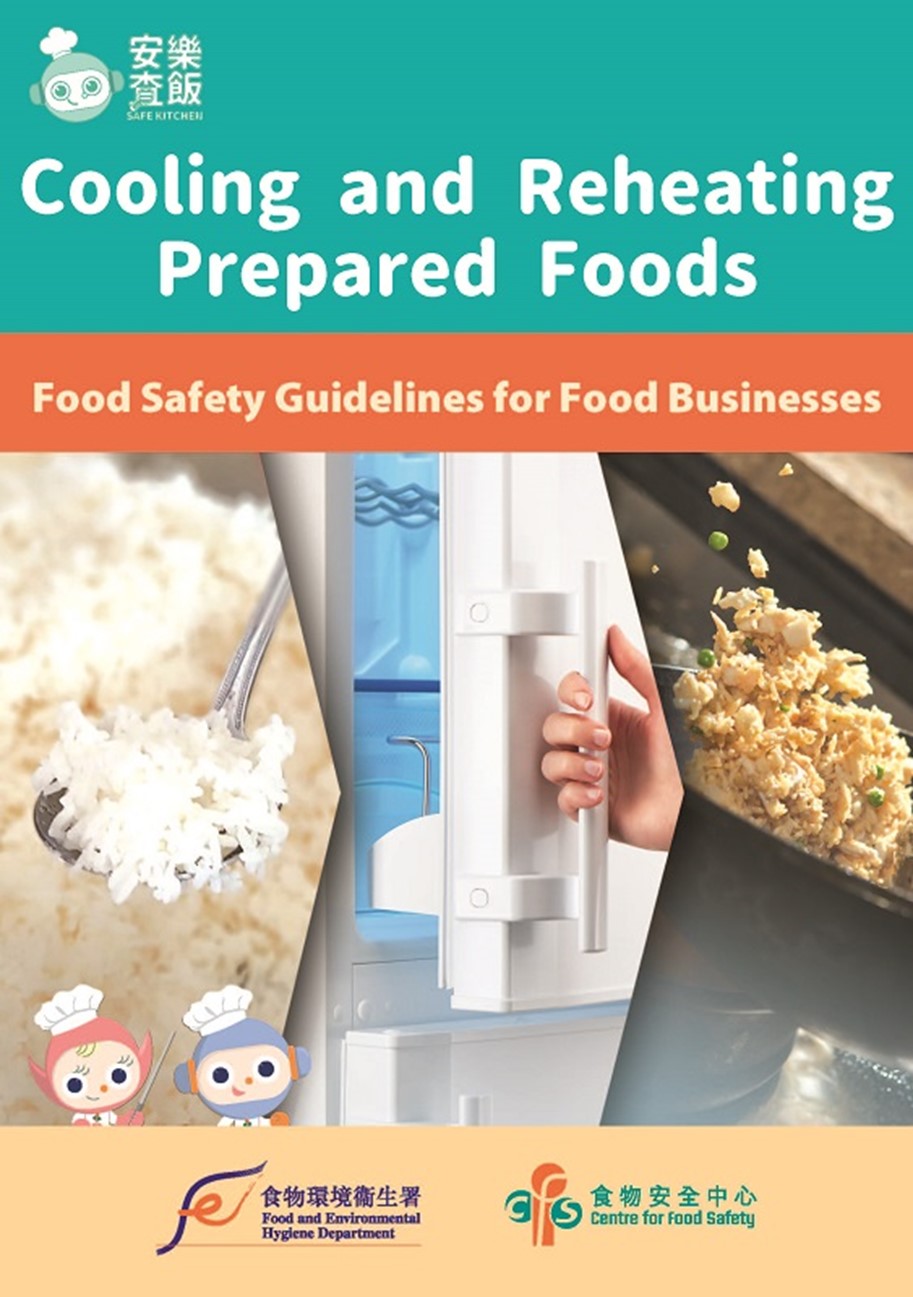
The CFS is dedicated to disseminating food safety knowledge and providing the food trade with practical guidance. Cooling and Reheating Prepared Foods – Food Safety Guidelines for Food Businesses (“the Guidelines”) published by the CFS help the trade master proper food handling procedures in a simple, easy-to-understand manner, with key points as follows: cooked food should be cooled by “two-step cooling” or “blast chilling” as soon as possible and should not be kept within the temperature danger zone (between 4℃ and 60℃) for too long; cooled food must be stored at 4℃ or below; for reheating, the food must be heated thoroughly until the temperature at its centre reaches at least 75℃ and is to be reheated only once. The trade should strictly comply with the Guidelines to reduce the risk of food poisoning. Trade practitioners could visit the CFS’s website (cfs.gov.hk/safekitchen) or scan the relevant QR code to download the Guidelines and put them into practice during their daily operations to enhance food safety and protect consumers’ health. The CFS calls on the trade to proactively adopt the Guidelines and work together to safeguard food safety in Hong Kong.

2. Prepared Dishes – Food Safety Advice for Food Businesses and Consumers
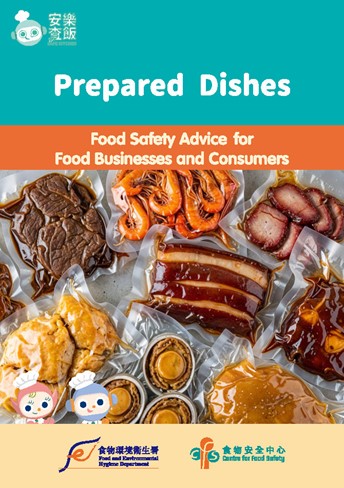
In order to facilitate proper handling and preparation of prepared dishes by the trade, the CFS has specially complied a pamphlet titled “Prepared Dishes – Food Safety Advice for Food Businesses and Consumers”, which covers the key points of food safety for prepared dishes across various stages, from purchasing to storage, preparation, cooling, packaging and transportation, as well as practical guidance on temperature control, prevention of cross-contamination and personal hygiene. It also explains the “two-stage cooling method” and labelling requirements to help the trade strengthen food safety management. Members of the trade could scan the relevant QR code to view or download the pamphlet online for reference. Let’s work together to safeguard food safety.

News on CFS
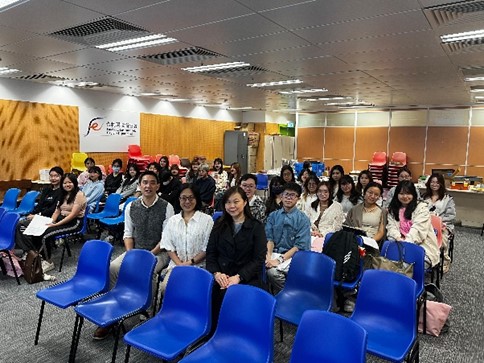
1. Briefing for Students of Bachelor Programmes, Chinese University of Hong Kong (CUHK)
As before, the CFS held a briefing for students of the Bachelor of Science in Community Health Practice and Public Health programmes, Faculty of Medicine, CUHK on 3 November 2025 to give information on the role of the FEHD in food safety surveillance and control in Hong Kong so that the students can have a preliminary understanding of the work of the CFS, thereby facilitating their career planning for professional development.
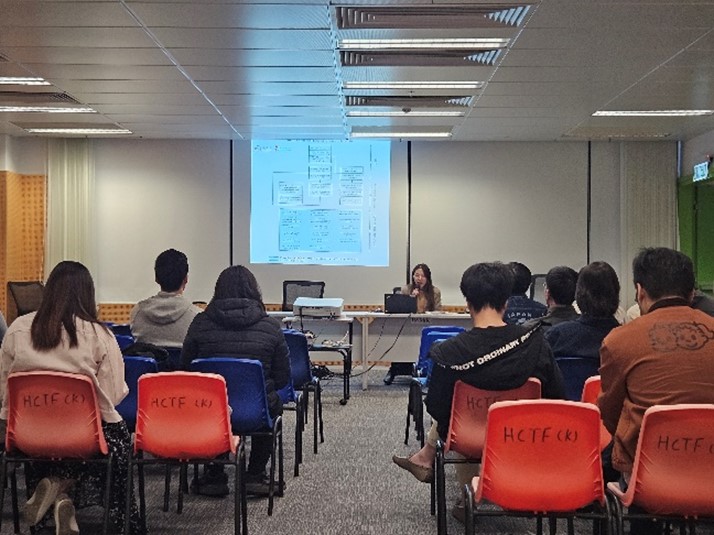
2. Talk on the Daya Bay Contingency Plan Held by CFS, FEHD
The CFS jointly organised an annual talk on the Daya Bay Contingency Plan with relevant government departments (including the DH and the Electrical and Mechanical Services Department) on 25 November 2025. On the day of the talk, departmental representatives took turns to share their respective areas of work, such as nuclear power generation, radiation monitoring, radiation exposure pathways, surveillance of imported food, management of contaminants and wastes, radiation devices, and protective equipment monitoring, so as to update our colleagues on the contingency plan.
3. Food Safety Seminar for Trade 2025 Held by CFS
On 4 December 2025, the CFS held a Food Safety Seminar for Trade 2025, which aimed to provide an opportunity for the Government and the food trade to exchange information and views on current and important food safety issues in Hong Kong, and encourage continuous improvement and collaboration in securing local food safety among the trade.
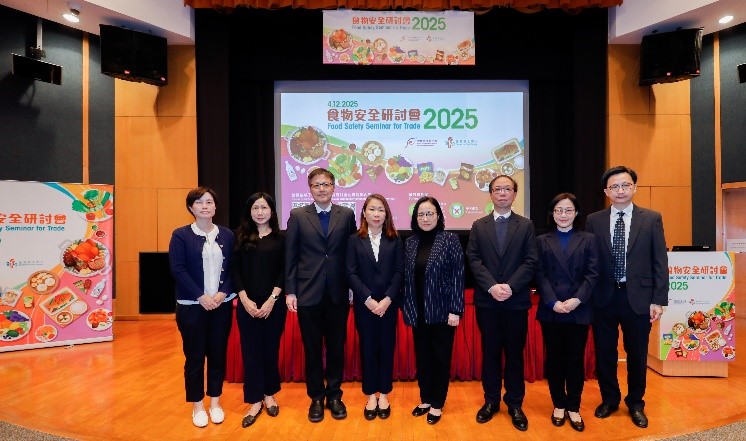
The seminar, held at Hong Kong Central Library, consisted of four sessions, namely Expert Sharing, Producing Safe Food, Legislation and Guidelines, and Food Trade Facilitation Measures. The seminar was divided into the morning and the afternoon parts, with question-and-answer sessions for trade representatives to ask questions.
For details of the event, please visit the following webpage or scan the relevant QR code:
https://www.cfs.gov.hk/english/whatsnew/whatsnew_act/Food_Safety_Seminar_for_Trade_2025.html

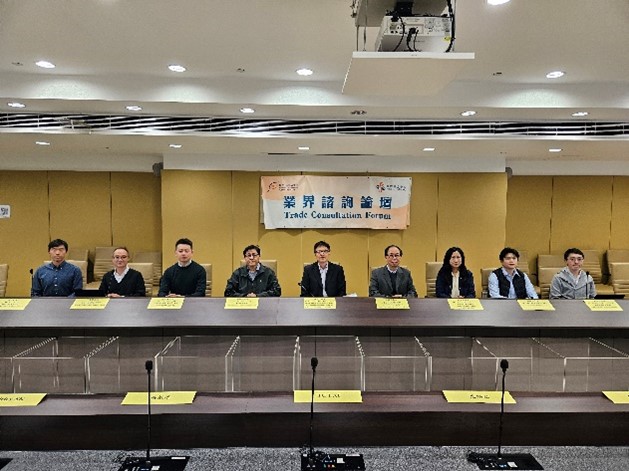
4. The 91st Meeting of the Trade Consultation Forum
The 91st meeting of the Trade Consultation Forum was held on 12 December 2025. The CFS and the trade exchanged their views on topics including “How to Address Anti-microbial Resistance (AMR) in Food for Food Businesses”, “Promotion of Food Trader Portal (FTP)”, and “Recommendations on Food Manufacturer Registration for Hong Kong-Manufactured Meat and Dairy Products Imported to the Mainland”.
For details of the event, please visit the following webpage or scan the relevant QR code:
https://www.cfs.gov.hk/english/committee/Notes_and_Presentation_Materials_TCF91_20251212.html

5. CFS's Participation in the 59h Hong Kong Brands and Products Expo
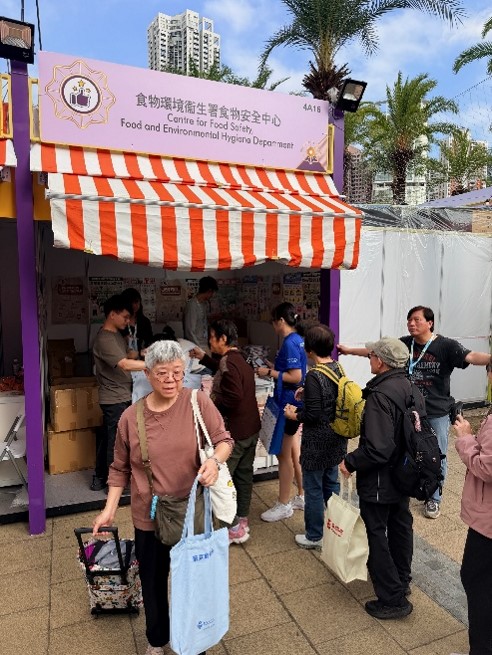
The annual Hong Kong Brands and Products Expo is one of the major outdoor trade fairs in Hong Kong. The 59th Expo was held at Victoria Park in late December 2025. As before, the CFS participated in the Expo to disseminate food safety messages to the public. For two consecutive days on 29 and 30 December 2025, the CFS set up a booth and distributed publicity leaflets, pamphlets and souvenirs in the Expo to promote food safety. The booth was bustling with visitors.
Ask Our Mascots
Tips for Safe Storage of Raw Meat in Freezers
Frozen meat should be stored at or below -18 ℃ to keep microorganisms inactive. However, the food quality may decline after three to six months. For instance, prolonged storage may affect food quality, resulting in drying, discoloration, and “ice crystals” formation (freezer burnNote 1 associated with dehydration and temperature differences between food surfaces and the freezer.
Prolonged storage of frozen meat also poses food safety concerns. Temperature fluctuations during defrosting and frequent door opening of freezers may promote microbial growth. Please refer to the key points below when storing frozen meat:
- Check the expiry dates of frozen meat, and use those nearing expiration first.
- Adhere to the “first-in, first out” principle when storing non-prepackaged food.
- Keep frozen meat in freezers upon receipt.
- Do not refreeze frozen meat exposed to the temperature danger zone (4℃ to 60℃) for more than two hours.
- Regularly monitor the temperature of freezers to ensure proper functioning.
- Always keep the doors of freezers closed and transfer the food from a defrosting freezer to a normal functioning one.
Note 1: To learn more about freezer burn of meat, please scan the QR code:

Enhancement Quiz
- Which of the following is not a key factor affecting the food safety risks of prepared dishes?
-
Quality of raw material.
-
Microbial contamination control during the manufacturing process.
-
Maintenance of the cold chain during the storage and transportation process.
-
The advertising methods for prepared dishes.
-
- Which of the following is a correct way to defrost food?
-
Defrost frozen food by leaving it at room temperature, then store it in the refrigerator after defrosting.
-
Place raw meat below ready-to-eat food in freezers at or below 4℃.
-
Defrost frozen food quickly in hot water to save time.
-
When defrosting frozen food, no packaging is needed; simply rinse it under running tap water.
-
- Which of the following statement is incorrect?
-
Wild mushrooms may contain heat-resistant toxins, which cannot be eliminated through cooking or freezing.
-
The most common mushroom toxin in Hong Kong is a gut irritant, which may cause symptoms like nausea and vomiting.
-
It is very easy to distinguish between edible and inedible mushrooms. Members of the public can identify and collect them themselves.
-
If mushroom poisoning occurs after consumption, seek medical attention immediately and bring the remaining mushroom for identification.
-

Diary of Mascot ON
Food and Drugs (Composition and Labelling) (Amendment) Regulation 2025 to take effect on 1 April 2026

The Food and Drugs (Composition and Labelling) (Amendment) Regulation 2025 (“Amendment Regulation”), which strengthens the regulation of prepackaged konjac-containing jelly confectionery, was passed by the Legislative Council by negative vetting on 20 August 2025. The Amendment Regulation will take effect on 1 April 2026, prohibiting the sale of mini-cup konjac-containing jelly confectionery with a height or width not exceeding 45 millimetres in the market. In addition, other prepackaged konjac jelly products must be labelled with choking warning statements on their packaging to remind consumers to exercise caution during consumption.
While the Codex Alimentarius Commission considers konjac a safe food additive, the unique product design and firm texture of mini-cup konjac jellies can increase the risk of choking if consumed improperly, which is particularly common among children and the elderly. The Government has been promoting health education messages on the prevention of food choking through various channels, including advice against directly sucking mini-cup konjac-containing jelly confectionery.
The CFS has worked with relevant stakeholders to enhance health education on choking prevention, including issuing letters to schools, organising seminars, and sharing information on social media. The CFS has also developed a set of guidelines on the new regulatory requirements for the trade and held a technical meeting with the trade on 28 August 2025 to facilitate their understanding of and compliance with the new requirements.
To view the press release regarding the new requirements of prepackaged konjac-containing jelly confectionery, go to the CFS's webpage by scanning the QR code: