Risk Assessment Studies
Report No. 17
NUTRIENT VALUES OF CHINESE DIM SUM
April 2005 (Revised February 2007)
Food and Environmental Hygiene Department
The Government of the Hong Kong Special Administrative Region
Correspondence:
Risk Assessment Section
Food and Environmental Hygiene Department
43/F, Queensway Government Offices,
66 Queensway, Hong Kong.
Email: enquiries@fehd.gov.hk
Contents
- Nutrient Contents in Chinese Dim Sum
- Effects of Adding Sauces in the Boiled Vegetable
- Effects of Consuming Soup on the Sodium Content of Noodle-in-soup
- Limitations of the study
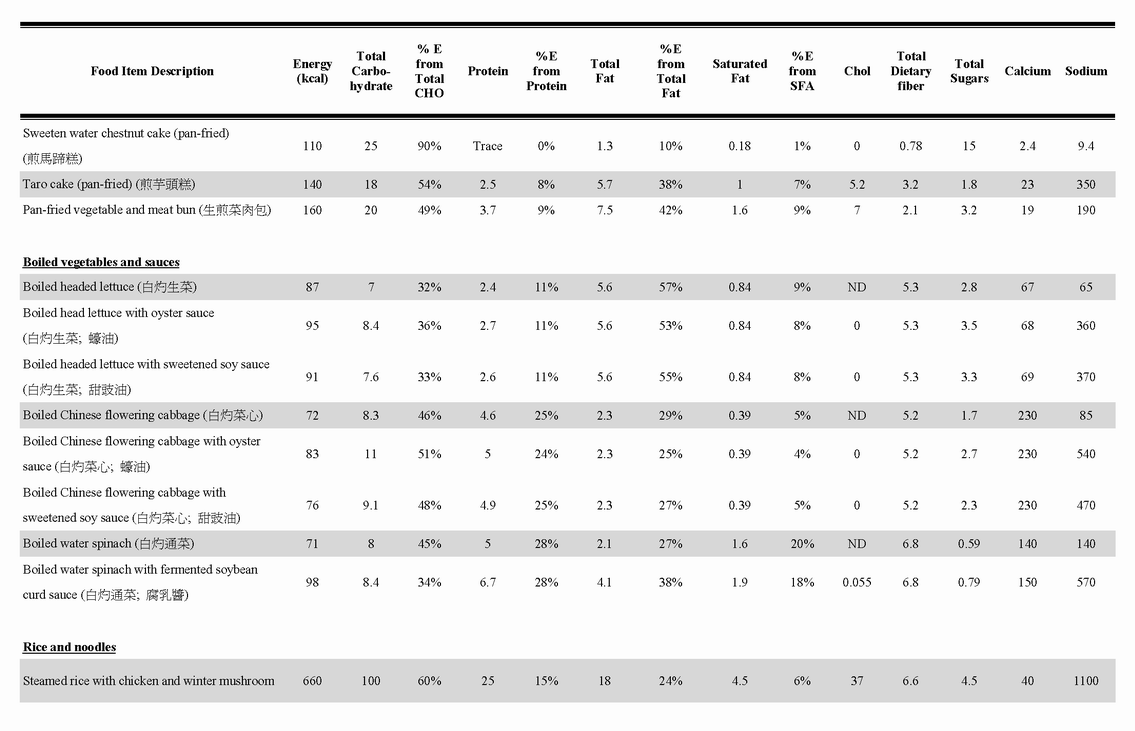
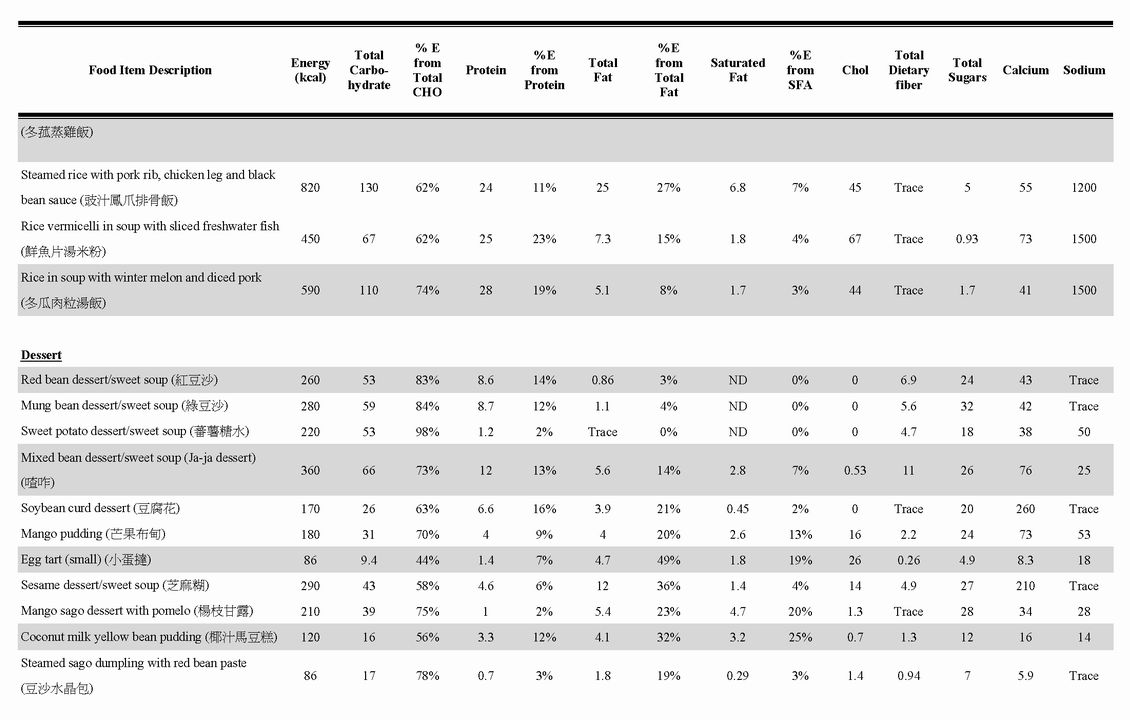
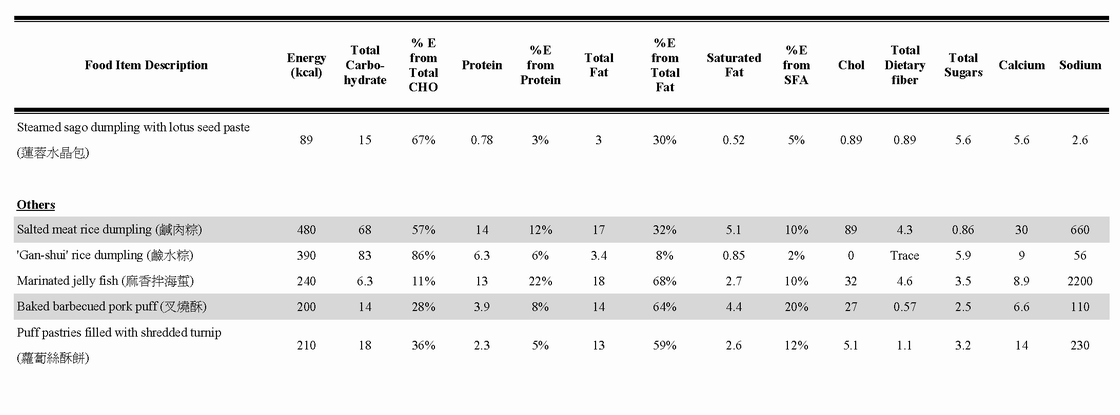
Conclusion and Recommendations
Annex I: Recommendations of WHO and FAO on Nutrient Intake
Annex II: Nutrition and Health 24
Annex III: Chinese dim sum analyzed in this study
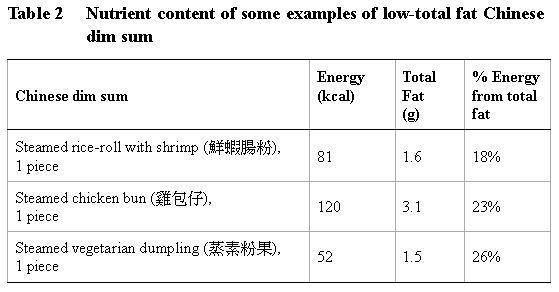
Annex IV: Testing Methods for the Determining Nutrient Contents in Foods
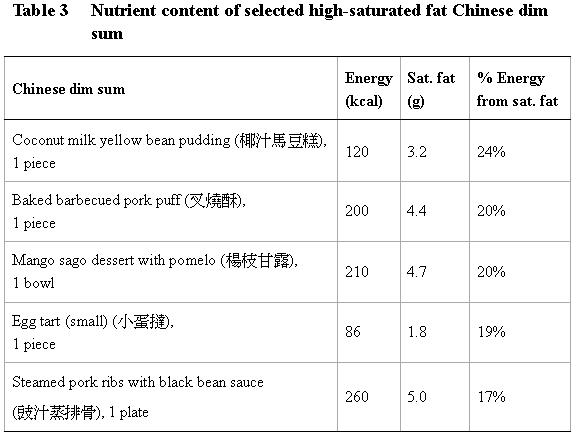
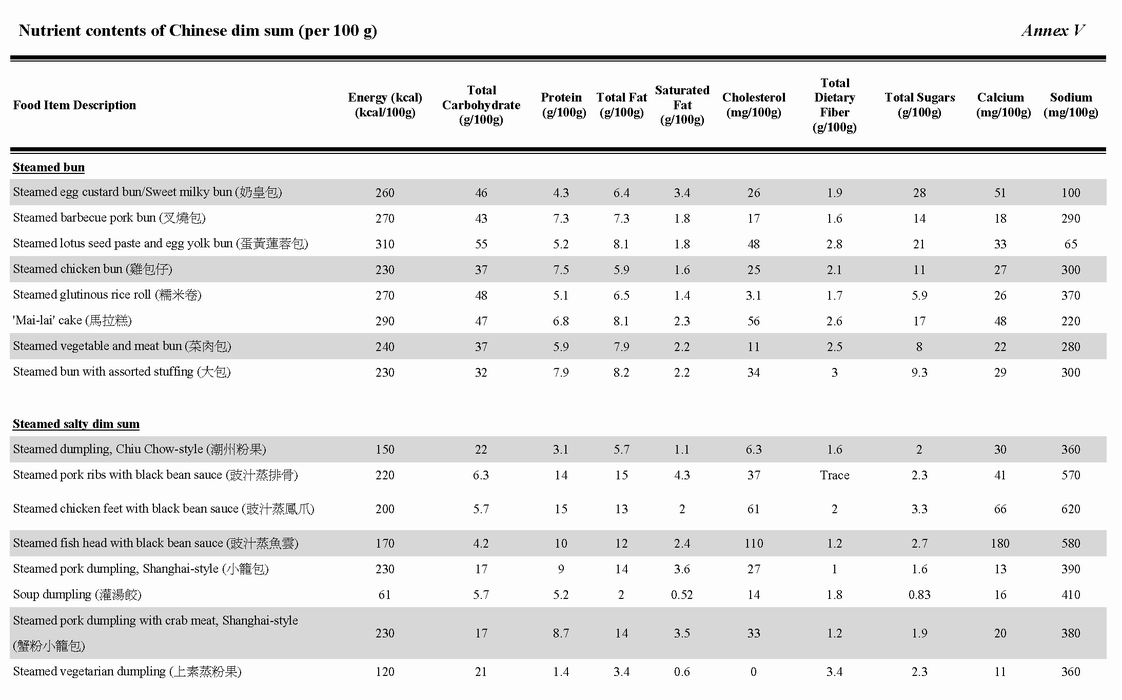
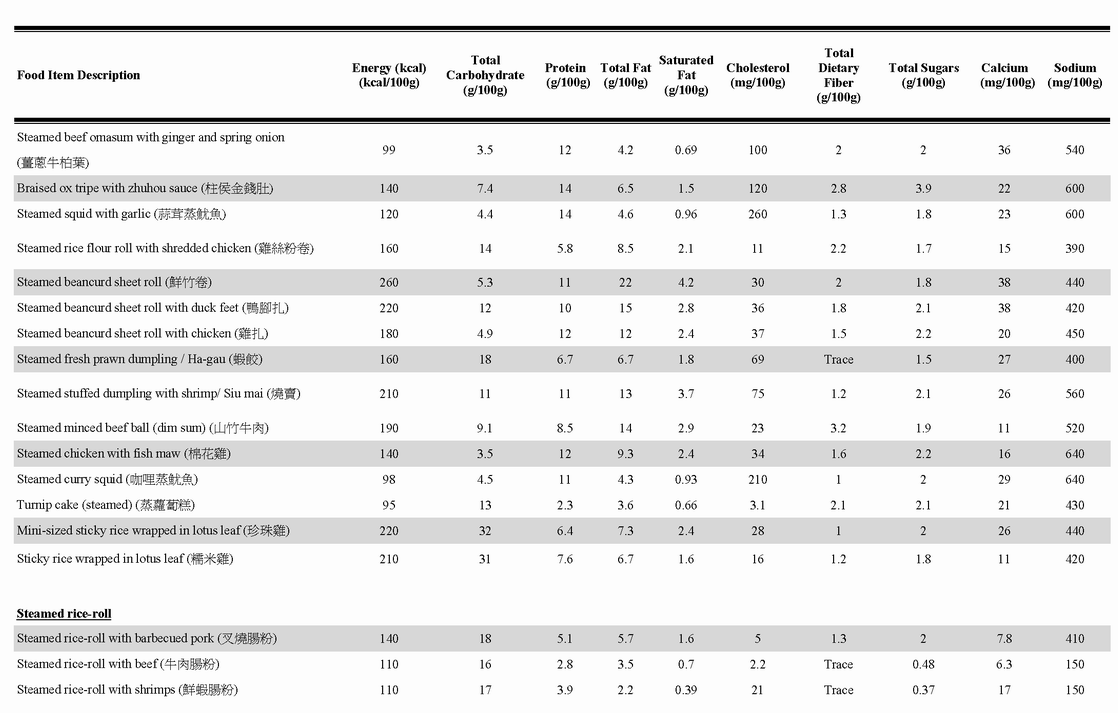
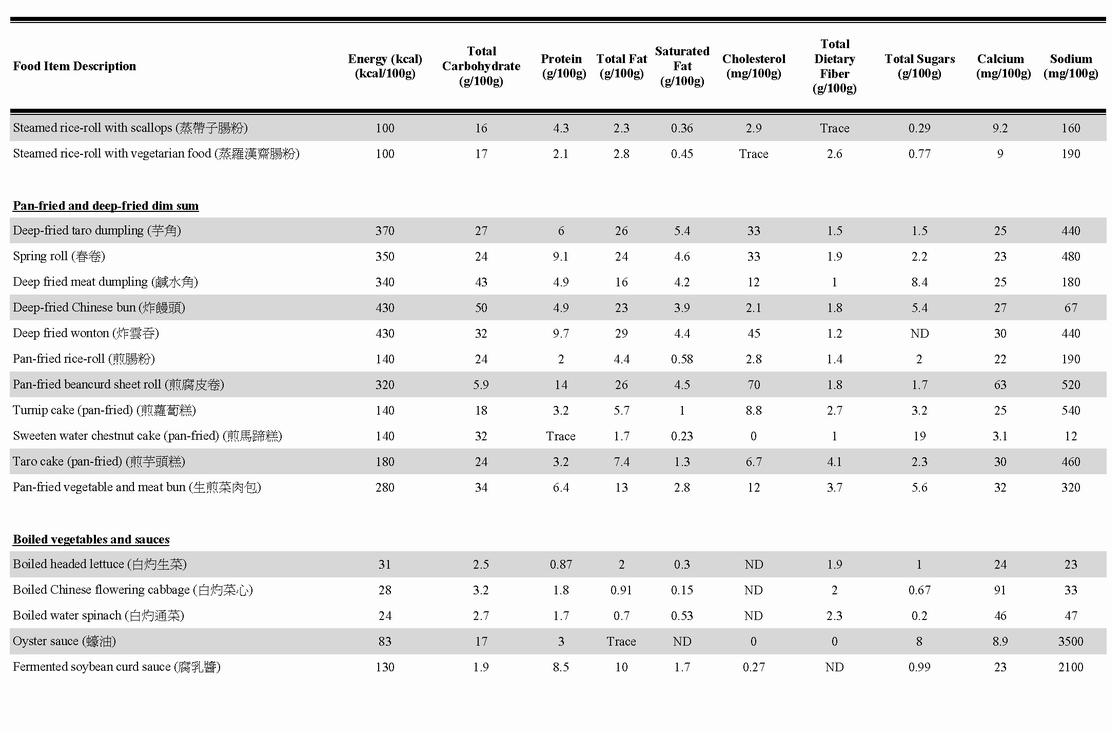
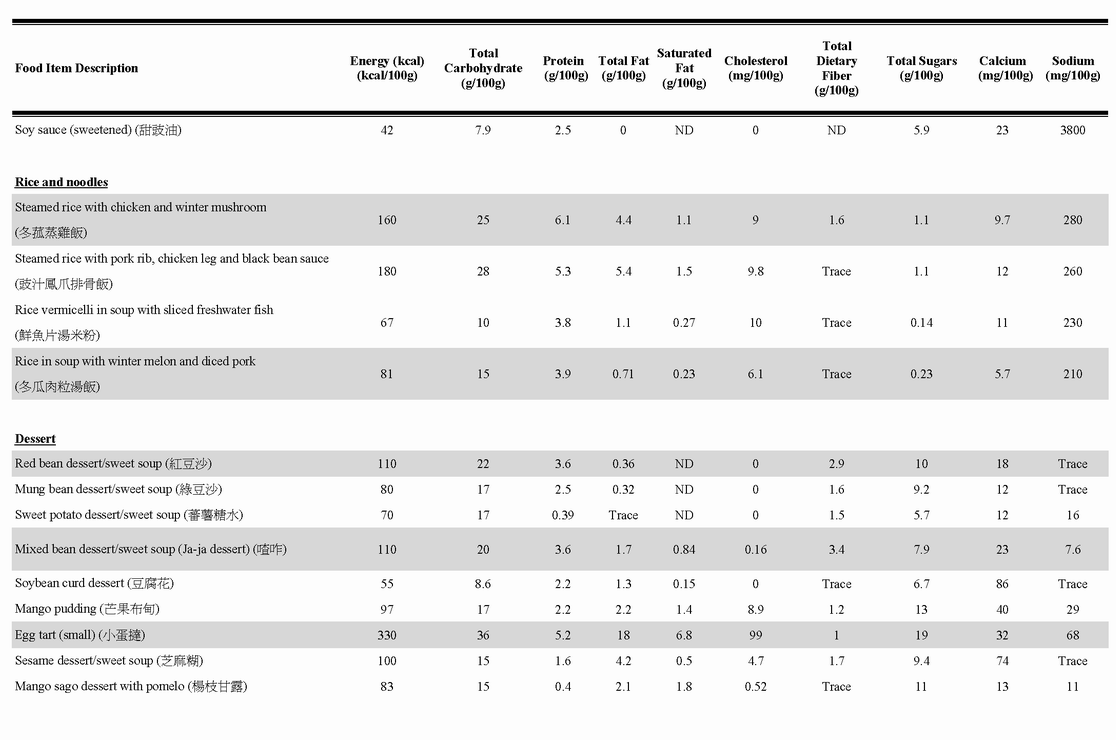
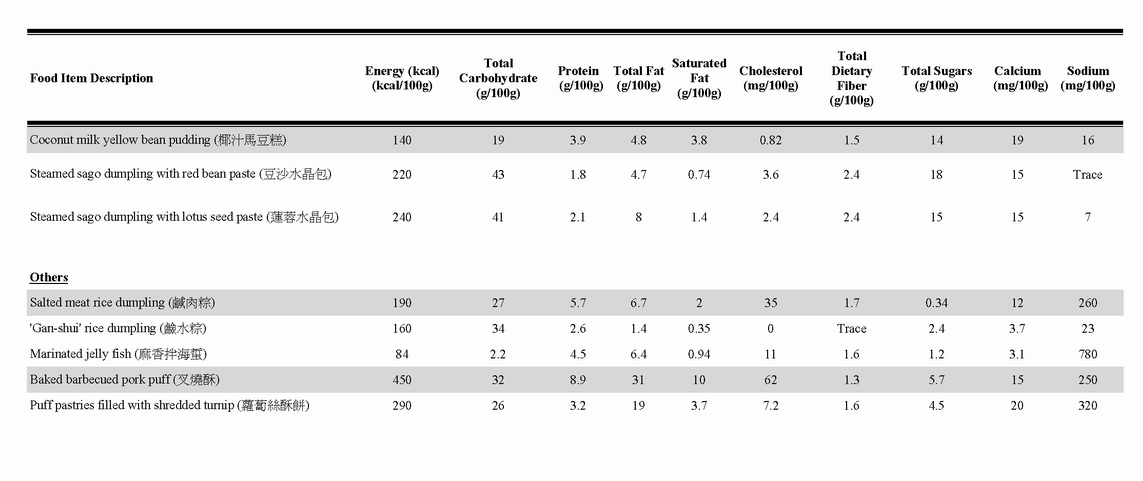
Annex V: Nutrient Contents of Chinese Dim Sum (per 100 g)
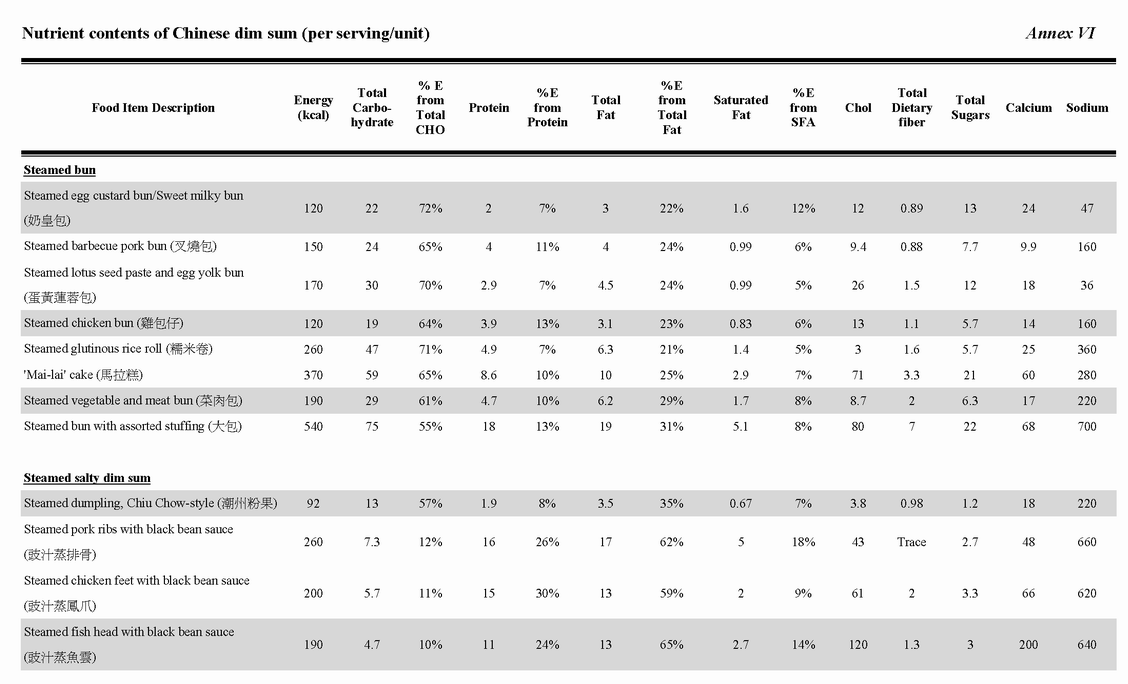
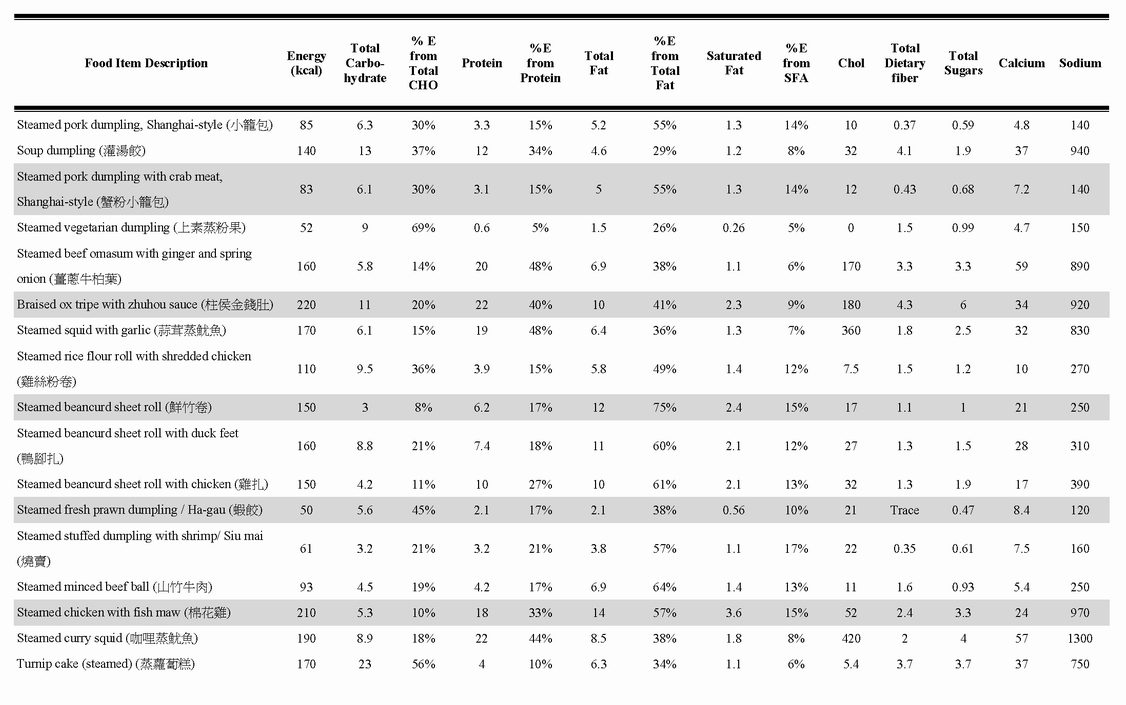
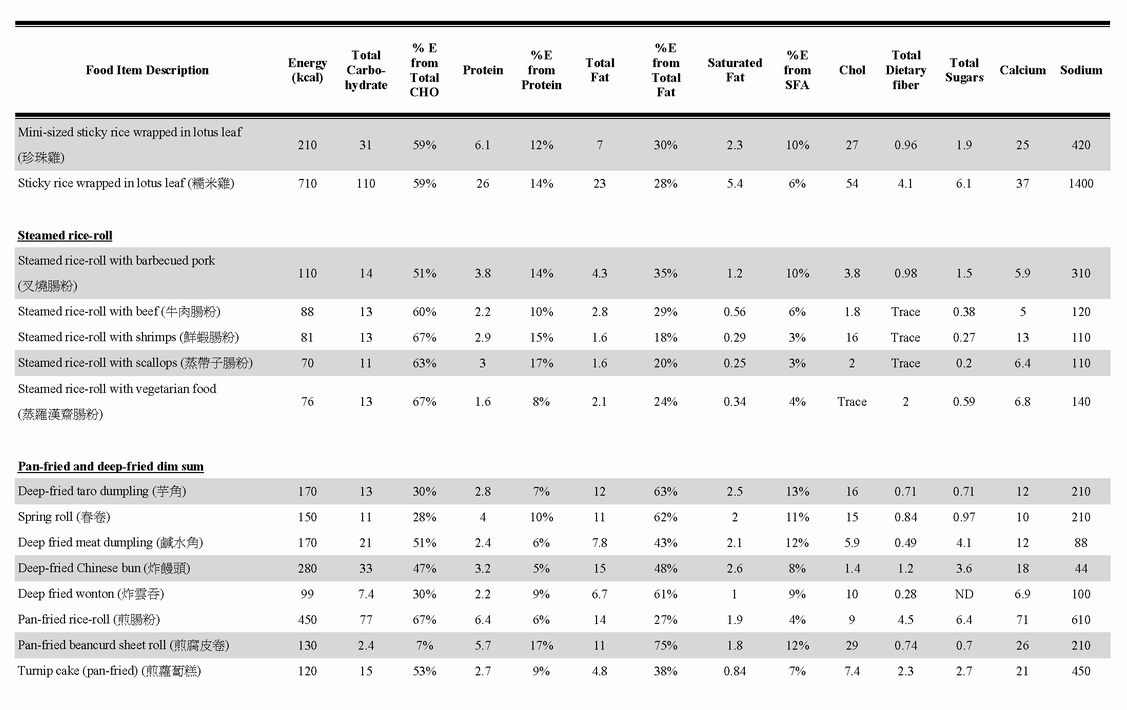
Annex VI: Nutrient Contents of Chinese Dim Sum (per Serving/Unit)
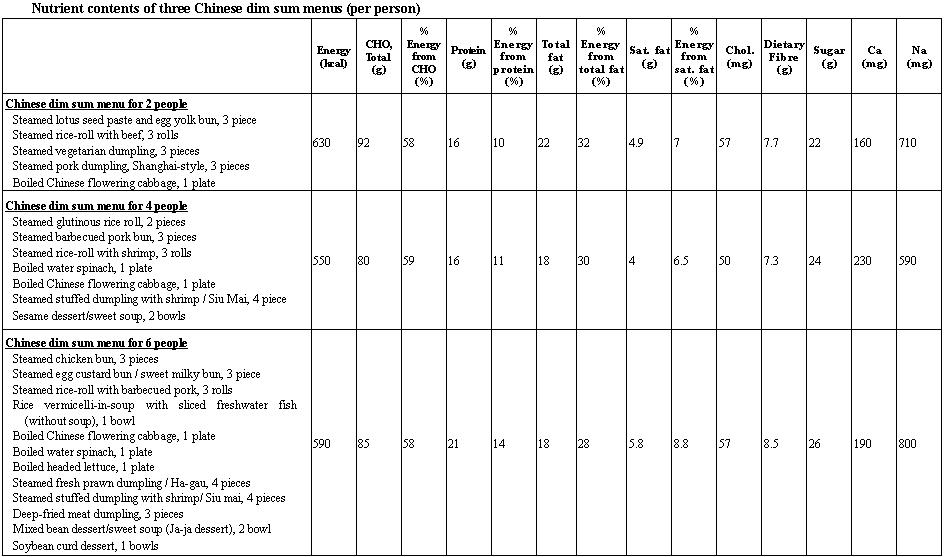
Annex VII: Nutrient Contents of Three Chinese Dim Sum Menus
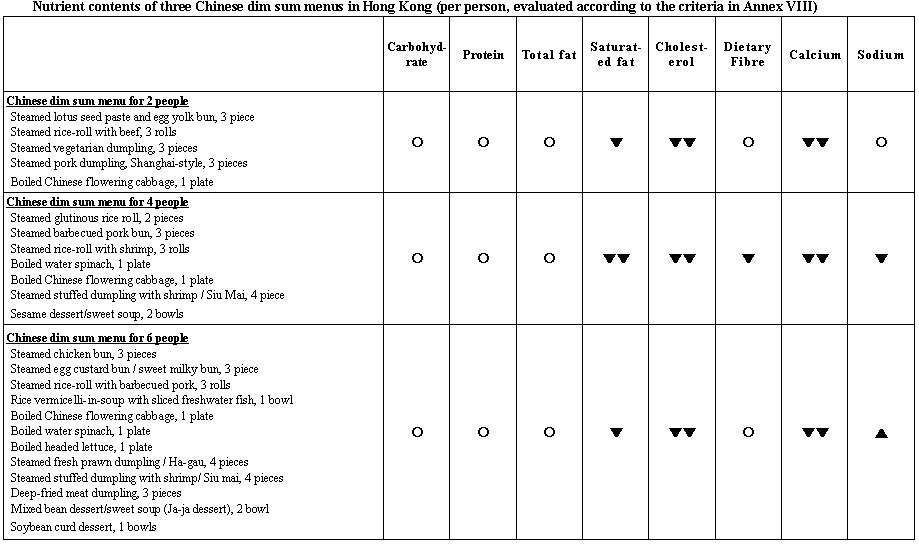
Annex VIII: Criteria for Evaluation of Nutrient Values of Chinese Dim Sum Sets
Abstract
The Food and Environmental Hygiene Department (FEHD) has conducted a study to determine the nutrient contents of the common Chinese dim sum in Hong Kong and proposes recommendations to maintain a balanced diet while consuming Chinese dim sum.
A total of 71 Chinese dim sum items and three sauces for boiled vegetables were selected for nutrient analysis and ten samples were purchased from the local market for each food item. Laboratory analyses for energy and nine nutrients of local public health interest were conducted by the Food Research Laboratory of FEHD.
The results showed that the total fat, saturated fat and sodium contents of some Chinese dim sum were quite high, whilst the calcium and dietary fibre contents were generally low.
A balanced diet can be achieved by choosing food carefully during a dim sum meal in Chinese restaurants. Members of the public are recommended to choose Chinese dim sum that are low in total fat and rich in complex carbohydrate as the staple foods; consume about half plate of boiled vegetable per person (preferably without sauce); consume steamed salty dim sum in moderate amount; choose less pan-fried and deep-fried dim sum and avoid consuming the soup of rice-in-soup and noodles-in-soup. Chinese restaurant patrons are also advised to have one to two servings of low-fat/skimmed dairy products for the rest of the day to ensure adequate intake of calcium.
Food trade is advised to modify the recipes of Chinese dim sum to lower the total fat, saturated fat and sodium levels in foods and provide more food items high in dietary fibre and calcium in the menu.
OBJECTIVES
This study aims (i) to determine the nutrient values of the common Chinese dim sum in Hong Kong and (ii) to propose recommendations to maintain a balanced diet while consuming Chinese dim sum.
BACKGROUND
Introduction
2. Food is essential for human life because it is the source of energy and nutrients. Energy supports the activities of human body, whereas nutrients are vital for growth of human body, tissue repair and maintenance of good health. On the other hand, many chronic diseases such as coronary heart disease, diabetes and certain types of cancer are related to an imbalanced diet. These nutrition-related diseases are important public health problems in many parts of the world including Hong Kong.
3. Knowing the nutrient content of food is important for making healthy choices. To establish a database of nutrient composition of local food items, the Food Research Laboratory (FRL) of the Food and Environmental Hygiene Department (FEHD) has started conducting nutrient analysis of indigenous foods since 2002. The nutrient analysis of local indigenous breakfast foods was completed and released in January 2004.
4. Chinese dim sum is one of the common food choices for breakfast and lunch in Hong Kong. However, no systematic nutrient analysis of Chinese dim sum has been conducted locally. To determine the nutrient content of Chinese dim sum and facilitate the public making healthier food choices, FEHD initiated a study on the nutrient composition of Chinese dim sum.
Chinese Dim Sum
5. The term "dim sum" first appeared in Tang Dynasty, and it generally refers to all common Chinese-style snacks. In this report, the term Chinese dim sum referred to the foods and snacks provided in Chinese restaurants (中式酒樓).
6. Chinese dim sum is one of the favourite food choices of Hong Kong people for breakfast and lunch. The Public Opinion Programme of the University of Hong Kong conducted a survey entitled "The Changing Eating Habits of White-collar Workers" in 2003, and they interviewed 511 white collar workers aged 18-49 by telephone 1 . In this survey, about 13% of the respondents reported having Chinese dim sum as their breakfast at least twice per week. For those respondents who were eating-out, 18% reported having lunch in Chinese restaurants at least twice a week. According to our figure as at December 2004, there were about 1473 licensed food premises producing and/or selling Chinese dim sum in Hong Kong.
7. There is a wide range of Chinese dim sum, mainly of Southern Chinese style, available in the Chinese restaurants in Hong Kong, such as steamed buns, steamed salty dim sum, steamed rice-roll, pan-fried and deep-fried dim sum, rice and noodles, boiled vegetable and desserts. The ingredients used for making Chinese dim sum included different types of cereal products, meat and poultry, seafood, vegetable and condiments. Chinese dim sum is mainly prepared by steaming, and some of them are prepared by pan-frying and deep-frying. The use of lard and monosodium glutamate (MSG) is believed to be quite common in the preparation of Chinese dim sum.
Nutrition and chronic diseases
8. Diet and nutrition are important factors in the promotion and maintenance of good health throughout the entire life course, and their role as determinants of chronic diseases is well established 2 . It is increasingly recognised that both under-nutrition and over-nutrition (as well as a host of other factors) play a role in the development of chronic diseases. The recent recommendations of World Health Organization (WHO) and Food and Agriculture Organization of the United Nations (FAO) on the population nutrient intakes are shown in Annex I.
9. Same as other industrialized economies, the burden of chronic diseases is rapidly increasing in Hong Kong. Of the recent data on ten leading causes of deaths in Hong Kong, cancer, coronary heart diseases, cerebrovascular disease and type 2 diabetes, which are diet-related, attributed nearly 60% of deaths in 2002 3 . Those patients who have heart diseases, strokes, diabetes, renal and liver problems also require dietary therapy both for disease management and prevention of complications. Among all nutrients, avoiding excessive dietary intakes of energy, saturated fat, cholesterol, sugars and sodium, as well as increasing the intake of dietary fibre and calcium, are most relevant to the prevention and dietary management of these diet-related chronic diseases (Annex II).
SCOPE OF STUDY
10. This study mainly covered the common Chinese dim sum and foods sold in Chinese restaurants. With reference to menus collected from Chinese restaurants, a total of 71 common Chinese dim sum and three sauces for boiled vegetables were identified for chemical nutrient analysis in this study (Annex III).
11. Chemical analyses were conducted to determine the content of energy and nine nutrients, namely total carbohydrate, protein, total fat, saturated fat, cholesterol, dietary fibre, sugar, sodium and calcium.
METHOD
Sampling Plan
12. The food samples were purchased and analyzed from April 2003 to September 2004. For each food item, 10 food samples were randomly purchased from food outlets in 10 different districts that were randomly selected from the 18 districts in Hong Kong. All samples were purchased in the ready-to-serve form for determining the nutrient contents.
13. Boiled vegetable samples and the corresponding sauces were purchased and analyzed separately. The amount of sauce taken in actual practice per serving of a boiled vegetable sample was then determined for calculating the nutrient contents of the boiled vegetable with sauce. For the noodle-in-soup samples, the soup and the corresponding solid contents were purchased separately. The solid contents were dipped into the soup for about ten minutes and then taken out for the determination of the nutrients in the noodle sample as "consumption without the soup". On the other hand, analyzing the soup and the solid contents in one lot provided the nutrient data for the noodle sample as "consumption with all the soup".
Laboratory Analysis
14. The laboratory testing work was conducted by the Food Research Laboratory of FEHD. For each food sample, the edible portion was obtained and homogenized. Appropriate test portions were taken for determining the nutrient profile by chemical analyses. All tests were conducted using single-laboratory validated methods based on international standards. A brief description of the test methods are shown in Annex IV.
Data Analysis
15. The nutrient data of food items is illustrated in both per 100g and per unit/serving basis. For each nutrient, the mean value is reported and corrected to 2 significant figures. If the level of a nutrient is too low for reliable reporting, the term "trace" is indicated (refer to Annex IV for details). The term "not determined" (ND) refers to cases where by nature of the food item, testing for the nutrient parameter is not appropriate and/or the nutrient is considered not generally present at a significant level.
RESULTS AND DISCUSSION
16. In this study, 74 food items were selected for nutrient analysis and ten samples were purchased for each food items. A total of 740 food samples were taken for chemical nutrient analysis. The mean values of energy, total carbohydrate, total fat, protein, saturated fat, cholesterol, sugar, dietary fibre, calcium and sodium per 100 g of the samples are presented in Annex V.
17. The mean nutrient values of the samples were also presented in per unit/serving basis in Annex VI. The nutrient values of three boiled vegetables (boiled headed lettuce, boiled Chinese flowering cabbage and boiled water spinach) and three sauces (sweetened soy sauce, oyster sauce and fermented soybean sauce) were used to calculate the nutrient content of five common combinations of boiled vegetables and sauces. Together with three boiled vegetables without sauce and other Chinese dim sum (totalled 68 items), there were a total of 76 Chinese dim sum items in Annex VI.
Nutrient contents in Chinese dim sum
18. The nutrient contents of Chinese dim sum varied, but generally most of them were low in calcium and dietary fibre 4 . The steamed savoury dim sum was generally high in total fat, saturated fat and sodium. The pan-fried and deep-fried dim sum was also found to be high in total fat. The steamed bun, steamed rice-roll, and rice and noodles were low in total fat, but the rice and noodles were high in sodium. The desserts were generally low in sodium but some of them were high in saturated fat. As expected, boiled vegetables were good sources of dietary fibre compared with other Chinese dim sum.
19. Among energy and the nine nutrients per unit/serving of Chinese dim sum presented in Annex VI, the levels of total fat, saturated fat and sodium of some Chinese dim sum items were quite high.
Total fat
20. The energy, total fat, and percentage energy from total fat of selected high-total fat Chinese dim sum were presented in Table 1. The percentage energy from total fat of the Chinese dim sum could be as high as 72%.

21. The energy, total fat, and percentage energy from total fat of three examples of low-total fat Chinese dim sum were presented in Table 2. Generally speaking, the steamed bun, steamed rice roll, and dessert were low in total fat, whilst the pan-fried and deep-fried Chinese dim sum was high in total fat. Steaming is one of the low-fat cooking methods, but some of the dim sum items prepared by steaming could be high in total fat. Among 37 savoury Chinese dim sum prepared by steaming, the percentage energy from total fat of 12 Chinese dim sum was more than 50%. It may be due to the high-total fat raw ingredients, for example the beancurd sheet roll, fatty meat, sesame oil, and fish head. Foods high in total fat are energy-dense and excessive intake of them may increase the risk of obesity.
Saturated fat
22. The energy, saturated fat, and percentage energy from saturated fat of selected Chinese dim sum with high-saturated fat were presented in Table 3. The main sources of saturated fat are animal fats, such as butter, lard, and fat in meat products. The coconut oil and palm oil are the two main origins of saturated fat in plant sources. Excessive intake of saturated fat in the long run will increase the risk of having chronic diseases such as cardiovascular diseases, cerebrovascular diseases and certain types of cancer. 4
23. It was noted that the Chinese dim sum with coconut milk, such as coconut milk yellow bean pudding and mango sago dessert with pomelo, were high in saturated fat. The pastry items such as egg tart and baked barbecued pork puff, which were mainly made by animal fats (lard and/or butter), were also high in saturated fat.
24. Food items using animal fat, palm and coconut products tended to have more saturated fat. On the other hand, foods mainly made from vegetarian ingredients and cooking oil from plant sources were low in saturated fat. Some of the low-saturated fat Chinese dim sum and their saturated fat content per serving are shown in Table 4.

Sodium
25. The mean sodium values in per 100 g basis of the top four high-sodium Chinese dim sum were presented in Table 5. Consuming such high-sodium foods frequently increases the chance of having excessive intake of sodium. Chronic excessive intake of sodium may lead to increase in blood pressure, which is a major risk factor for coronary heart disease and cerebrovascular diseases. 4
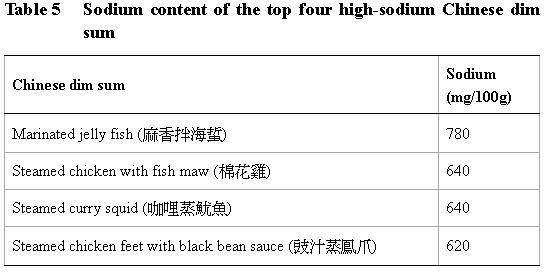
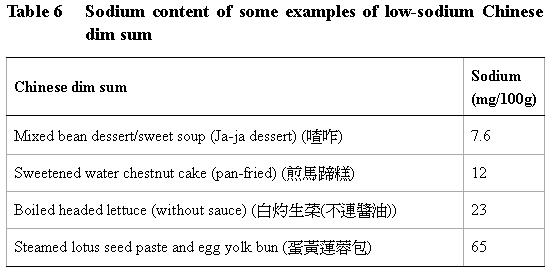
26. The high-sodium condiments, such as table salt, black bean sauce and mono-sodium glutamate, were considered as the main contributors of the high sodium content in these foods. On the other hand, the boiled vegetable (without or with sauces), steamed rice-roll, some of the steamed bun and dessert were low in sodium. Some examples of the low-sodium Chinese dim sum and their sodium content were shown in Table 6.
Calcium
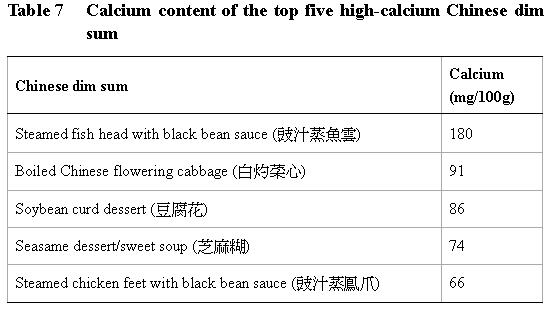
27. According to the data presented in Annex V, calcium content of most of the Chinese dim sum was low. However, a few Chinese dim sum, such as soybean curd dessert (豆腐花), boiled Chinese flowering cabbages (白灼菜心), and sesame dessert/sweet soup (芝麻糊) were good sources of calcium (Table 7). However, caution should be taken for some of the high-calcium Chinese dim sum such as steamed fish head with black bean sauce (豉汁蒸魚雲) and steamed chicken feet with black bean sauce (豉汁蒸鳳爪), as they were high in total fat and saturated fat. There is convincing evidence indicating the reduction in risk of osteoporosis with sufficient intake of calcium together with vitamin D among older adults. 4 , 5
Dietary fibre
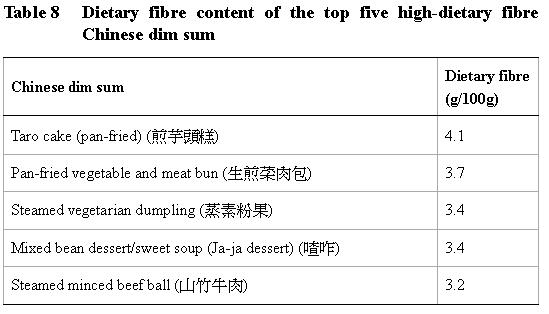
28. The content of dietary fibre in Chinese dim sum was generally low. Some Chinese dim sum with higher fibre content included boiled Chinese flowering cabbage (白灼菜心) and mixed bean dessert/sweet soup (喳咋) (Table 8). However, some high-dietary fibre dim sum items such as taro cake (pan-fried) (煎芋頭糕), pan-fried vegetable and meat bun (生煎菜肉包), and steamed minced beef ball (山竹牛肉) were also high in total fat and saturated fat. It is recommended to include high-fibre Chinese dim sum in a dim sum meal, and consume sufficient amount of fruits and vegetables to get adequate amount of dietary fibre, which in turn reduces the risk of certain types of cancer 4 and improves gastrointestinal health.
Effects of adding sauces in the boiled vegetables
29. The amount of sauce taken in actual practice per serving of a boiled vegetable sample was studied. The percentage increase in weight of boiled vegetable consumed with sauces was presented in Table 9. Based on the data in Table 9, about 6.7 g to 29 g of the sauces was consumed together with each serving of boiled vegetables.
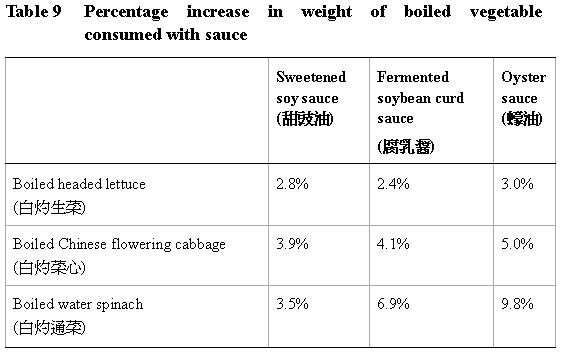
30. Using the data in Table 9, the nutrient content of the boiled vegetables consumed with or without sauces was calculated as shown in Annex VI. The nutrient content in boiled vegetable consumed with or without sauces was very similar except for sodium.
31. Some of the sauces and condiments, including soy sauce, oyster sauce and fermented soybean curd sauce, were high in sodium. Consumed with sauces, there was an approximately 300% to 540% increase in the sodium content of boiled vegetables.
Effects of consuming soup on the sodium content of noodle-in-soup
32. The nutrient contents of rice vermicelli-in-soup with sliced freshwater fish (魚片湯米粉) with or without consuming the soup were similar, except that the sodium content of such rice vermicelli-in-soup when consumed with soup (1500 mg per serving) was significantly higher than that consumed without the soup (1000 mg per serving).
33. It indicated that the soup of the rice vermicelli-in-soup was made from ingredients high in sodium, such as monosodium glutamate, table salt, and/or salty meat. Consumption of the rice vermicelli-in-soup with all the soup will increase the risk of having excessive intake of sodium, which may lead to the elevation of blood pressure and other adverse effects on the cardiovascular system.
Limitations of the study
34. The nutritional risks associated with the consumption of Chinese dim sum were evaluated in this study. Owing to the lack of comprehensive food consumption data in Hong Kong, the nutrient intake of the whole population and population subgroups due to these sources could not be quantified, and the evaluation was based on the nutrient composition of Chinese dim sum only.
35. The Chinese dim sum was selected for this study with reference to the menus of Chinese restaurants in Hong Kong. They covered most of the common Chinese dim sum sold in the food premises, but some special Chinese dim sum was not included in this study. The frozen and pre-packaged dim sum was also not covered in this study.
36. In addition, there is variability in the composition of foods. The composition of processed foods varies due to variations in the composition of ingredients and changes in formulation. Chinese dim sum, as one of the composite dishes, showed even greater variation in composition. Apart from the variations in the composition of ingredients and change in formulation, the recipe formulation and actual cooking method are the major sources of variation. 6
CONCLUSION AND RECOMMENDATIONS
37. This study provided data on the nutrient content of common Chinese dim sum. The results of this study suggested that the total fat, saturated fat and sodium contents of some Chinese dim sum were quite high, whilst the calcium and dietary fibre contents were generally low.
Advice to consumers
38. From the nutritional point of view, there is no good or bad food. As the nutrient contents of various types of food vary, choosing different types of food for breakfast and lunch is a simple way to get a wide range of essential nutrients, and thus avoid nutritional problems. People with particular nutrition concern should pay attention to the nutrient content of foods, including Chinese dim sum, while choosing or ordering foods. For instance, individuals who are advised to reduce sodium intake should choose Chinese dim sum with less sodium and reduce the intake of high sodium Chinese dim sum.
General advices on ordering a Chinese dim sum meal
39. Although some Chinese dim sum was found to be high in total fat, saturated fat and sodium, and low in calcium and dietary fibre, a reasonably balanced diet can still be achieved if careful food choice in Chinese restaurants is made. To maintain a balanced diet, patrons having dim sum meals in Chinese restaurants are advised to -
- Choose Chinese dim sum that are low in fat and rich in complex carbohydrate, such as steamed bun, steamed rice-roll, as the staple foods;
- Consume about half plate of boiled vegetable per person (preferably without adding any sauce) to get enough dietary fibre;
- Consume steamed salty dim sum in moderate amount as some of them were high in fat and sodium;
- Choose less pan-fried and deep-fried dim sum to avoid excessive intake of fat and energy; and
- Avoid consuming the soup of rice-in-soup and noodles-in-soup.
40. Based on the nutrient data of Chinese dim sum and the above-mentioned advices, three Chinese dim sum menus are presented as to illustrate healthier combinations of Chinese dim sum for different occasions:
1. Chinese dim sum menu for 2 people (e.g. a couple):
Steamed lotus seed paste and egg yolk bun (蛋黃蓮蓉包), 3 piece
Steamed rice-roll with beef (牛肉腸粉), 3 rolls
Steamed vegetarian dumpling (蒸素粉果), 3 pieces
Steamed pork dumpling, Shanghai style (小籠包), 3 pieces
Boiled Chinese flowering cabbage (白灼菜心), 1 plateHighlights of the menu
‧ Choosing steamed bun and rice roll as staples
‧ Sharing 1 plate of boiled vegetables by 2 people
‧ Consuming moderate amount of steamed salty dim sum
2. Chinese dim sum menu for 4 people (e.g. a couple with 2 children in their teens)
Steamed glutinous rice roll (糯米卷), 2 pieces
Steamed barbecued pork bun (叉燒包), 3 pieces
Steamed rice-roll with shrimps (鮮蝦腸粉), 3 rolls
Boiled water spinach (白灼通菜), 1 plate
Boiled Chinese flowering cabbage (白灼菜心), 1 plate
Steamed stuffed dumpling with shrimp/ Siu mai (燒賣), 4 pieces
Sesame dessert/sweet soup (芝麻糊), 2 bowlsHighlights of the menu
‧ Choosing steamed bun and rice roll as staples
‧ Sharing 2 plates of boiled vegetables by 4 people
‧ Consuming moderate amount of steamed salty dim sum
3. Chinese dim sum menu for 6 people (e.g. 6 adult friends or colleagues):
Steamed chicken bun (雞包仔), 3 pieces
Steamed egg custard bun/Sweet milky bun (奶皇包), 3 pieces
Steamed rice-roll with barbecued pork (叉燒腸粉), 3 rolls
Rice vermicelli-in-soup with sliced freshwater fish (魚片湯米粉) , 1 bowl
Boiled Chinese flowering cabbage (白灼菜心), 1 plate
Boiled headed lettuce (白灼生菜), 1 plate
Boiled water spinach (白灼通菜), 1 plate
Steamed fresh prawn dumpling / Ha-gau (蝦餃), 4 pieces
Steamed stuffed dumpling with shrimp/ Siu mai (燒賣), 4 pieces
Deep-fried meat dumpling (鹹水角), 3 pieces
Mixed bean dessert/sweet soup (Ja-ja dessert) (喳咋), 2 bowl
Soybean curd dessert (豆腐花), 1 bowlsHighlights of the menu
‧ Choosing steamed bun and rice roll as staples
‧ Sharing 3 plates of boiled vegetables by 6 people
‧ Consuming moderate amount of steamed salty dim sum
‧ Choosing less deep-fried/ pan-fried dim sum
‧ Not consuming the soup in the rice vermicelli-in-soup.
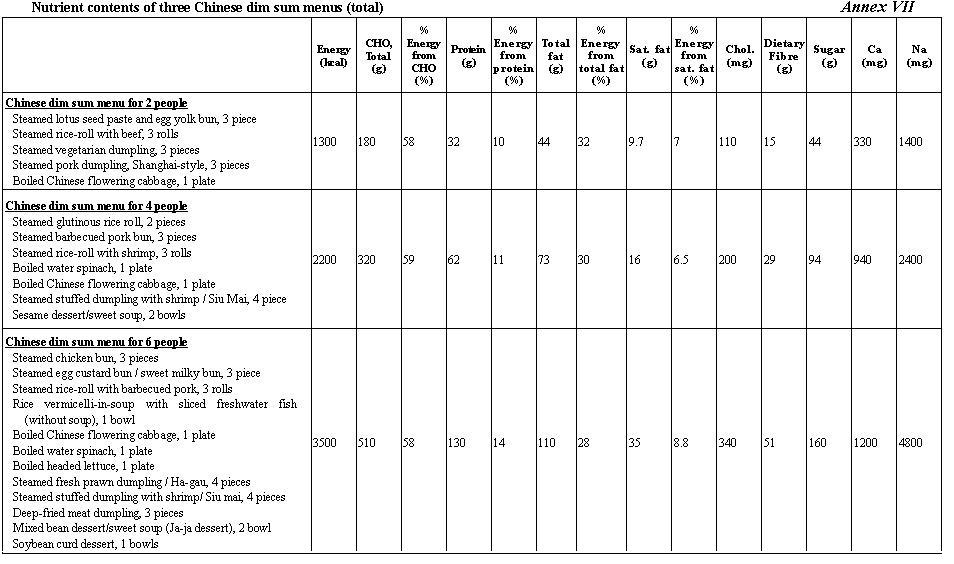
41. The nutrient values of these three Chinese dim sum sets are presented in Annexes VII. The values of most nutrients were close to or within the WHO recommendation on the population nutrient intakes4 (Annex VIII) except the calcium content. As the calcium content of most Chinese dim sum is generally low, people having meals in Chinese restaurants are advised to follow the dietary recommendations of the food guided pyramid and have 1 to 2 servings of low-fat/skimmed dairy products for the rest of the day to ensure adequate intake of calcium. Calcium-fortified soybean milk and orange juice, soybean curd, and green leafy vegetable are also the good sources of calcium.
Advice for trade
42. It is recommended that the owners of food premises should try to modify the recipes of Chinese dim sum to lower the total fat, saturated fat and sodium levels in foods. It can be achieved by reducing the amount of cooking oil used, trimming visible fat of meat, serving the sauces separately if possible, and reducing the use of high sodium condiments.
43. Members of trade may also consider providing more food items high in dietary fibre and calcium in the food premises. For example, sliced fruits and calcium-fortified soy milk would be two of the good choices.
Uploading the information onto the Department's website
44. Apart from this written report, the mean nutrient values (energy, available carbohydrate, protein, total fat, saturated fat, cholesterol, sugars, dietary fibre, calcium and sodium) of per 100 g of the Chinese dim sum studied will also be uploaded onto the Nutrition Information Inquiry System (NIIS) of the Department's website for public access.
References
- CHUNG RTY. Changing eating habits of the white-collars – under economic stress and SARS. The Public Opinion Programme, the University of Hong Kong, 2003.
[Available at: www.hkupop.hku.hk] - World Health Organization (WHO). The world health report 2002: reducing risks, promoting healthy life. Geneva: WHO, 2002.
- Department of Health. Number of deaths by leading causes of death by sex and age.
[Available at: http://www.info.gov.hk/dh/diseases/index.htm] - Food and Agriculture Organization of the United Nations (FAO) / WHO. Joint WHO/FAO expert consultation on diet, nutrition and the prevention of chronic diseases. Geneva: WHO, 2003.
- FAO/WHO. Human vitamin and mineral requirements. Report of a joint FAO/WHO expert consultation. Rome: FAO, 2001.
- Greenfield G, Southgate DAT. Food composition data. Production, management and use, 2nd edition. Rome:FAO, 2003.
Annex I
Recommendations of WHO and FAO on Nutrient Intake
In 2003, WHO updated the technical report entitled "Diet, nutrition and the prevention of chronic diseases" 1 In this report, a series of population nutrient intake goals for preventing diet-related chronic disease was established, and they are presented in Table 1.
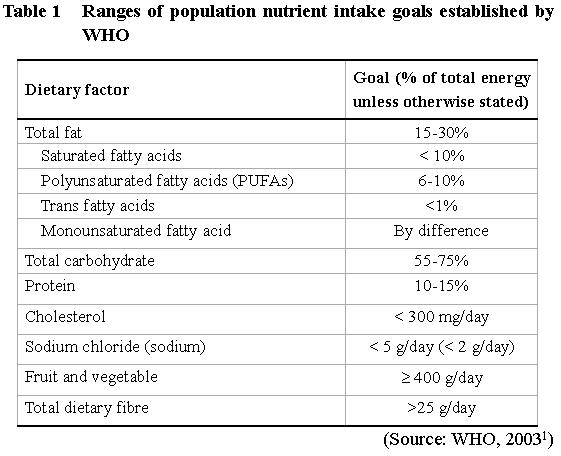
The population nutrient intake goals were set up for consideration by national and regional bodies establishing dietary recommendations for the prevention of diet-related chronic diseases. It represents the population average intake that is judged to be consistent with the maintenance of a low prevalence of diet-related diseases in a population. 1 If existing population averages fall outside this range, or trends in intake suggest that the population average will move outside the range, health concerns are likely to arise.
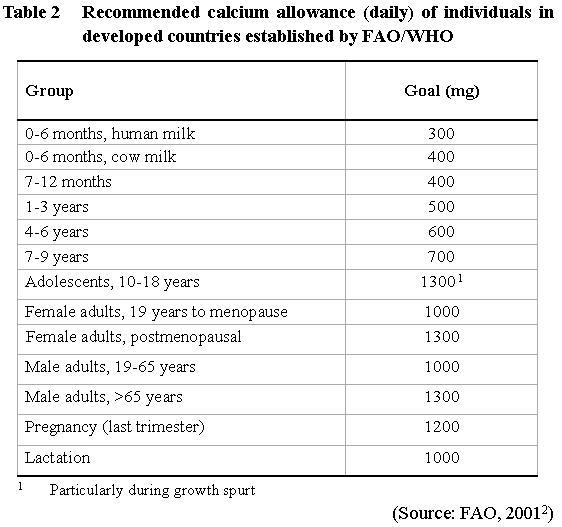
However, no population nutrient intake goal for calcium was established by WHO. In another report of a joint FAO/WHO expert consultation entitled "Human vitamin and mineral requirements" 2 , the data of balanced studies and factors affecting the calcium requirement of human were reviewed. Based on the available data, the experts of FAO/WHO agreed to set the recommended calcium allowance of 1000 mg/day for adults. 2 The recommended calcium allowances of individuals in developed countries at different stages of life cycle were shown in Table 2.
Reference for Annex I
- FAO/WHO. Joint WHO/FAO expert consultation on diet, nutrition and the prevention of chronic diseases. Geneva: WHO, 2003.
- FAO/WHO. Human vitamin and mineral requirements. Report of a joint FAO/WHO expert consultation. Rome: FAO, 2001.
Annex II
Nutrition and Health
Energy, carbohydrate, total fat and protein
The causal relationship of obesity and high intake of energy-dense micronutrient-poor foods are well established. Energy content of food, together with information on the content of energy-producing nutrients (carbohydrate, protein and total fat) is the essential information for construction of a balanced diet.
Saturated fat and cholesterol
2. Evidence has indicated that saturated fat and cholesterol play an important role in the above mentioned chronic diseases. For example, increasing saturated fat and/or cholesterol intake may lead to an increase in blood cholesterol, which is one of the key risk factors of cardiovascular diseases. 1 , 2
Sugars
3. Sugars, i.e., mono and di saccharides, are commonly found in food as sweetening or thickening agent. Controlling intake of sugars in diet plays an important role in managing body weight and diabetes. 1 In addition, limiting sugar intake may help preventing dental caries. 1 The importance of managing sugar intake is revealed in various food based dietary guidelines, such as the ones from the US 3 and Australia 4 , which suggest sugars should be consumed in moderate amount.
Sodium
4. Sodium is another important nutrient related to chronic diseases. Data showed that sodium intake was positively associated with blood pressure. 1, 5 , For instance, limiting the sodium intake has long been identified as one of the dietary control methods for hypertension. Other than hypertension, sodium also appears to play a significant role in people with renal diseases. 5
Dietary Fibre
5. The protective role of dietary fibre has been demonstrated by numerous studies. 6 Diet rich in fibre improves gastrointestinal health by increasing faecal bulk and reducing transit time, which in turn may lower incidence of certain types of cancer. 1 , 7 , 8 In addition, its possible cholesterol lowering effect may benefit patients with cardiovascular diseases. 7 , 9
Calcium
6. Calcium is important for bone health. Resorption and formation of bone is a continued lifetime process and calcium contributes significantly in the maintenance of bone tissue. In Hong Kong, the age-adjusted fracture rates have been significantly increased in recent decades. 10 , 11 Adequate intake of calcium was shown to reduce the risk of osteoporosis in older people. 1
Reference for Annex II
- FAO/ WHO. Joint WHO/FAO expert consultation on diet, nutrition and the prevention of chronic diseases. Geneva: WHO, 2003.
- Kris-Etherton P, Daniels SR, Eckel RH, Engler M, Howard BV, Krauss RM, et al. Summary of the scientific conference on dietary fatty acids and cardiovascular health: conference summary from the nutrition committee of the American Heart Association. Circulation 2001;103(7):1034-9.
- Department of Health and Human Services (HHS) and the Department of Agriculture (USDA). Nutrition and your health: dietary guidelines for Americans. 5th Edition. Washington: HHS and USDA; 2000.
- National Health and Medical Research Council. Dietary guidelines for Australian adults. Canberra: National Health and Medical Research Council, 2003.
- Scientific Advisory Committee on Nutrition. Salth and health. Norwich: The Stationery Office, 2003.
- Pereira MA, Ludwig DS. Dietary fiber and body-weight regulation. Observations and mechanisms. Pediatr Clin North Am. 2001 Aug;48(4):969-80.
- Susan E. Marconutrients: carbohydrates, proteins, and lipids. In:Mahan LK, Escott-Stump S, editors. Krause's food, nutrition, and diet therapy, 10th edition. Philadelphia: W.B. Saunders Company, 2000.
- World Cancer Research Fund / American Institute for Cancer Research (AICR). Food, nutrition and the prevention of cancer: a global perspective. Washington: AICR, 1997.
- Food and Agriculture Organization of the United Nations (FAO) / World Health Organization (WHO). Joint WHO/FAO expert consultation on diet, nutrition and the prevention of chronic diseases. Geneva: WHO, 2003.
- Lau EM, Cooper C. The epidemiology of osteoporosis. The oriental perspective in a world context. Clin Orthop. 1996;(323):65-74.
- Ho SC, Lau EM, Woo J, Sham A, Chan KM, Lee S, et al. The prevalence of osteoporosis in the Hong Kong Chinese female population. Maturitas. 1999;32(3):171-8.
Annex III
Chinese dim sum analyzed in this study
| Steamed bun ( 包點 ) | ||
|---|---|---|
| 1. | Steamed egg custard bun/Sweet milky bun |
奶皇包 |
| 2. | Steamed barbecued pork bun |
叉燒包 |
| 3. | Steamed lotus seed paste and egg yolk bun |
蛋黃蓮蓉包 |
| 4. | Steamed chicken bun |
雞包仔 |
| 5. | Steamed glutinous rice roll |
糯米卷 |
| 6. |
"Mai-lai" cake |
馬拉糕 |
| 7. | Steamed vegetable and meat bun |
菜肉包 |
| 8. | Steamed bun with assorted stuffing/big bun |
大包 |
| Steamed salty dim sum ( 咸蒸點 ) |
|
|
| 9. | Steamed dumpling, Chiu Chow-style |
潮州粉果 |
| 10. | Steamed pork ribs with black bean sauce |
豉汁蒸排骨 |
| 11. | Steamed chicken feet with black bean sauce |
豉汁蒸鳳爪 |
| 12. | Steamed fish head with black bean sauce |
豉汁蒸魚雲 |
| 13. | Steamed pork dumpling, Shanghai-style |
小籠包 |
| 14. | Soup dumpling |
灌湯餃 |
| 15. | Steamed pork dumpling with crab meat, Shanghai-style |
蟹粉小籠包 |
| 16. | Steamed vegetarian dumpling |
上素蒸粉果 |
| 17. | Steamed beef omasum with ginger and spring onion |
薑蔥牛柏葉 |
| 18. | Braised ox tripe with zhuhou sauce |
柱侯金錢肚 |
| 19. | Steamed squid with garlic |
蒜茸蒸魷魚 |
| 20. | Steamed rice flour roll with shredded chicken |
雞絲粉卷 |
| 21. | Steamed beancurd sheet roll |
鮮竹卷 |
| 22. | Steamed beancurd sheet roll with duck feet |
鴨腳扎 |
| 23. | Steamed beancurd sheet roll with chicken |
雞扎 |
| 24. | Steamed fresh prawn dumpling / Ha-gau |
蝦餃 |
| 25. | Steamed stuffed dumpling with shrimp/ Siu mai |
燒賣 |
| 26. | Steamed minced beef ball |
山竹牛肉 |
| 27. | Steamed chicken with fish maw |
棉花雞 |
| 28. | Steamed curry squid |
咖哩蒸魷魚 |
| 29. | Turnip cake (steamed) |
蒸蘿蔔糕 |
| 30. | Mini-sized sticky rice wrapped in lotus leaf |
珍珠雞 |
| 31. | Sticky rice wrapped in lotus leaf |
糯米雞 |
| Steamed rice-roll ( 蒸腸粉 ) | ||
|---|---|---|
| 32. | Steamed rice-roll with barbecued pork |
叉燒腸粉 |
| 33. | Steamed rice-roll with beef |
牛肉腸粉 |
| 34. | Steamed rice-roll with shrimps |
鮮蝦腸粉 |
| 35. | Steamed rice-roll with scallops |
蒸帶子腸粉 |
| 36. | Steamed rice-roll with vegetarian stuffing |
蒸羅漢齋腸粉 |
| Pan-fried and deep-fried dim sum ( 煎 / 炸點心 ) |
|
|
| 37. | Deep-fried taro dumpling |
芋角 |
| 38. | Spring roll |
春卷 |
| 39. | Deep-fried meat dumpling |
鹹水角 |
| 40. | Deep-fried plain bun |
炸饅頭 |
| 41. | Deep fried wonton |
炸雲吞 |
| 42. | Pan-fried rice-roll |
煎腸粉 |
| 43. | Pan-fried beancurd sheet roll |
煎腐皮卷 |
| 44. | Turnip cake (pan-fried) |
煎蘿蔔糕 |
| 45. | Sweetened water chestnut cake (pan-fried) |
煎馬蹄糕 |
| 46. | Taro cake (pan-fried) |
煎芋頭糕 |
| 47. | Pan-fried vegetable and meat bun |
生煎菜肉包 |
| Boiled vegetables and sauces ( 灼菜及醬油 ) |
|
|
| 48. | Boiled headed lettuce |
白灼生菜 |
| 49. | Boiled Chinese flowering cabbage |
白灼菜心 |
| 50. | Boiled water spinach |
白灼通菜 |
| 51 | Oyster sauce |
蠔油 |
| 52. | Fermented soybean curd sauce |
腐乳醬 |
| 53. | Soy sauce (sweetened) |
甜豉油 |
| Rice and noodles ( 飯麵類 ) |
|
|
| 54. | Steamed rice with chicken and winter mushroom |
冬菰蒸雞飯 |
| 55. | Steamed rice with pork rib, chicken leg and black bean sauce |
豉汁鳳爪排骨飯 |
| 56. | Rice vermicelli-in-soup with sliced freshwater fish (with soup) |
魚片湯米粉 (連湯) |
| 57. | Rice-in-soup with winter melon and diced pork |
冬瓜肉粒湯飯 |
| Dessert ( 甜品 ) | ||
|---|---|---|
|
58. |
Red bean dessert/sweet soup |
紅豆沙 |
|
59. |
Mung bean dessert/sweet soup |
綠豆沙 |
|
60. |
Sweet potato dessert/sweet soup |
蕃薯糖水 |
|
61. |
Mixed bean dessert/sweet soup (Ja-ja dessert) |
喳咋 |
|
62. |
Soybean curd dessert |
豆腐花 |
|
63. |
Mango pudding |
芒果布甸 |
|
64. |
Egg tart (small) |
小蛋撻 |
|
65. |
Sesame dessert/sweet soup |
芝麻糊 |
|
66. |
Mango sago dessert with pomelo |
楊枝甘露 |
|
67. |
Coconut milk yellow bean pudding |
椰汁馬豆糕 |
|
68. |
Steamed sago dumpling with red bean paste |
豆沙水晶包 |
|
69. |
Steamed sago dumpling with lotus seed paste |
蓮蓉水晶包 |
|
|
Others ( 其他 ) |
|
|
70. |
Salted meat rice dumpling |
鹹肉粽 |
|
71. |
"Gan-shui" rice dumpling |
鹼水粽 |
|
72. |
Marinated jelly fish |
麻香拌海蜇 |
|
73. |
Baked barbecued pork puff |
叉燒酥 |
|
74. |
Puff pastries filled with shredded turnip |
蘿蔔絲酥餅 |
Annex IV
Testing Methods for Determining Nutrient Contents in Foods
Test methods
Single-laboratory validated test methods based on the following references -
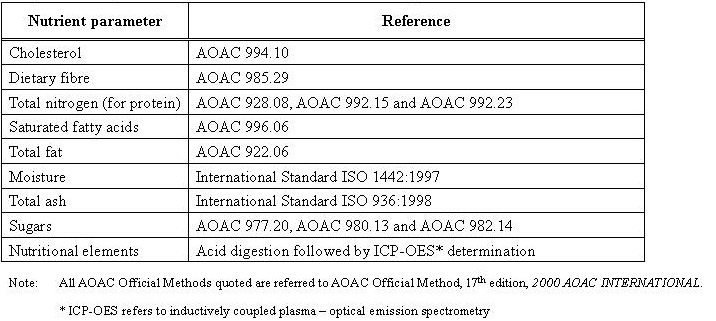
Nutrient parameters by calculation
- Energy is calculated as the sum of contents of total fat, protein and carbohydrate multiplying their corresponding conversion factors (i.e. carbohydrate: 4kcal/g, protein: 4kcal/g, fat: 9kcal/g).
- Total carbohydrate is calculated by subtracting the sum of moisture, ash, total fat and protein from the total weight of the food sample.
- Protein is calculated by multiplying the content of total nitrogen in the food sample with the conversion factor of 6.25.
- Saturated fat is the sum of 13 saturated fatty acids including C4:0, C6:0, C8:0, C10:0, C12:0, C14:0, C15:0, C16:0, C17:0, C18:0, C20:0, C22:0 and C24:0.
- Sugar is the sum of individual sugars including fructose, glucose, sucrose, maltose and lactose.

Annex V
Annex VI
Annex VII

Annex VIII
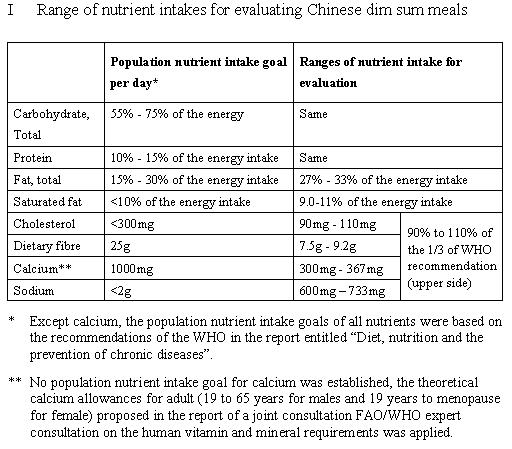
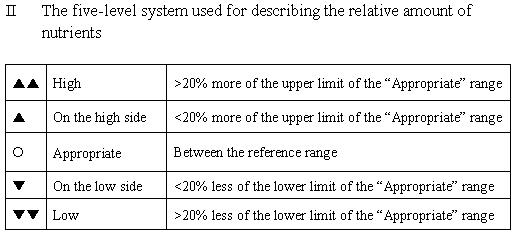
Criteria for evaluation of nutrient values of Chinese dim sum sets