Risk Assessment Studies
Report No. 2
Microbiological Hazard Evaluation
SUSHI & SASHIMI
IN
HONG KONG
An Evaluation of Sushi and Sashimi
Microbiological Surveillance
1997-1999
Table of Contents:
- Abstract
- Introduction
- Definitions
- ProductionProcesses and Microbiological Hazards
- Surveillanceon Sushi and Sashimi from 1997 to 1999
- Recommendations
- Figures 1 – 3
- Tables 1 – 3References
- Appendix 1: FEHD Microbiological Guidelines for Sushi andSashimi
- Appendix 2: Pathogen Profile
- Appendix 3: Legal provision in Hong Kong
Abstract
Sushi and sashimi exhibitdistinct features that are associated with introduction of microbiologicalhazards. In the past three years, 3% of reported food poisoning outbreakshave been associated with sushi and sashimi and have resulted in 142affected persons. The Food Surveillance Programme took a total of 1020sushi and 906 sashimi samples from 1997 through 1999 for microbiologicalassessment and evaluated against the microbiological guidelines of FEHD.Among these samples, 13.8% of sushi and 11.1% of sashimi were unsatisfactoryin terms of their hygienic quality and 0.26% of all samples yieldedspecific pathogens including one Vibrio parahaemolyticus, twoStaphlococcus aureaus, one Salmonella species, and oneListeria Monocytogenes. Both the product quality as well as safetycould be improved by incorporating safety measures throughout the manufacturingprocess, such as by adopting the Good Manufacturing Practice and HazardAnalysis Critical Control Point system.
Risk Assessment Studies –
Microbiological Hazards Evaluation
Sushi and Sashimi In Hong Kong
- An Evaluation of Sushi and Sashimi Microbiological Surveillance 1997 - 1999
Introduction
Sushi and sashimi have been among the popular food items in Hong Kong. They are not only found in the conventional Japanese-style restaurants, but also a variety of food premises that serve Chinese and Western dishes. Sushi and sashimi are also sold in self-service Sushi Restaurants. Different types of sushi and sashimi are produced and displayed, typically on conveying belts, and the customers simply need to pick up the ones they want. Pre-packed sushi and sashimi are available in the supermarkets, or shops on main streets or in shopping centres. Importers, food manufacturers, restaurant owners and even supermarket entrepreneurs have been attracted to participate in these varieties of business.
The objective of this study is to evaluate the microbiological hazards associated with sushi and sashimi in Hong Kong. In this paper, we first define the issue, followed by a review of the production process of sushi and sashimi to identify features that are associated with introduction of microbiological hazards. The microbiological surveillance results of sushi and sashimi from 1997 to 1999 in Hong Kong are then presented and analysed. Recommendations on reduction of microbiological hazards in sushi and sashimi are put forward to the trade and the public.
Definitions
Sushi and Sashimi
Sushi and Sashimi are classified as restricted food in the Food Business Regulation of the Public Health and Municipal Services Ordinance (Chapter 132). It has been defined that "Sashimi" is food consisting of fillets of marine fish, molluscs, crustaceans, fish roe or other seafood to be eaten in its raw state. Under the same Regulations, "sushi" refers to food consisting of cooked and pressed rice flavoured with vinegar and garnished with other food ingredients including raw or cooked or vinegared seafood, marine fish or shellfish roe, vegetable, cooked meat or egg on top or in the middle which may or may not be wrapped with seaweed and usually served in pieces.
Microbiological hazards
Micro-organisms include bacteria, viruses, yeasts and moulds. Not all of them are harmful. Those capable of causing foodborne illness are known as foodborne pathogens. Some others may cause food spoilage with colour and flavour degradation. As regards foodborne pathogens, some of them may be carried in raw food and persist throughout the food preparation process. For instance, Vibrio parahaemolyticus is commonly found in seafood, whereas Staphylococcus aureus and Salmonella species may be introduced into food by cross-contamination or improper handling during food processing.
Microbiological assessment of sushi and sashimi provides information regarding the hygienic quality and product safety. The most commonly adopted initial assessment is through a determination of the number of indicator organisms in food. The number of aerobic bacteria colonies grown in the laboratory conditions, technically termed as Aerobic Plate Count (APC), has been used to assess product quality. In terms of food safety, the commonest indicator organism employed is Escherichia coli (E. coli) which reflects the extent of faecal contamination and the possible presence of enteric pathogens in foods. There are limitations associated with each of these tests but the results will in general give some indications on the standard of hygienic practice in food preparation and storage. The International Commission on Microbiological Specifications for Foods (ICMSF) has indicated in 1978 that the presence of E. coli in a food does not connote directly the presence of a pathogen, but only implies a certain risk that it may be present. In other words, the measurements may not be associated with human illnesses directly (1).
Food poisoning outbreaks due to consumption of sushi and sashimi
From 1997 to 1999, food poisoning outbreaks due to consumption of sushi and sashimi accounted for 3.0% (45 out of 1481) of all food poisoning outbreaks reported to the Department of Health. A total of 142 persons (1.8% of 7728) were affected in these outbreaks. The three commonest causative bacteria identified were Vibrio parahaemolyticus (28 outbreaks affecting 100 people), Staphylococcus aureus (7 outbreaks affecting 17 people), and Salmonella species (5 outbreaks affecting 15 people). Of these outbreaks, 15 of them (33.3%) were due to consumption of sushi and the rest (66.7%) were caused by sashimi. (Source of Data: Department of Health)
Production Process and Microbiological Hazards
To evaluate microbiological hazards associated with sushi and sashimi, it is necessary to first review how these food items are being produced. Generally speaking, the production process of sushi and sashimi can be divided into four principal stages: purchasing, storage, preparation, and delivery & display (Figure 1). The following paragraphs highlight the special features of these steps and identify features that are associated with microbiological hazards.
Purchasing
Seafood is the key ingredient of sashimi, and to a large extent, of sushi as well. The most commonly used seafood for sushi and sashimi are salmon, tuna, octopus, yellow tail, and hokkigai. They are mostly imported from abroad by air and by sea. For instance, Norway has contributed to around 75% of total imported salmon in 1998 (2).
For sushi, ingredients other than marine products may be used. Examples include fried soybean cakes, sweet omelette, and cucumber.
It is crucial for the manufacturers to obtain good quality ingredients, as these food items will be consumed raw after preparation. They should be purchased from reliable and reputable sources, and preferably with health certificate issued by competent authority of the country of origin.
Storage
As the frozen or chilled seafood arrives at the manufacturing area in central factories and/or outlets, they are checked and then stored in freezer or refrigerator to maintain required temperature. For frozen products, they should be kept at or below -18°C until the day prior to preparation. Prolonged storage is possible at this temperature when micro-organisms remain dormant and unable to multiply. Chilled storage refers to keeping the food at a temperature between 0-4°C. At this temperature range, the growth of most bacteria can be prevented but some pathogens, notably Listeria monocytogenes and a wide variety of food spoilage organisms, may grow slowly.(3) Food spoilage is therefore possible as enzyme activity may still occur at down to -10°C(4).
Preparation
Frozen seafood is usually defrosted in the refrigerator (< 4°C) one day before preparation. On the day of preparation, the seafood is washed and then cut into the desired shape such as fillets, slices or cubes. They can be immediately served as sashimi, like salmon sashimi and tuna sashimi.
Preparation of rice is a major step in sushi processing. Rice is cooked, cooled and then treated with seasonings such as vinegar and sugar. If it is not used immediately, they may be put in the refrigerator temporarily, otherwise the shari (vinegared rice) is pressed or moulded into the desired shape, usually as a rice cube weighing 25-30g. This may be done by an automatic moulder, or by hand, depending on the scale of the food premises. Seafood slice is then added on the rice cube so as to be served as seafood sushi. This style of sushi is called as "Nigiri-Sushi".
There are other types of sushi ("Maki-Sushi" & "Oshi-Sushi") with additional ingredients like seaweed and cucumber that may require more handling. They may be pressed hard, rolled tight and cut. Again, they may be served immediately or chilled (< 4°C) during transportation or display.
Delivery and/or display
Well-prepared sushi and sashimi are placed on plates and properly covered before serving or packed in plastic box for display. Some operators may prefer to pack sushi by plastic paper individually. To minimize any potential bacterial multiplication, the finished sushi and sashimi should be stored at or below 4°C during display or transportation.
Features associated with introduction of microbiological hazards
Sushi and sashimi and their preparation processes carry specific features that may be associated with introduction of microbiological hazards. Firstly, most ingredients used for sushi and sashimi are eaten raw and cold. Secondly, cooked ingredients are not reheated prior to serving. Thirdly, the storage temperature, if not properly maintained, could contribute to growth and persistence of micro-organisms. And fourthly, the preparation involves many handling steps by bare hands. The practice of food handlers therefore plays a crucial role in determining the hygienic status of the final products.
Surveillance on Sushi and Sashimi from 1997 to 1999
In Hong Kong, food premises holding a general restaurant or food factory license have to obtain specific endorsement for manufacturing and sale of sushi and sashimi. Others who want to sell but not manufacture sushi and sashimi also need to obtain a special permit. As of January 2000, some 770 premises have been issued licenses with such endorsement or permits. Under the Food Surveillance Programme, sushi and sashimi samples are collected at the point of sale from these outlets for microbiological assessment. The following presents an analysis on the surveillance findings from 1997 through 1999.
Methods & laboratory determination
Under the current arrangement, Food Inspectors are responsible for taking food samples and send them to the Public Health Laboratories, Pathology Service of the Department of Health for microbiological analysis. Between January 1997 and December 1999, a total of 1,926 samples (Table 1) of sushi and sashimi from different outlets were collected for microbiological examination.
The laboratory determination consists of two parts. The first part is an assessment on the level of indicator organisms (APC & E. coli (total)) and the other on specific pathogens including Salmonella species, Shigella species, Staphylococcus aureus, and Vibrio parahaemolyticus.
Results
The Microbiological Guidelines for Ready-to-eat Food of the Food and Environmental Hygiene Department is used as the reference for the food surveillance. The microbiological guidelines for sushi and sashimi are shown in Appendix 1.
Hygienic Quality
APC or E. coli (total) can reflect the general hygienic status of sushi and sashimi. From 1997 through 1999, 13.8% (141 out of 1020) of sushi and 11.1% (101 out of 906) of sashimi samples were found unsatisfactory (Tables 2 and 3).
Trend analysis showed that there had been improvement in the hygienic quality of sashimi, with a progressive decrease in the unsatisfactory proportion from 17.5% in 1997 to 10.1% and 4.3% in 1998 and 1999. For sushi, improvement had occurred mainly in 1999, with the unsatisfactory rates at 15.4%,18.4%, and 8.5% in 1997 to 1999. (Figures 2 and 3)
Specific Pathogens in Sushi
Among the 1020 sushi samples examined, two were found to contain pathogen - Staphylococcus aureus. For these two, one was detected in 1997 in a California Maki and the other in tuna fish sushi sampled in 1999.
Specific Pathogens in Sashimi
Among the 906 samples of sashimi examined, three samples were found to contain food poisoning pathogens. In 1998, two sashimi samples yielded Vibrio parahaemolyticus and Listeria monocytogenes each. The former was in a shrimp sashimi whereas the latter in a flying fish roe sashimi. In 1999, one salmon sashimi grew Salmonella species.
Interpretation of findings
High levels of APC and E. coli (total) are indicative of unsatisfactory hygienic practice during processing of food from source to table. High counts of APC in foods often indicate contaminated raw materials or unsatisfactory processing and indicate unsuitable time/temperature conditions during storage (1). Although these organisms may not directly cause human illness, the levels of unsatisfactory samples suggested room for improvement in the production process.
Specific pathogens had been isolated in only a small proportion (0.26%) of the sushi and sashimi samples taken in the past three years. Four pathogenic organisms, namely Vibrio parahaemolyticus, Staphylococcus aureus, Salmonella species and Listeria monocytogenes, were identified. Vibrio parahaemolyticus is commonly found in seafood. It might persist and multiply as a result of improper hygienic practice. Staphylococcus aureus and Salmonella species might be introduced by the food handler, whereas Salmonella species and Listeria monocytogenes by cross-contamination of other foods. All of these pathogens can cause gastrointestinal illness with symptoms of vomiting, diarrhoea and abdominal pain occuring within the first few days of ingestion. Listeria monocytogenes is characterized by a longer incubation period, typically 3 weeks, and will cause severe illness in people with impaired immunity such as the elderly, neonates, and pregnant mothers.(5,6) These pathogens are described in more details in Appendix 2.
Recommendations
With effect from 1 March 1997, all food premises engaged in the preparation and/or sale of sushi and sashimi have been subject to licensing control. The product safety is monitored regularly by the Food Surveillance Programme. The legal provision to control these food premises is detailed in Appendix 3.
Good Manufacturing Practice (GMP) and Hazard Analysis and Critical Control Point (HACCP) are both ways to incorporate food safety control measures in the manufacturing process and may contribute to strengthen food safety control.(7) The following are recommendations for the trade derived basing on the principles of GMP and HACCP.
The trade to observe key steps in production
The trade is recommended to pay special attention to the following key steps:
- Buy the seafood and other raw materials fromreliable and reputable sources:
- The health certificate or other documents issued by the exporting countries should be checked; and
- The documents must be kept to maintain traceability.
- Ensure optimal storage conditions:
- The freezing temperature for foods should be at -18°C or below, and the chilling temperature should be at 4°C or below; the temperature of the freezer or chiller should be monitored regularly and proper record should be kept;
- The raw ingredients and prepared foods should be stored separately to prevent cross-contamination;
- After preparation and during transportation and display, all sushi and sashimi should be covered and kept at 4°C or below to reduce the risk of cross-contamination and multiplication of bacteria; and
- The leftovers should be discarded after business hours.
- Ensure the seafood is used at its fresh state:
- No excessive amount of seafood should be stored; and
- Apply "First-in-first-out" principle in stock keeping.
- Observe hygienic practice during food preparation and any other handling process:
- Hands should be properly washed and direct touching of foods should be reduced to a minimum – use machines or wear disposable gloves;
- All food handlers should observe personal hygiene strictly;
- Hygiene of the preparation area and the equipment should be maintained in good condition;
- Utensils should be cleaned and disinfected before and after use, separate utensils should be used for the preparation of sushi and sashimi; and
- Sushi and sashimi should be prepared in separate areas with good ventilation.
Advice on hygienic practice can be found in the pamphlet titled "Know more about Japanese Sashimi" and it can be obtained from the Food and Environmental Hygiene Department.
Advice to Consumers
Apart from the trade, consumer is another important partner in contributing to food safety in the public health sense. Sushi and sashimi contain raw ingredients and exhibit distinct features in the production process that are associated with increased microbiological hazards, they are not advisable for people with impaired immunity, including pregnant women, the elderly, and those with chronic illness such as cancer. For others who are generally healthy who wishes to consume sushi and sashimi are advised to identify reliable and reputable operators and choose the sushi and sashimi that are in good conditions. The following are some clues for these purposes.
- Observe the general hygiene of food premises
- Common areas such as the floor, wall and ceilingare clean;
- Equipments such as refrigerators for displayof foods are clean and in good condition; and
- Utensils used to hold the foods are clean andtidy.
- Choose sushi and sashimi that are in good conditions
- Sushi and sashimi are cold enough;
- Rice of sushi is soft and white;
- Fish and shellfish should look bright, glossyand transparent;
- Fat of fish pieces, such as salmon fillets,is clearly visible; and
- For pre-packed ones, observe the shelf life.
FPHB/FEHD
April 2000.
FIGURE 1: Sushi and Sashimi Production Flow Chart
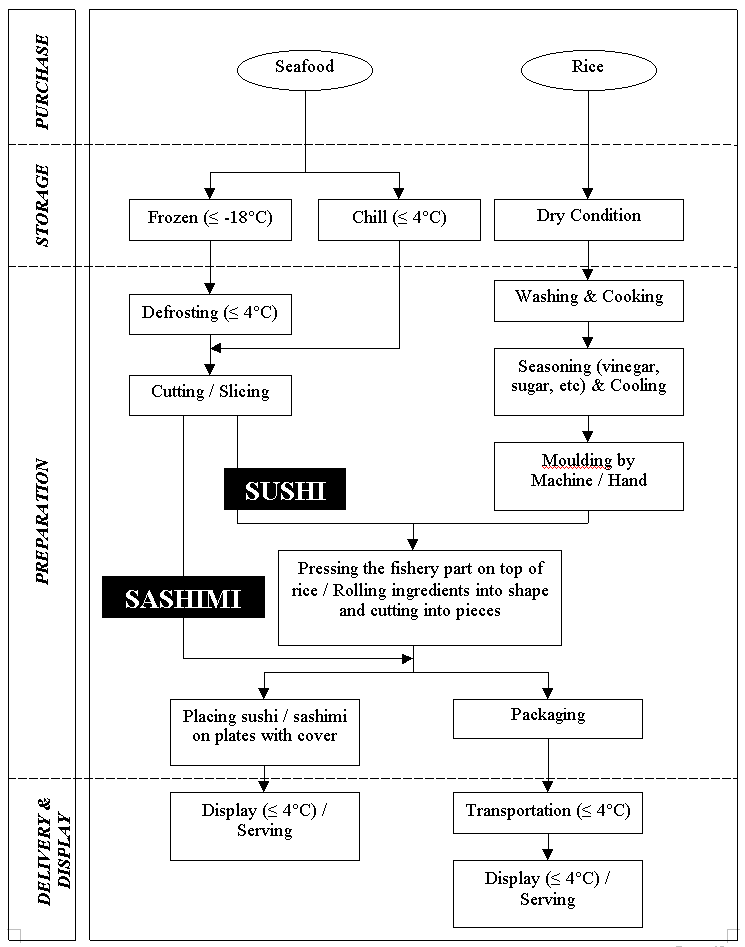
FIGURE 2
Sushi and Sashimi Microbiological Surveillance in Hong Kong:
Hygienic Quality (APC & E. coli (total)) of Sushi 1997-1999
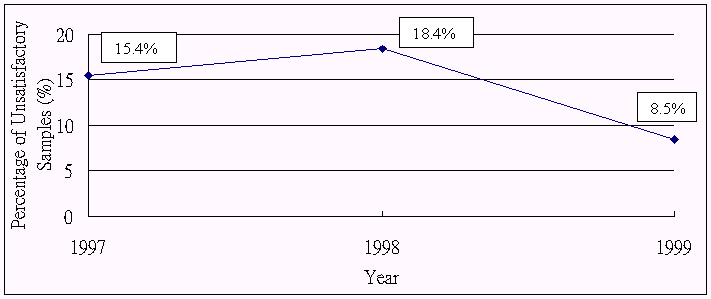
FIGURE 3
Sushi and Sashimi Microbiological Surveillance in Hong Kong:
Hygienic Quality (APC & E. coli (total)) of Sashimi 1997-1999
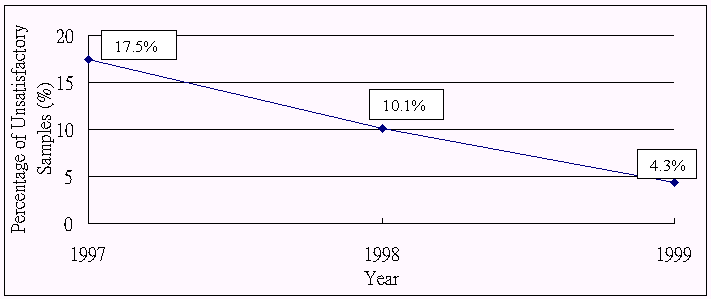
TABLE 1
Sushi & Sashimi Microbiological Surveillance in Hong Kong:
Number of samples taken 1997-1999
| Food sample | 1997 | 1998 | 1999 | Total |
|---|---|---|---|---|
| Sushi | 286 | 348 | 386 | 1020 |
| Sashimi | 331 | 318 | 257 | 906 |
| Grand total | 617 | 666 | 643 | 1926 |
TABLE 2
Sushi & Sashimi Microbiological Surveillance in Hong Kong:
Hygienic Quality (APC & E. coli (total)) of Sushi 1997-1999
| Year | No. of sample | No. of unsatisfactory samples (%) |
|---|---|---|
| 1997 | 286 | 44 (15.4%) |
| 1998 | 348 | 64 (18.4%) |
| 1999 | 386 | 33 (8.5%) |
| Total | 1020 | 141 (13.8%) |
TABLE 3
Sushi and Sashimi Microbiological Surveillance in Hong Kong:
Hygienic Quality (APC & E. coli (total)) of Sashimi 1997-1999
| Year | No. of sample | No. of unsatisfactory samples (%) |
|---|---|---|
| 1997 | 331 | 58 (17.5%) |
| 1998 | 318 | 32 (10.1%) |
| 1999 | 257 | 11 (4.3%) |
| Total | 906 | 101 (11.1%) |
References
- International Commissionon Microbiological Specifications for Foods. Micro-organisms in foods 1. London:Blackie Academic & Professional. 1978.
- Census and Statistics Department,HKSAR, PRC. Hong Kong Trade Statistics. December 1998 Imports.
- Lund BM, Baird-Parker TC,Gould GW, editors. The Microbiological Safety and Quality of Food. VolumeI. Maryland: Aspen Publishers, Inc; 2000.
- International Commissionon Microbiological Specifications for Foods. Development and use of microbiologicalcriteria for foods – Guidance for those involvedin using and interpreting microbiological criteria for foods. Food Scienceand Technology Today 1997; 11 (3): 137-177.
- Adams MR & Moss MOBacterial agents of foodborne illness. In: Food Microbiology. England. Cambridge:The Royal Society of Chemistry; 1995.
- International Commissionon Microbiological Specifications for Foods. Micro-organisms in Foods 5. London:Blackie Academic & Professional. 1996.
- Joint FAO/WHO Food StandardsProgramme Codex Alimentarius Commission. Codex Alimentarius Food Hygiene BasicTexts. Food and Agriculture Organization of the United Nations World HealthOrganization. Rome, 1997.
Appendix 1:
FEHD Microbiological Guidelines for Sushi and Sashimi *
| Unsatisfactory Hygienic Quality | ||
|---|---|---|
| a. | APC (sushi, fish fillet & fish roe sashimi) | > 106 /g |
| APC (sashimi other than fish fillet & fish roe) |
> 107 /g | |
| b. | E. coli (total) | > 104 /g |
| Note: For assessment of hygienic quality,unsatisfactory means the results of APC are > 106/g forsushi, fish fillet & fish roe sashimi, or > 107/gfor sashimi other fish fillet & fish roe, or the results of E.coli (total) are > 104/g. | ||
| UnsatisfactoryLevels of Specific Pathogens | ||
| a. | Campylobacter spp. | present in 25g |
| b. | E. coli O157 & other VTEC | present in 25g |
| c. | Listeria monocytogenes | present in 25g |
| d. | Salmonella spp. | present in 25g |
| e. | Vibrio paraheamolyticus | > 1,000 /g |
| f. | Staphylococcus aureus | > 10,000 /g |
| g. | Clostridium perfringens | > 10,000 /g |
| h. | Bacillus cereus and Bacillus subtilis groups |
> 100,000 /g |
* Microbiological Guidelines for Ready-To-Eat Food has beenupdated and the above guidelines may no longer be applicable. Please referto the latest version at Microbiological Guidelines for Ready-to-eat Food
Appendix 2:
Pathogen Profile
Vibrio parahaemolyticus
V. parahaemolyticus is normally found in fish and shellfish. The organism is likely to be part of the natural flora of fish caught in coastal waters during the warmer months. Through contact in the fish market, it can readily spread to deep-water species and will multiply rapidly if the product is inadequately chilled. It is a common cause of food poisoning in Japan and in Hong Kong. Poisoning illness usually starts at 12 to 24 hours after ingestion, but the incubation period may range from 2 hours to 4 days. Illness persists for up to 8 days and is characterised by profuse watery diarrhoea free from blood or mucus, abdominal pain, vomiting and fever.
Salmonella species.
Salmonellas are one of the most important causes of food-borne illness worldwide. Meat, milk, poultry, and eggs are primary vehicles of this bacteria. Salmonella may be found in these primary vehicles when they are undercooked, or in other foods through cross contamination.
The generally quoted infective dose is high at 100,000 cells per gram. Other factors may include the virulence of the serotype, the susceptibility of the individual and the food vehicle involved. It causes an illness with nausea, vomiting, abdominal cramps, diarrhoea, fever, and headache, usually starting at 12 – 36 hours after ingestion of the contaminated food.
Staphylococcus aureus
S. aureus is commonly found on hands, in throats, and nasal passages of humans. It is introduced to the food through improper handling. The storage temperature and duration are most important contributing factors to the multiplication of this organism. When it is ingested in large doses, at the range of 100,000 per gram, Staphylococcal food poisoning may occur. It generally occurs in two to four hours after ingestion. The disease course is relatively mild and short-lived. Nausea, vomiting, stomach cramps, retching and prostration are the predominant symptoms, although diarrhoea is also often reported, and recovery is normally complete within 1-2 days.
<h5Listeria monocytogenes
L. monocytogenes is the only important human pathogen among the seven species currently recognized within the genus Listeria. L. monocytogenes will grow over a wide range of temperature from 0-42°C with an optimum between 30 and 35°C. L. monocytogenes is normally found in milk products, vegetables, poultry and meat. It could be introduced to fish and shellfish by cross-contamination by other food items.
The incubation periods for the disease is typically a few weeks, but may range from one to 90 days. Symptoms of the disease, which is most likely to develop in pregnant women, the very young or elderly and the immunocompromised, can vary from a mild, flu-like illness to meningitis and meningoencephalitis. In pregnant women, the symptoms are generally mild with fever, gastrointestinal upset, or flu-like symptoms. The main impact is on the foetus or newborn which can be fatal.
References:
- Adams MR & Moss MO Bacterialagents of foodborne illness. In: Food Microbiology. England. Cambridge: TheRoyal Society of Chemistry; 1995.
- International Commission on MicrobiologicalSpecifications for Foods. Micro-organisms in Foods 5. London: Blackie Academic& Professional; 1996.
- Benenson AS, editor. Control of CommunicableDiseases Manual. Sixteenth Edition. Washington DC: American Public HealthAssociation; 1995.
Appendix 3:
Legal Provision in Hong Kong
Under Schedule 2 to the Food Business Regulation (subsidiary legislation of Cap. 132), sashimi and sushi are classified as restricted foods (items 18 and 19 respectively of the Schedule).
2. The sale of restricted foods including sashimi and sushi is governed by section 30(1)(a) of the same Regulation as follows:
"30. Restrictionon the sale, etc. of articles specified in Schedule 2
- Save with the permission in writing of the Director, no person shall –
- sell or offer or expose for sale, or possess for sale or for use in the preparation of any article of food for sale, any of the foods specified in items 1 to 5 inclusive, items 9 to 14 inclusive and items 16 to 20 inclusive of Schedule 2:
Provided that this paragraph shall not apply to the hawking of live poultry in any place or area for the time being set aside by the Director pursuant to section 4(1)(a) of the Hawker Regulation;"
3. Thus any person who wishes to sell or prepare for sale sashimi and sushi must apply for appropriate licence or permit from the Director of Food and Environmental Hygiene.
4. With effect from 1 March 1997, all premises engaged in the preparation and sale of "sushi" and "sashimi" are subject to one of the following means of licensing control:
- a general restaurant licence withspecific endorsement is required when these food items are prepared, handledand sold for consumption on the premises;
- a food factory licence with specificendorsement is required when these food items are prepared, handled and soldfor consumption off the premises; and
- a restricted food permit is requiredfor only selling these food items for consumption off the premises, such asfrom a licensed fresh provision shop. The food has to be supplied from a sourceapproved by the Director.
This is a publication of the Food and Public Health Branch of the Food and Environmental Hygiene Department of HKSAR Government. Under no circumstances should the research data contained herein be reproduced, reviewed, or abstracted in part or in whole, or in conjunction with other publications or research work unless a written permission is obtained from the Department. Acknowledgement is required if other parts of this publication are used.
Correspondence:
Risk Assessment Section
Food and Environmental Hygiene Department
43/F, Queensway Government Offices,
66 Queensway, Hong Kong.
Email: enquiries@fehd.gov.hk